Intertek Verified Supplier Ningbo, Zhejiang, China info@cefnakauto.com
0%

A Motor Production Line is a coordinated sequence of stations that turns components into tested electric motors. Depending on the design, the process may include shaft preparation, rotor and stator assembly, winding, balancing, and final inspection. Parts move by conveyor, carts, or dedicated fixtures. At each station, operators or machines perform a defined task. The aim is steady output with consistent quality—not speed at any cost.

The work often begins with prepared components. A winding station places insulated copper wire into stator slots, while assembly equipment fits parts to controlled dimensions. Sensors and gauges can check alignment, temperature, or electrical performance. After assembly, a motor may undergo insulation, vibration, and no-load tests. A small imbalance can create noticeable noise. Small differences matter. Data from these checks helps teams trace defects to a station, tool, or batch.

Automation can improve repeatability, but it does not remove the need for skilled oversight. Operators set up equipment, respond to alarms, and inspect results that machines may miss. The best layout depends on motor type, production volume, and changeover needs. A line built for a compact appliance motor may not suit a large industrial unit. That sounds simple. It rarely is. This guide explains the main stations, how materials and information move between them, and which practical checks keep production reliable. It also considers a useful limitation: no single line design fits every factory.
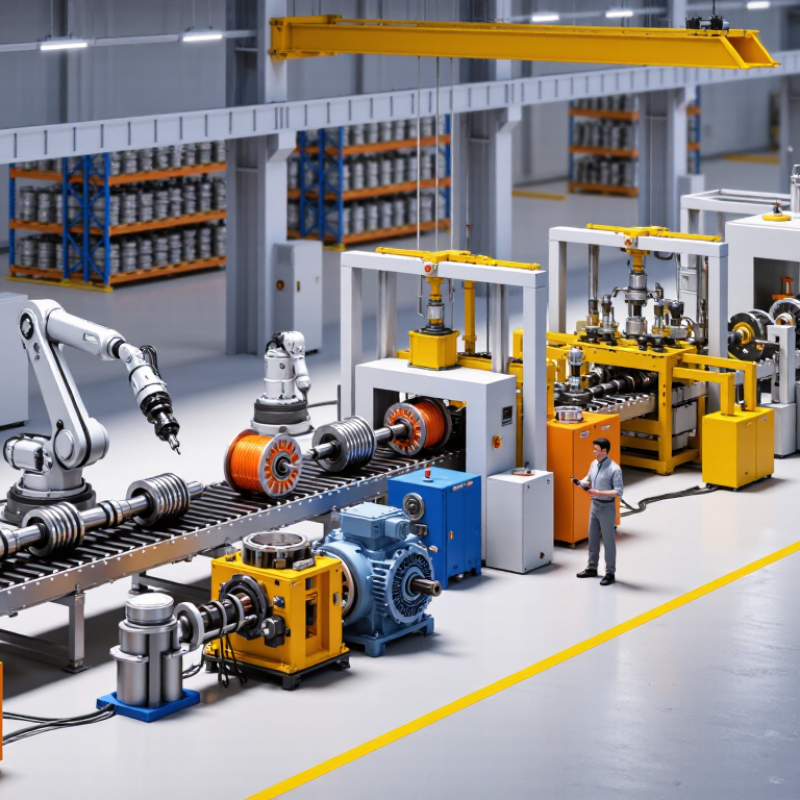
What Is a Motor Production Line and How Does It Work?

What a Motor Production Line Is

A motor production line is a connected sequence of workstations that turns components into a tested electric motor. It may begin with stator and rotor preparation, then move through winding, assembly, electrical connection, and final inspection. Each station performs a defined task, while conveyors or operators move parts between steps. The exact layout depends on motor size, design, and production volume. Small details matter.

Quality checks can include winding resistance, insulation, vibration, and noise. These tests help detect faults before a motor reaches its user. Some lines use automated equipment; others rely on skilled operators for delicate assembly. The International Federation of Robotics reported 541,302 industrial robot installations worldwide in 2023 in its World Robotics 2024 report. That figure reflects broader factory automation, not motor lines alone. Automation can improve repeatability, but it cannot fix poorly balanced stations or unclear work instructions.

Tips: When assessing a line, follow one component from start to finish. Note where parts wait, where measurements are recorded, and how failed tests are handled. A neat layout may still hide a bottleneck. Look at the process, not just the machines.

The Main Components and Workstations

A motor production line is a sequence of connected workstations that turns components into a tested motor. Typical stations prepare and stack stator laminations, wind or insert copper coils, build the rotor, and fit the shaft, bearings, and housing. Conveyors or fixtures move each unit between tasks, while operators and automated equipment handle steps requiring different levels of precision. At winding, for example, fine copper wire must sit neatly in narrow slots; at assembly, a small alignment error can cause noise or vibration later.

Testing matters as much as assembly. Stations may check electrical resistance, insulation, rotation, vibration, and balance before a motor reaches packaging. The International Federation of Robotics reported 4,281,585 industrial robots operating worldwide in 2023, in its World Robotics 2024 report. This figure covers many industries, not motor lines alone, but it shows how widely manufacturers use automation. Still, automation does not guarantee quality. A line can look orderly on paper and perform unevenly when parts vary or maintenance slips. That deserves attention.

Tips: Keep work instructions beside each station, and record test results by unit. Watch the handoffs. A loose fixture or unclear signal can interrupt the whole line. Review bottlenecks with operators; their practical observations may reveal problems that dashboard data misses.

How Motor Parts Move Through the Production Process

A motor’s production journey begins with separate parts, not a finished machine. Steel laminations, copper wire, shafts, housings, bearings, and insulation arrive in labeled containers. Workers or automated systems check dimensions and sort components before they enter the line. Small differences matter. A slightly damaged lamination, for example, may affect how the finished motor runs.

Parts move between workstations on conveyors, carts, or indexed pallets. At the stator station, thin steel layers are stacked and secured, then wire is wound through their slots. Insulation is added where needed. The rotor is assembled separately, often with a shaft fitted through its center. These assemblies meet later, when the rotor is placed inside the stator and the housing is attached. The route can vary by motor design.

Not every handoff is perfectly smooth. A pallet may pause while an operator checks a winding or replaces a misplaced part. That delay can be useful, though it may also reveal a bottleneck. Sensors and visual checks help catch alignment problems as parts move forward. Near the end, the assembled motor is tested for electrical performance, noise, vibration, and temperature behavior. Only after these checks does it move to finishing and packing.

How Assembly, Testing, and Quality Control Work

A motor production line links winding, core assembly, rotor fitting, and final inspection. At the winding station, copper wire is placed into stator slots, then connected and secured. Operators or automated tools check wire placement before the rotor is fitted. Presses control force and depth, since a small assembly variation can cause noise, heat, or vibration later.

Small errors matter.

Testing begins during production, not only at the end. Electrical checks measure winding resistance and insulation; dynamic tests examine current, speed, vibration, and sound. A dynamometer can reveal whether torque stays within the motor’s specification under load. The International Federation of Robotics’ World Robotics 2024 report recorded 541,302 industrial robots installed worldwide in 2023. That figure shows the scale of industrial automation, but automation alone does not guarantee consistent quality.

Quality control combines test limits, calibrated instruments, and traceable records for each motor. If a test fails, the line can flag the unit and connect its result to the station, tool, and production batch. Teams review recurring failures, rather than simply adjusting the final tester. A passing result can still hide a weak process. It is worth asking whether the measurement catches the real defect, or merely the easiest one to measure.

How Automation Coordinates Line Operations

On a motor production line, automation links winding, rotor assembly, balancing, testing, and packing into a timed flow. Line-control software releases work orders, while programmable controllers coordinate conveyors, presses, and safety interlocks. Sensors check part presence, temperature, torque, or vibration before each motor moves forward. A barcode record can connect test results to a motor’s serial number. Small pauses matter. If a bearing press runs late, upstream stations may slow and downstream workers may run short of parts.

Coordination depends on shared, timely data—not simply adding robots. The International Federation of Robotics reported 4.28 million industrial robots operating worldwide in 2023 (World Robotics 2024). Deloitte’s 2024 Smart Manufacturing and Operations Survey found that 92% of surveyed manufacturing executives viewed smart manufacturing as a primary competitiveness driver over the following three years. These figures cover manufacturing broadly, not motor lines alone. In practice, monitoring systems compare cycle times and fault codes, helping operators spot stations drifting from target. Yet a loose fixture can mimic a faulty motor. Sensors can drift. Operators still need clear alarms, calibrated test equipment, and a safe manual recovery path. One weak data link can make a polished dashboard confidently wrong.

FAQS

What does a motor production line do?

It moves separate components through connected workstations to create and test an electric motor. Small details matter.

Which parts are commonly assembled on the line?

Common parts include steel laminations, copper wire, a shaft, bearings, insulation, and a housing. The exact mix depends on motor design.

How are stator and rotor components prepared?

Steel laminations are stacked to form the stator core, then wire is wound through narrow slots. The rotor is assembled separately, often around a shaft.

How do parts move between workstations?

Conveyors, carts, or indexed pallets carry parts between tasks. A pallet may pause while an operator checks a winding or replaces a misplaced part.

What tests can identify motor problems?

Checks may cover electrical resistance, insulation, rotation, balance, vibration, and noise. Some lines also examine temperature behavior.

Does automation guarantee consistent quality?

No. Automation can improve repeatability, but it cannot correct unclear instructions, poor station balance, or skipped maintenance. Machines still need attention.

What should someone observe when assessing a production line?

Follow one component from arrival to testing. Notice where parts wait, how results are recorded, and what happens after a failed check.

Why can a small defect matter?

A damaged lamination or loose fixture can affect later assembly or testing. It is easy to focus on machines and miss these details.

What can operators reveal about bottlenecks?

Operators may spot handoff delays or awkward tasks that dashboard data misses. Their observations are useful, though they may not explain every cause.

Conclusion

A Motor Production Line is an organized sequence of workstations that transforms individual components into finished motors. It typically includes stations for preparing parts, assembling key components, connecting electrical elements, and installing the motor’s housing and accessories. Each station has a specific task, helping production proceed in a consistent and efficient order.

Parts move through the process by conveyors, carts, or other material-handling systems, with each step timed to keep work flowing smoothly. Workers and automated equipment perform assembly tasks, while inspections and tests check dimensions, electrical performance, balance, and general operation. Quality-control checks can identify issues early so that products meet defined requirements before leaving the line. Automation coordinates equipment, tracks production steps, and helps synchronize movement between workstations. Together, these elements make motor manufacturing more repeatable, support steady output, and help ensure that each completed motor is reliable and ready for its intended use.

Elowen

Elowen

Elowen is a professional marketing specialist who combines a deep understanding of the company’s products with a thoughtful, customer-focused approach. Through regular contributions to the company website, Elowen shares clear, practical blog articles that explain product features, highlight......