Intertek Verified Supplier Ningbo, Zhejiang, China info@cefnakauto.com
0%

Selecting a partner from the top Electric Motor Production Line Manufacturers requires more than comparing brochure speeds. A capable line may include rotor and stator assembly, winding, balancing, testing, and traceable quality checks. Each station affects output, product consistency, and the space required on the factory floor. For buyers, the real question is whether the equipment fits the motor design, annual volume, and workforce skills. A line built for small batches may not suit continuous production. Details matter. Ask how changeovers work, which process data operators can review, and what support is available during commissioning.

This overview considers manufacturers through practical criteria: engineering depth, automation options, integration experience, service coverage, and documented quality procedures. It also examines whether suppliers can adapt tooling for different frame sizes or winding specifications, rather than offering only a fixed package. References from comparable projects can be useful, but they should be checked against actual production conditions. A polished demonstration is not the same as stable output over a full shift. Not always. Buyers should clarify cycle-time assumptions, acceptance tests, spare-parts availability, and training before making comparisons. No supplier is ideal for every plant, and published claims rarely show the whole picture. Some trade-offs remain. A lower initial price can mean more manual handling; higher automation can add maintenance demands. The best choice is the one whose capabilities are verifiable, whose limits are clearly explained, and whose line can grow with the product roadmap. This guide helps readers ask sharper questions and assess claims with care.
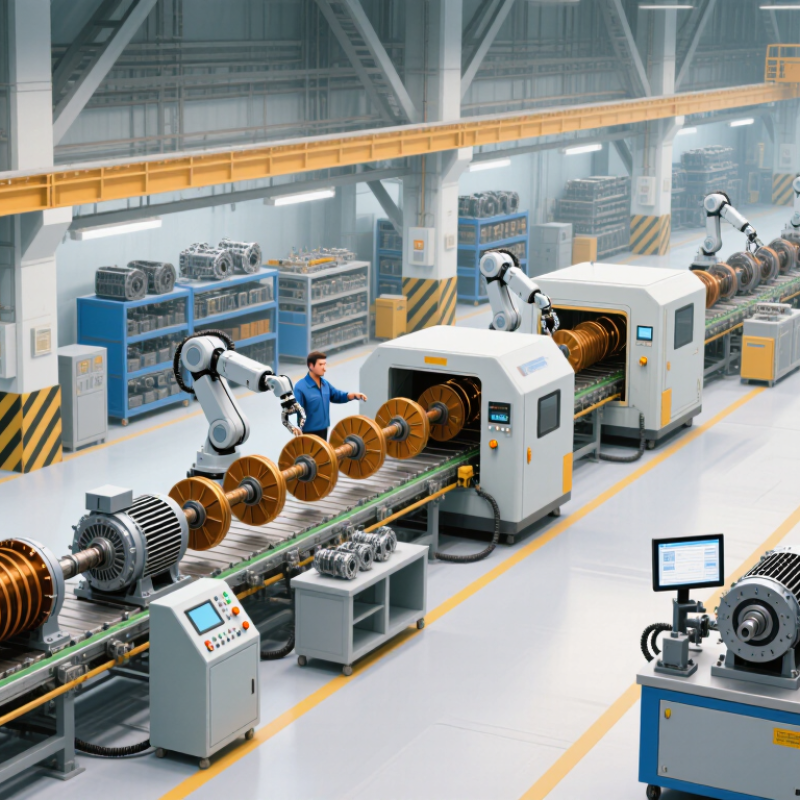
Top Electric Motor Production Line Manufacturers

What Electric Motor Production Line Manufacturers Do

Electric motor production line manufacturers turn product requirements into a coordinated sequence of machines, workstations, and inspections. They may supply equipment for core stacking, winding, rotor assembly, balancing, and final testing. The exact process depends on motor size, design, and expected output. A useful supplier asks about these details before proposing automation.

Their work often includes line layout, equipment integration, controls, commissioning, and operator training. They may also plan how parts move between stations and how test results are recorded. For example, a stator winding station must suit the wire size and slot geometry, not just the target cycle time. A line can look efficient on a drawing and still feel awkward on the shop floor. That gap deserves a real trial.

Tips: Ask for a sample process plan, changeover details, and acceptance-test criteria. Check whether operators can reach routine service points safely. Confirm what production data the system records, and how faults are diagnosed.

Good manufacturers explain trade-offs instead of promising perfect uptime. They should clarify capacity assumptions, maintenance needs, and what happens when product specifications change. Buyers should review the proposed workflow with production and maintenance staff. Small layout issues can become daily delays. Even a well-designed line may need adjustments after installation, so realistic commissioning time matters.

How Electric Motor Production Lines Are Designed

Designing an electric motor production line starts with the motor, not the machinery. Engineers define the required power, frame size, annual volume, and product variation before setting cycle times. A line for small motors may use automated coil winding and insertion, while larger units need lifting fixtures and more manual access. The route should connect lamination stacking, winding, assembly, impregnation, balancing, and final testing without forcing operators to carry heavy parts across the floor. Small details matter. A resin-curing station placed too far from assembly can create queues and complicate handling.

Energy use also shapes equipment choices. The International Energy Agency’s 2011 report, Energy-Efficiency Policy Opportunities for Electric Motor-Driven Systems, estimated that these systems used about 45% of global electricity. The U.S. Department of Energy’s 2014 motor-system market assessment estimated a 68% share of U.S. manufacturing electricity. These figures concern motor-driven systems, not factory production lines, but they underline why efficient drives and idle-time controls deserve attention. Sensors can record winding tension, temperature, and test results for each unit. That helps trace defects. It is not a substitute for sound process design.

Capacity planning should include changeovers, maintenance, and rejected parts, rather than assuming every station runs continuously. A bottleneck often moves. Pilot runs can expose awkward loading steps or test delays, though early layouts still miss things. Designers should review real operator feedback before fixing the final arrangement.

Core Technologies Used in Motor Manufacturing

Core motor manufacturing depends on accurate lamination stacking, winding, insulation, and rotor assembly. Small errors matter. A loose stator stack can increase vibration, while uneven coil placement may create hot spots during operation. Automated winding systems control wire tension and coil geometry; machine vision checks alignment before the motor moves downstream. These controls support repeatability, but they cannot replace sound process design.

Efficiency testing is equally important. The International Energy Agency’s report, Energy-Efficiency Policy Opportunities for Electric Motor-Driven Systems, estimates that electric motor-driven systems use about 45% of global electricity. That figure explains why manufacturers measure losses, temperature rise, vibration, and electrical performance at the end of the line. Modern test stations can record results against each motor’s serial number, making defects easier to trace. Still, automation is not magic. Sensors need calibration, and a fast line can reproduce the same defect very consistently. Impregnation methods, such as vacuum-pressure treatment, help protect windings from moisture and vibration. Yet the right process depends on motor design, materials, and operating conditions; one setting rarely fits every model.

Leading Manufacturers and Their Areas of Expertise

Electric motor production line manufacturers often specialize in different parts of factory setup. Some design complete lines, linking core assembly, winding, rotor balancing, and final testing. Others focus on precision winding equipment, where stable wire tension and repeatable coil placement matter. Automation specialists may excel at robotic handling, traceability, and coordinating stations with different cycle times. Testing-focused manufacturers build systems for checking insulation, vibration, noise, and electrical performance. That distinction matters.

Tips: Ask for sample process data, not just a polished demonstration. Check whether the equipment can handle your motor sizes, changeovers, and expected production volume. Small details count.

When comparing suppliers, examine how their expertise matches your product and workforce. A line designed for high-volume production may not suit frequent model changes. Review station layouts, maintenance access, spare-parts plans, and operator training. Request a trial using representative components, then check cycle times and defect records. A useful caution: a fast machine does not guarantee a balanced line. Bottlenecks can shift to manual loading or inspection. Even experienced project teams may underestimate changeover time, so test that step before finalizing the design.

How to Compare Electric Motor Production Line Suppliers

Top Electric Motor Production Line Manufacturers

How to Compare Electric Motor Production Line Suppliers

A production line may look impressive in a showroom, but compare its documented performance under conditions close to yours. Ask suppliers to define hourly output, acceptable defect rates, changeover time, and the product range used for each figure. A winding station rated for one motor size may not handle your full model mix. Request a process layout showing winding, rotor and stator assembly, balancing, and end-of-line testing. Check how test results are recorded and linked to each unit.

Tips: Ask for a sample acceptance plan, a realistic cycle-time demonstration, and references from operations with similar products. Compare installation scope, operator training, spare-parts availability, and response times—not just equipment prices. Get assumptions in writing. A neat spreadsheet can still hide gaps, especially around integration between machines. I would leave room for questions after a site visit; the first checklist rarely catches every practical issue.

Before choosing, discuss what happens when output falls short during commissioning. Clarify who diagnoses faults, how corrective actions are tracked, and what evidence confirms that the line meets agreed targets. Reliable suppliers explain limits plainly and support their claims with test records, not broad promises.

FAQS

What does an electric motor production line manufacturer provide?

Manufacturers coordinate machines and workstations for winding, assembly, balancing, and final testing. They may also handle layout, controls, installation, and operator training.

How does the motor design affect the production line?

Motor size, wire thickness, and slot geometry influence equipment choices. A winding station for one model may not suit every model.

What details should buyers request before comparing suppliers?

Ask for hourly output, defect targets, changeover times, and the product range behind each figure. Get the assumptions in writing.

How can buyers check whether a line will work on the shop floor?

Review a process layout and watch a realistic cycle-time demonstration. Check whether operators can reach service points without awkward movements.

Why should acceptance-test criteria be agreed early?

Clear criteria show how output and quality will be measured. They also define what evidence confirms the line meets its targets.

What should buyers ask about production data?

Ask how test results are recorded and linked to each motor. Check how operators can trace faults. Details matter.

How should installation and commissioning support be compared?

Compare installation scope, training, spare-parts availability, and response times. Ask who diagnoses faults if output falls short during commissioning.

Can a well-designed line still need adjustments?

Yes. Small layout issues can slow daily work, even when drawings look efficient. A site visit helps, though it may not reveal everything.

Conclusion

An Electric Motor Production Line brings together the equipment, processes, and quality checks needed to manufacture motors efficiently and consistently. Manufacturers design each line around factors such as motor type, production volume, available space, and required levels of automation. A well-planned layout connects component preparation, assembly, winding, testing, and handling in a sequence that supports smooth workflows and reliable output.

Core technologies may include precision winding systems, automated assembly tools, machine vision, data monitoring, and electrical performance testing. Different manufacturers specialize in areas such as customized line design, high-volume automation, flexible production, or process integration. When comparing suppliers, consider their engineering capabilities, equipment compatibility, service and training, production flexibility, quality-control methods, and total operating costs. The right partner can help create a dependable production system that meets present needs while allowing room for future changes.

Elowen

Elowen

Elowen is a professional marketing specialist who combines a deep understanding of the company’s products with a thoughtful, customer-focused approach. Through regular contributions to the company website, Elowen shares clear, practical blog articles that explain product features, highlight......