CE Certified Motor Testing Benches & Inspection Lines
High-rigidity dynamometers, real-time transient data acquisition systems, and turnkey BLDC motor production testing platforms customized to your engineering parameters.
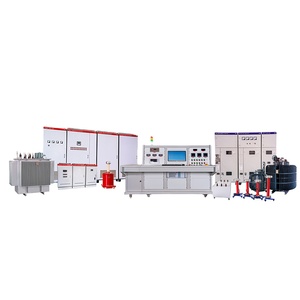
UHV-316 Electric Motor Test Bench Motor Test Equipment
- Multi-parameter dynamic load testing
- High-accuracy torque-speed mapping
- Integrated temperature rise monitoring
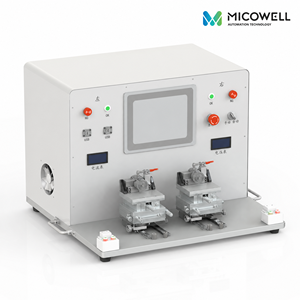
Factory Direct Flexible Modular Real Time Monitoring Motor Test Equipment
- Modular hardware & sensor expansion
- Real-time telemetry & wave logging
- Automated pass/fail quality analytics
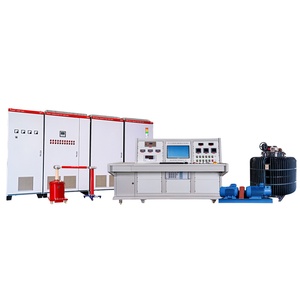
UHV-316 DC Motor Test Bench Motor Test Equipment
- Precision DC power supply unit
- Armature current & efficiency curves
- Back-EMF and stall torque evaluation
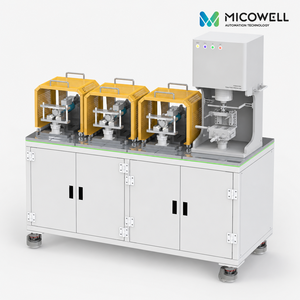
Stepper Motor Torque Frequency Curve Test System for R&D
- Pull-in & pull-out torque profiling
- High-frequency resonance analysis
- Automation drive signal inspection
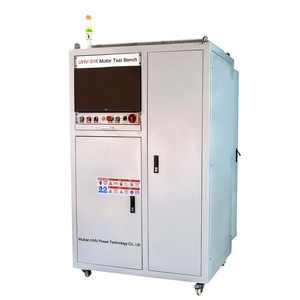
UHV-316 Customizable Motor Test Bench Equipment
- Sample-based engineering design
- Programmable thermal cycle stress
- CAN-Bus & EtherCAT communication
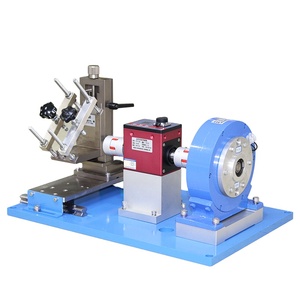
Electric Motor Stand Magnetic Powder Dynamometer Bench
- Magnetic powder / eddy current brake
- Precise low-speed load control
- Continuous overload endurance check
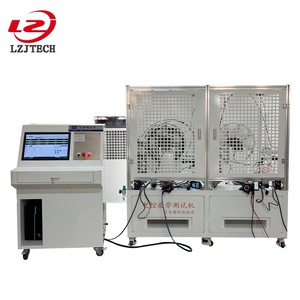
Two-Station Motor & Controller Durability Performance Tester
- Dual-station synchronous testing
- Controller efficiency & harmonic check
- Accelerated aging life verification
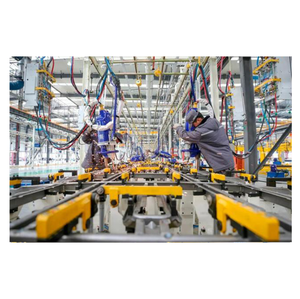
Automatic Motorcycle BLDC Motor Manufacturing & Testing Line
- Turnkey assembly to EOL testing
- Automated stator winding & balancing
- Traceable factory MES integration
Engineering Standards & Sourcing Requirements for CE Certified Motor Test Benches
In modern electromechanical manufacturing, the transition toward high-efficiency brushless DC (BLDC) motors, permanent magnet synchronous motors (PMSM), and wide-bandgap inverter-driven powertrains has placed unprecedented demands on CE certified motor testing equipment. As global OEM buyers seek rigorous quality assurance and regulatory compliance across international markets, selecting an established motor test stand factory requires an in-depth understanding of compliance frameworks, measurement physics, and real-time telemetry architectures.
Under European Union regulations, a motor test bench must comply with multiple directives to earn the CE marking. Key standards include the Low Voltage Directive (LVD 2014/35/EU), the Electromagnetic Compatibility Directive (EMC 2014/30/EU), and the Machinery Directive (2006/42/EC). Furthermore, precision measurement platforms must align with IEC 60034-2-1 (standard methods for determining losses and efficiency from tests) and IEEE 112 Standard Test Procedure for Polyphase Induction Motors and Generators. Equipment that fails to achieve these standards introduces critical measurement errors in torque-speed curve characterization, efficiency mapping, and thermal dissipation modeling.
Direct Dynamic Load Control
Utilizes magnetic powder, hysteresis, or regenerative AC servo dynamometers to provide continuous, smooth load torque across 0 to 20,000 RPM spectrums.
High-Speed DAQ Sampling
Synchronous multichannel analog acquisition sampling at up to 500 kHz/channel to accurately capture high-frequency PWM voltage spikes and phase current harmonics.
Thermal & NVH Synchronization
Integrates multi-point PT100 temperature sensors and piezoelectric vibration accelerometers to correlate structural resonance with thermal stress profiles.
Information Gain: Key Technical Parameters for Motor Testing Equipment Selection
When procuring custom or standardized test equipment from qualified factories, procurement officers and engineering managers must evaluate key technical indicators. The table below illustrates the critical specifications required for various motor testing methodologies:
| Motor Technology | Primary Testing Metrics | Recommended Dynamometer Type | Compliance Standard |
|---|---|---|---|
| Brushless DC (BLDC) | Back-EMF constant (Ke), Cogging Torque, Phase Current, Efficiency Map | Hysteresis / Low-Inertia AC Servo | CE Certified / IEC 60034 |
| Permanent Magnet (PMSM) | Id/Iq Vector Control, Field Weakening, Thermal Runaway, NVH Acoustics | Four-Quadrant Regenerative Servo | CE / ISO 17025 Compliant |
| Stepper Motors | Pull-In/Pull-Out Torque Frequency Curve, Resonance Frequencies, Step Angle Error | Magnetic Powder / Micro Torque Load | CE / EN 61010-1 |
| EV Traction Motors | Overload Endurance, 0-100% Transient Load Step, Insulation Withstand, Controller Harmonics | High-Power Regenerative Dynamometer | CE / ISO 26262 Alignment |
Note: All customized solutions supplied by Ningbo Davri Automation Equipment Co., Ltd. (Cefnak) undergo pre-shipment calibration against verified lab standards, ensuring 100% repeatability upon factory site integration.
Technological Evolution & Future Procurement Trends
How emerging electrification technologies, wide-bandgap inverters, and digital factory initiatives are transforming motor test equipment manufacturing.
1. Silicon Carbide (SiC) & High-Frequency Test Compatibility
With the rapid adoption of SiC and GaN power electronics operating at switching frequencies above 50 kHz, modern test benches must incorporate high-bandwidth current transducers (Rogowski coils or fluxgate sensors) and ultra-low noise power analyzers. Future procurement strategies prioritize test rigs capable of isolating high dv/dt voltage transients and parasitic capacitive currents to prevent false insulation failures during end-of-line (EOL) testing.
2. Regenerative Back-to-Back Energy Recovery Systems
Energy efficiency during long-duration durability testing has moved from a secondary benefit to a primary procurement metric. Modern CE certified test benches utilize four-quadrant active front-end (AFE) regenerative drives that feed over 85% to 92% of mechanical braking energy back into the factory grid. This significantly lowers operational utility costs and reduces total cost of ownership (TCO) for high-power electric forklift and EV motor manufacturers.
3. Digital Twin Integration & Real-Time Cloud Telemetry
Leading global factories are phasing out standalone legacy test rigs in favor of IoT-enabled testing platforms. Modern motor testing software interfaces directly with Manufacturing Execution Systems (MES) via OPC-UA, MQTT, or Modbus TCP. By generating automated digital passports for every motor serial number, factories can achieve complete quality traceability, predictive maintenance alerts, and cloud-based statistical process control (SPC).
4. Modular Sample-Based Customization & Turnkey Line Integration
As product lifecycles shorten, motor manufacturers can no longer rely on rigid, single-purpose testing stands. The industry is rapidly shifting toward flexible, multi-station designs where mechanical mounting plates, shaft couplings, and software testing sequences can be swapped in minutes to support diverse motor frame sizes—from UAV drone outruners to industrial pump drives.
Engineered by Ningbo Davri Automation Equipment Co., Ltd. (Cefnak)
With over 11 years of deep expertise in motor manufacturing automation, stator winding technology, and electrical testing engineering, Ningbo Davri Automation (Cefnak) provides end-to-end solutions for global OEMs. Our integrated facility executes metal stamping, precision machining, software design, and rigorous quality inspection under one roof.
- Intertek On-Site Verified Supplier: Audited factory premises, legal credentials, and production lines.
- Sample-Based Customization: Trial winding and dynamic load testing using client-supplied motor samples.
- In-House Quality Control Lab: 6 specialized testing instruments managed by certified senior engineers.
- Global Field Support: Overseas engineering commissioning, operator training, and lifetime spare parts backup.
Technical Consultation & Custom Proposals
Send us your motor drawings, slot counts, wire gauges, torque targets, or takt time requirements to receive a customized technical proposal.
Request Technical ProposalFrequently Asked Questions for Sourcing Motor Test Equipment
Clear answers to technical compliance, lead times, calibration standards, and custom bench engineering questions.
Q1: What safety directives and CE certifications apply to your motor test benches?
Our motor testing equipment is engineered in compliance with EU CE directives including the Low Voltage Directive (LVD 2014/35/EU), Electromagnetic Compatibility Directive (EMC 2014/30/EU), and Machinery Directive (2006/42/EC). All electrical enclosures include emergency-stop loops, interlocked safety guards, and isolated ground protection.
Q2: Can test benches be customized based on our physical motor sample or CAD drawing?
Yes. Sample-based customization is an independently verified core capability. Buyers can send stator or motor physical samples or 3D drawings (SolidWorks/STEP). Our engineering team designs custom mounting fixtures, mechanical shaft couplings, and software loading profiles specifically matched to your motor's dimensions.
Q3: Which load braking technologies are recommended for high-speed BLDC vs. high-torque DC motors?
For high-speed BLDC and drone motors, low-inertia hysteresis brakes or high-speed AC servo dynamometers are ideal due to smooth torque resolution at high RPM. For high-torque DC or electric forklift motors, magnetic powder dynamometers or water-cooled eddy current brakes provide superior low-speed torque holding capacity.
Q4: How is measurement accuracy guaranteed and calibrated prior to delivery?
Each test stand undergoes factory calibration using certified dead-weight lever arms for torque sensors and precision power calibrators for electrical sensors. Calibration data certificates traceable to international standards are included with the equipment documentation package.
Q5: Does the testing software support automated test reporting and MES integration?
Yes. Our customized software suite provides automated generation of torque-speed curves, efficiency heatmaps, back-EMF graphs, and temperature rise logs. Data can be exported in CSV, Excel, or SQL format, and directly communicated to your factory MES via TCP/IP protocols.
Q6: What after-sales engineering support and installation services are available for international buyers?
We provide comprehensive remote commissioning support via video link, as well as on-site dispatch of experienced service engineers for physical installation, alignment calibration, software setup, and local operator training at your facility.