Featured CE-Certified Motor Production Equipment
Explore our top-tier automated winding machinery, custom assembly production lines, and precision motor components engineered to maximize slot fill factor and operational throughput.
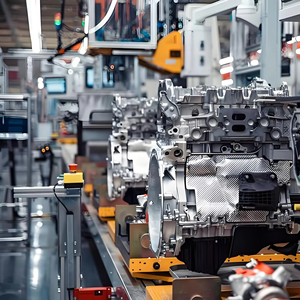
Custom New Energy Vehicle Engine Assembly Production Line With Manual Workbench
- Integrated Manual & Automated Stations
- Real-Time Torque & Sensor Monitoring
- Tailored for NEV Traction Motors
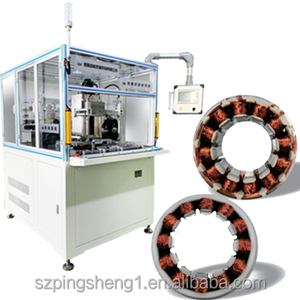
Large Motor Stator Coil Winding Motor Stator Coil Winding/copper Wire Motor Production Line
- High Torque Wire Delivery Mechanism
- Suitable for Heavy-Duty Industrial Stators
- Automated Wire Insertion & Taping
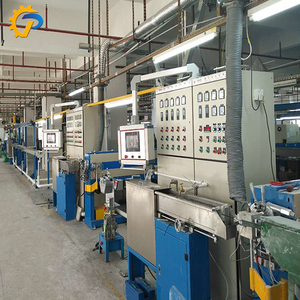
Chipeng Aerial Cable Aluminium Wire Electric Motor Automatic Making Machine Cable Extrusion Production Line
- High-Speed Continuous Extrusion
- Precision Diameter Feedback Control
- Heavy Industrial Cable Processing
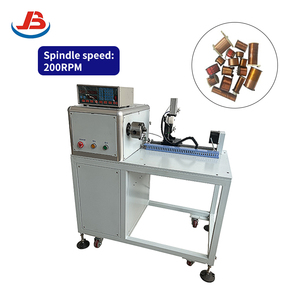
Jianbo CNC 50sqmm Copper Flat Wire Coil Winding Machine PLC for Easy Operation Making Transformer Coils Motor Core Components
- Up to 50sqmm Heavy Flat Wire Capacity
- Programmable PLC Motion Controller
- High Slot Fill Factor Optimization
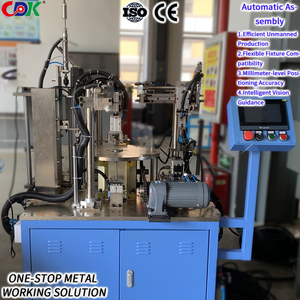
Steel Automatic Assembly Machine for Non-Standard Row Plug Including Pump Motor Engine Gear Gearbox
- Multi-Component Modular Feeding
- High-Precision Mechanical Indexing
- Automated QC Inspection Integration
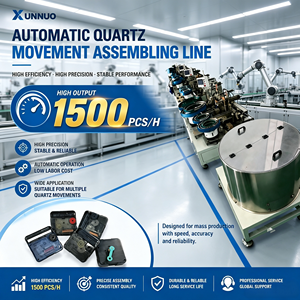
Customized PLC Controlled Automatic Watch Movement Assembly Line Motor/Engine 1 Year for High Performance Mass Production
- Sub-Micron Positioning Precision
- High-Speed Automated Pick & Place
- Full Takt-Time Optimization
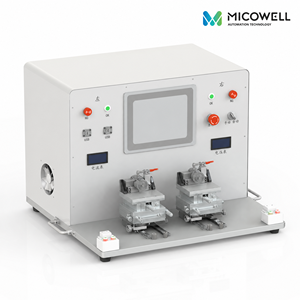
Factory Direct Flexible Modular Design Factory QC Customized Solution Real Time Monitoring Motor Test Equipment
- Hi-Pot & Insulation Resistance Test
- Dynamic Torque & Cogging Evaluation
- Real-Time IoT Data Logging
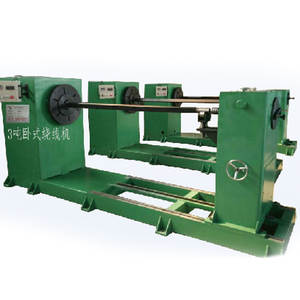
LEADWIN High Capacity Automatic Toroidal Low Voltage Motor & Engine Winding Machine with Low Maintenance Cost
- Low Energy & Maintenance Overhead
- High-Density Core Winding Efficiency
- Rugged Industrial Construction
Technical Whitepaper: Engineering Next-Generation CE Certified Needle Winding Machinery
In modern electromagnetic motor manufacturing, the transition from conventional flyer and transfer winding toward multi-axis CNC needle type internal and external stator winding machines represents a fundamental engineering shift. Driven by global mandates for higher power density, lower harmonic distortion, and optimal slot fill factors in Brushless DC (BLDC), Permanent Magnet Synchronous Motors (PMSM), and New Energy Vehicle (NEV) traction drives, modern industrial procurement requires machinery that couples rigorous mechanical kinematics with certified safety standards.
SEO & Procurement Insight: Sourcing CE-certified needle winding machinery guarantees that equipment complies with the European Machinery Directive 2006/42/EC and EN 60204-1 safety standards while delivering precision tensioning that eliminates enamel wire abrasion during high-speed strokes up to 2,500 SPM (Strokes Per Minute).
1. Kinematic Mechanics of Multi-Axis Servo Needle Winding
Needle winding technology directly deposits insulated copper magnet wire into the stator slots through a hollow needle mechanism moving in synchronized spatial trajectories. Unlike traditional external coil insertion techniques, needle winding guides the wire continuously around internal or external stator teeth. A state-of-the-art CNC needle winding machine relies on a 4-axis to 6-axis closed-loop motion architecture:
- Z-Axis Vertical Reciprocation: Driven by high-dynamic linear motors or absolute-encoder AC servo drives, executing stroke control with sub-millimeter turning points.
- X/Y Axis Radial Positioning: Controls needle stroke depth and slot clearance to maintain tight proximity to the lamination stack, preventing overlapping turns and wire crossing.
- C-Axis Stator Indexing: Ultra-precise rotary positioning powered by direct-drive torque motors, achieving indexing resolution under 0.01 degrees for multi-slot stators.
- W-Axis Dynamic Tension Control: Real-time closed-loop magnetic hysteresis tensioners or active servo tension units that maintain constant wire tension (from 0.5N to 50N depending on wire gauge) across variable acceleration phases.
2. CE Certification Framework & Electrical Safety Architecture
For international buyers and procurement directors, CE certification is not merely a regional regulatory requirement—it serves as an authoritative benchmark for machine reliability, structural integrity, and risk mitigation. A fully compliant CE-certified needle winding machine must adhere to the following harmonized directives:
| EU Directive / Safety Standard | Technical Scope & Engineering Requirement | OEM & Wholesaler Compliance Verification |
|---|---|---|
| Machinery Directive 2006/42/EC | Comprehensive mechanical hazard assessment, dual-channel emergency stop circuits, safety light curtains, and interlocking guards. | TÜV Rheinland or Intertek third-party audit reports and signed EC Declarations of Conformity. |
| Low Voltage Directive 2014/35/EU (EN 60204-1) | Electrical safety, insulation resistance, continuous grounding continuity (<0.1 Ω), and thermal overload protection for control cabinets. | Routine factory hi-pot voltage withstand testing up to 1,500V AC for 1 minute without breakdown. |
| EMC Directive 2014/30/EU | Electromagnetic Compatibility ensuring high-frequency servo drives do not interfere with plant control networks or sensor lines. | Integrated line filters, shielded encoder cabling, and strict metallic cabinet grounding design. |
| EN ISO 13849-1 (Safety of Machinery) | Performance Level d (PL d) rating for safety-related control functions including needle crash prevention and manual loading safety. | Redundant safety relays and safe-torque-off (STO) integrated servo drives. |
Global Procurement Trends: Strategic Sourcing for Motor Automation (2025–2030)
As global electric vehicle adoption accelerates and industrial automation expands into robotics and unmanned aerial vehicles (UAVs), global B2B buyers are shifting their procurement strategies. Sourcing directors look beyond initial capital expenditure (CAPEX) to prioritize Total Cost of Ownership (TCO), process flexibility, and digital integration.
Key Sourcing Drivers Shaping the Winding Machinery Market
- Transition to High-Fill Hairpin & Flat-Wire Systems vs. Precision Needle Winding: While heavy EV traction stators utilize hairpin technology, needle winding remains the undisputed leader for internal slot BLDC stators, small-to-medium NEV auxiliary pump motors, drone outrunners, and air conditioning compressor motors due to lower tooling cost and flexible slot geometry handling.
- Modular Tooling for Rapid Changeover: Wholesalers and tier-1 suppliers require needle winding platforms capable of swapping needle heads, wire guides, and stator clamping fixtures in under 15 minutes to handle low-volume, high-mix (LVHM) production contracts.
- Real-Time Quality Data Analytics (Industry 4.0): Modern procurement specifications mandate OPC-UA or Modbus TCP protocols for exporting real-time winding tension profiles, turns counts, cycle times, and insulation breakdown indicators directly to factory MES systems.
- Custom Sample-Based Tooling Engineering: Standard off-the-shelf catalog machines frequently fail due to unpredicted wire friction or tight slot dimensions. Leading vendors now provide custom tooling validation based on physical customer lamination samples prior to contract finalization.
Procurement Advice: When evaluating global winding machine wholesalers, request documented evidence of stroke speed stability, needle nozzle material specs (such as tungsten carbide or polished ruby tips), and localized after-sales engineer support capability.
Technological Innovations in Needle Winding Kinematics
The core bottleneck in needle winding has historically been wire stretching and enamel damage at the outer turn radii during rapid directional changes. Recent mechanical and electrical engineering breakthroughs engineered by top-tier manufacturers have overcome these physical constraints:
1. Active Closed-Loop Servo Tension Control
Traditional mechanical friction tensioners apply constant force regardless of needle position. However, during the top and bottom deceleration phases of a needle stroke, static friction causes tension spikes that strip wire enamel. Modern CE-certified machines incorporate linear dynamic servo tensioners that dynamically drop tension during directional changes and instantly apply counter-torque during high-speed linear strokes, preserving wire insulation integrity up to 100%.
2. Adaptive Flying Wire Termination & Automatic Pin Wrapping
Modern production lines demand zero-manual-intervention cycles. Advanced needle winders incorporate integrated 3-axis secondary tooling heads that execute automated flying wire routing, skeletal pin wrapping, and thermal wire stripping/cutting within the same machine chassis—reducing overall cycle time per stator by 35% to 50%.
3. Comparison: Needle Winding vs. Alternative Coil Production Methods
| Winding Parameter | Needle Type Winding | Flyer Winding | Hairpin (Formed Wire) |
|---|---|---|---|
| Target Application | Internal/External BLDC, PMSM, Drone, NEV Pump Motors | Universal Motors, Armatures, Outer Rotor Stators | High-Power EV Main Traction Drive Motors |
| Slot Fill Factor | High (60% – 75%) | Medium (45% – 55%) | Ultra-High (75% – 85%) |
| Wire Gauge Range | 0.08 mm to 1.8 mm (Round Wire) | 0.05 mm to 1.2 mm (Round Wire) | Heavy Rectangular Flat Wire |
| Tooling & NRE Cost | Moderate & Highly Modular | Low to Moderate | Extremely High Capital Cost |
| Changeover Flexibility | High (Fast Nozzle & Fixture Swaps) | High | Very Low (Dedicated Lines) |
Enterprise Strengths & Global Supply Infrastructure
Ningbo Davri Automation Equipment Co., Ltd. (Cefnak) brings over a decade of verified industrial expertise in stator machinery engineering, quality assurance, and international deployment.
Intertek On-Site Verified Supplier
Our manufacturing plant, legal registration, mechanical workshops, and administrative facilities are independently audited and verified on-site by Intertek.
Sample-Based Custom Engineering
Send us your physical stator samples or lamination drawings. Our engineers utilize SolidWorks 3D to design custom nozzle geometries, winding paths, and trial tooling.
In-House 6-Stage QC Testing Lab
Every winding machine undergoes rigorous internal testing including handheld digital tension verification, hi-pot insulation tests, video microscope solder checks, and 48-hour aging runs.
Global Technical & Engineer Support
We deploy senior field engineers internationally to assist overseas factory buyers with machine installation, PLC programming alignment, operator safety training, and process tuning.
Complete Turnkey Production Integration
From individual 4-station internal winders to fully automated assembly lines incorporating slot insulation insertion, coil winding, wire taping, soldering, and end-of-line testing.
11+ Years Industrial OEM Leadership
Backed by over a decade of continuous mechanical design evolution in Ningbo, China—one of the world's dense motor automation hubs.