1. Executive Summary & Regulatory Framework for CE-Certified Stator Manufacturing
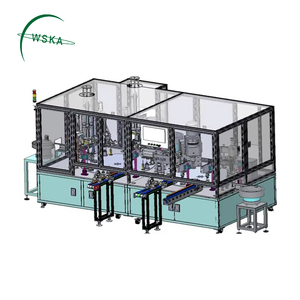
In modern electromechanical manufacturing, the electric motor stator serves as the electromagnetic core determining power density, thermal performance, energy efficiency, and operational lifespan across applications ranging from Electric Vehicle (EV) traction drive units to UAV brushless outrunners, industrial servo actuators, and HVAC compressors. Procuring a modern CE Certified Stator Assembly Line is no longer merely a capital expenditure for machinery; it is a strategic investment in flexible industrial automation, electromagnetic precision, and global market regulatory compliance.
CE certification for fully automated stator assembly lines requires adherence to complex European Directives. Specifically, high-speed automated assembly equipment must comply with the Machinery Directive 2006/42/EC, the Low Voltage Directive (LVD) 2014/35/EU, and the Electromagnetic Compatibility (EMC) Directive 2014/30/EU. Under standards such as EN 60204-1 (Safety of Machinery - Electrical Equipment of Machines), automated stator manufacturing systems must integrate dual-channel safety circuits, emergency stop architectures with PLd/e safety levels, optical light curtains, interlocked physical fencing, and robust grounding protection to eliminate electrical hazards under 380V/480V high-power continuous operation.
Technical Insight: A compliant CE-certified stator line integrates closed-loop telemetry across every station. Real-time monitoring of wire tension, surge voltage insulation resistance, and mechanical insertion pressure prevents micro-damage to copper enamel, achieving operational Overall Equipment Effectiveness (OEE) exceeding 92% in continuous 24/7 industrial environments.
2. Technological Architecture & Engineering Evolution of Stator Production Lines
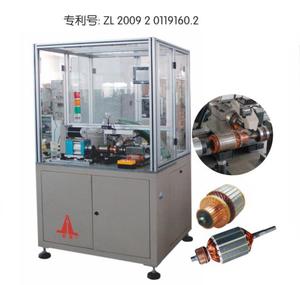
The transition from legacy manual coil insertion machines to fully automated, unmanned stator production lines represents a profound technological shift. Contemporary motor topologies—such as Brushless DC (BLDC), Permanent Magnet Synchronous Motors (PMSM), AC Induction Motors, and Brushless AC (BLAC) drives—demand highly specialized winding and assembly methodologies optimized for distinct geometric constraints and copper slot-fill requirements.
2.1 Advanced Winding Technologies: Needle Winding vs. Outer Stator Fly Winding
Winding is the central process in stator production. Machine selection depends primarily on whether the stator exhibits an internal slot geometry (inner-rotor motor) or an external slot geometry (outer-rotor motor):
- Needle Type Internal Stator Winding: Designed for inner-rotor BLDC, power tool, and EV auxiliary pump stators. The winding needle moves along linear CNC axes (X, Y, Z, and C rotation) to guide enamelled copper wire directly into narrow inner slots. Closed-loop servo tension controllers keep tension fluctuations within ±0.5% of nominal values, preserving enamel coating integrity and eliminating inter-turn short circuits.
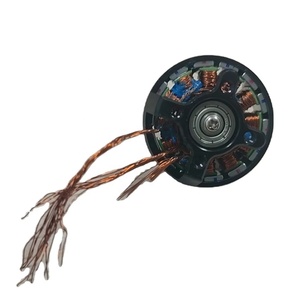
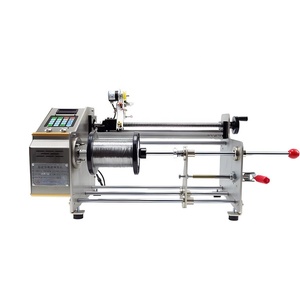
- Outer Stator Fly Winding: Applied to external-rotor motors found in FPV drones, UAV propulsion modules, treadmill drives, and ceiling fans. High-speed rotating flyers wrap copper wire directly around outer lamination teeth. Modern CNC flyer winders execute multi-strand parallel winding at speeds up to 3,000 RPM while maintaining neat layer packing to maximize copper slot-fill ratios up to 75%.
- Hairpin Stator Technology: Representing the pinnacle of EV traction motor production, hairpin lines utilize rectangular enamelled wire instead of round wire. Solid copper pins are formed, inserted into insulated slots, twisted, and laser welded. This architecture raises slot-fill factors beyond 80%, substantially reducing copper losses and optimizing heat dissipation under high current densities.
2.2 Automated Slot Insulation & Paper Insertion
Before coil winding, raw stator laminations undergo slot paper insertion to establish a dielectric barrier between the metallic stator core and copper windings. Automated paper insertion machines cut, fold (B-shape, S-shape, or cuff-folded ends), and push DMD, NMN, or Nomex insulation paper into stator slots at cycle times under 0.5 seconds per slot, verified by optical sensor inspection.
2.3 Commutator Hot Staking, Wire Lacing, and Trickle Varnishing
For universal rotor armatures and specific BLDC stators, wire ends are terminated via high-precision CNC commutator hot staking or laser welding. Downstream stations execute automatic wire lacing to bind coil heads, followed by secondary slot wedge insertion. Finally, stators pass through automated trickle varnishing or vacuum resin impregnation systems, ensuring total moisture resistance, structural rigidity against mechanical vibration, and enhanced dielectric strength.
| Stator Line Component | Core Process Technology | Critical Quality Metrics | Typical Applications |
|---|---|---|---|
| Slot Insulation Machine | CNC paper folding, cuffing & high-speed mechanical insertion | Positioning accuracy ±0.05mm; 100% slot presence check | BLDC, Automotive Pumps, Power Tools |
| Needle Winding Station | Multi-axis CNC servo needle movement with dynamic tension control | Wire diameter range 0.1mm - 1.8mm; tension deviation < 0.5% | EV Auxiliary Motors, Servo Motors, BLDC |
| Outer Stator Winder | High-speed flyer rotation with automated index indexing | Spindle speed up to 3000 RPM; precise turn count verification | UAV / Drone Outrunners, Treadmill Motors |
| Hot Staking / Laser Welder | Resistance spot welding / Fiber laser beam fusion with thermal feedback | Contact resistance < 5 µΩ; zero thermal degradation of insulation | Automotive Armatures, Starter Rotors |
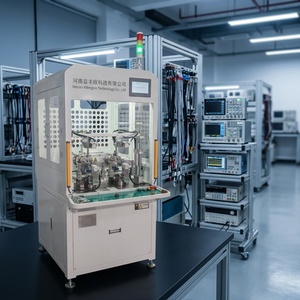
| End-of-Line (EOL) Tester | Surge impulse, AC/DC Hi-pot, insulation resistance & resistance check | Insulation resistance > 500 MΩ @ 1000V; real-time SPC logging | 100% Quality Inspection across all production lines |
3. Future Procurement Trends in Stator Assembly Automation (2025–2030)
Global procurement teams in automotive tier-1 supply chains, industrial motor manufacturing, and drone propulsion systems face evolving technological demands. Key procurement trends shaping the stator manufacturing sector include:
3.1 Modular Line Flexibility and Rapid Tooling Changeover
Modern production economics require lines capable of producing multiple motor sizes on a single system. Future-proof procurement dictates modular stator assembly lines equipped with quick-change tooling fixtures, digital servo adjustments, and recipe-driven CNC software. Changing between stator stack heights or slot configurations can now be completed within 15 to 30 minutes, minimizing downtime for low-volume, high-mix production schedules.
3.2 Integration of Industry 4.0 Telemetry, AI Vision, and MES Traceability
Leading global buyers prioritize factory equipment featuring native OPC UA, Modbus TCP, and Ethernet/IP protocols. Smart stator assembly lines communicate continuously with enterprise Manufacturing Execution Systems (MES). AI-powered machine vision systems inspect pin positioning, coil head geometry, and solder joint quality in real time. Every manufactured stator is laser-etched with a 2D DataMatrix code, binding electrical test data, wire lot numbers, and operator metrics to the individual unit for 100% lifetime traceability.
3.3 Transition Toward Energy-Efficient Green Manufacturing
Energy consumption during continuous line operation is an increasingly important factor in Total Cost of Ownership (TCO) calculations. Modern lines integrate regenerative servo drives, high-efficiency ABB/Siemens IE4 motor sets, intelligent pneumatic standby valves, and low-emission induction curing ovens to lower total energy usage by up to 28% compared to legacy line setups.
4. Technological Trends: The Convergence of Smart Robotics & Micro-Precision
As motor designs trend toward higher power densities and smaller physical footprints—particularly in UAV drones, surgical power tools, and robotics joints—stator assembly technology is evolving rapidly:
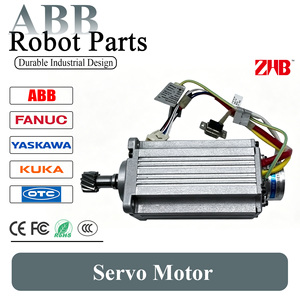
- 6-Axis Articulated Robot Integration: Replacing fixed mechanical transfer arms with compact 6-axis industrial robots (e.g., ABB, KUKA, FANUC) enables dynamic handling of fragile stators, automated palletizing, and flexible loading into varnish and oven systems.
- Ultra-High Speed Drone Stator Production: Specialized multi-station winding equipment now produces micro-stators (such as 12N14P or 24N28P outrunner stators) with continuous multi-strand parallel wire paths, handling ultra-thin 0.05mm copper strands without breaking.
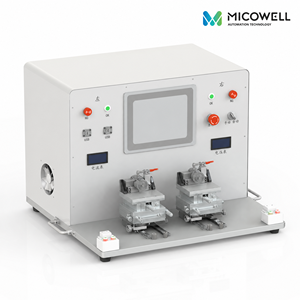
- In-Line Real-Time Partial Discharge (PD) Testing: High-voltage motors operating on 800V EV architectures require advanced testing beyond basic surge insulation checks. Advanced EOL testing modules incorporate In-Line Partial Discharge measurement to detect microscopic air voids inside stator windings before resin encapsulation, preventing premature insulation breakdown in the field.
5. Enterprise Advantages of Partnering with Ningbo Davri Automation (Cefnak)
Selecting the right OEM/ODM equipment vendor is critical to mitigating operational risk. Ningbo Davri Automation Equipment Co., Ltd. (Cefnak) offers significant technical and structural advantages for global buyers:
5.1 Sample-Verified Design Engineering
We eliminate technical ambiguity prior to manufacturing. Clients provide raw stator core laminations, wire specifications, and target output rates. Our in-house engineering group performs 3D SolidWorks simulation, FEA electromagnetic validation, and physical trial winding on prototype stations to prove process feasibility before full machine assembly begins.
5.2 Rigorous 16-Step In-House Quality Control System
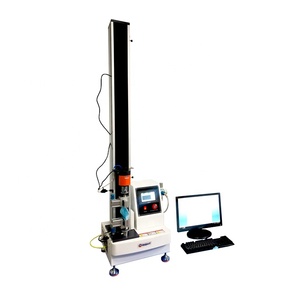
Quality assurance at Cefnak is backed by six dedicated testing instruments and an engineering team holding certified expertise across mechanical, electrical, and control disciplines. Every machine undergoes rigorous load testing, noise level assessment (< 72 dB), thermal imaging, and continuous 72-hour burn-in trials prior to customer Factory Acceptance Testing (FAT).
5.3 Third-Party Verified Credibility
As an Intertek On-Site Verified Supplier located in Ningbo, Zhejiang—one of China's primary precision equipment manufacturing hubs—we maintain transparent export records, verified capital capabilities, and audited cleanroom assembly spaces. Overseas buyers are invited to conduct virtual factory tours or on-site audits at any time.