State-of-the-Art Motor Winding Machinery
Explore our top-rated automated stator winders, hairpin assembly lines, and precision coil production systems engineered for maximum slot fill factor and process repeatability.
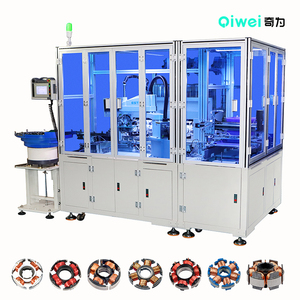
CNC Fully Automatic Production Line for Motor Stator Winding Machine with Gear and Pump Components
View Product Specifications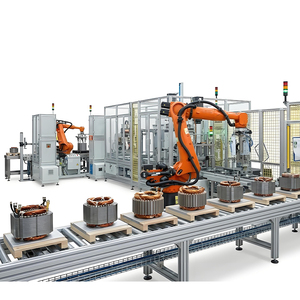
Visual Inspection New Energy Vehicle Motors Speed Hairpin Winding Customizable Fully Automatic Stator Assembly Production Line
View Product Specifications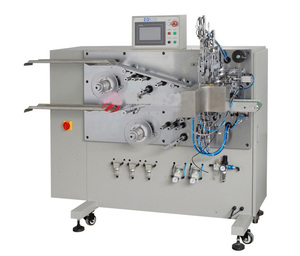
Electrical Motor Winding Machine 220 V 2 KW Lithium Ion Battery Pilot Line Production Equipment
View Product Specifications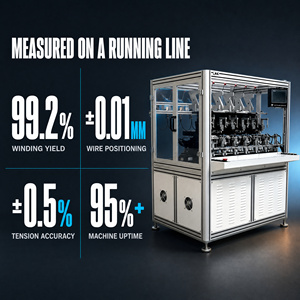
Custom Automated Brushless Motor Winding Machine OEM Motor Production Line Winding Equipment
View Product Specifications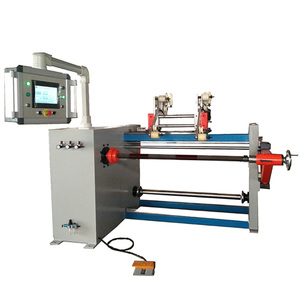
Servo Motor Driven Two Wire Guides Coil Winder Transformer Automatic Winding Machine
View Product Specifications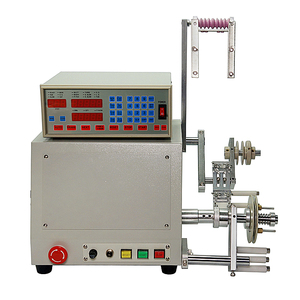
LY 810/820 0.03-1.2mm 0.03-3mm Wire 220V/110V Motor Transformer Wire Coil Winding Machine 750W
View Product Specifications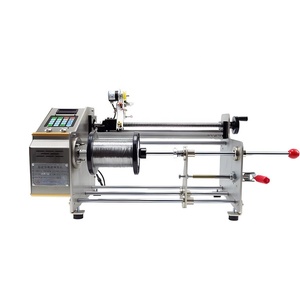
PWD-M-30 Precision CNC Winding Machine Stepper Motor Drive Parallel Winding Coil Winder
View Product Specifications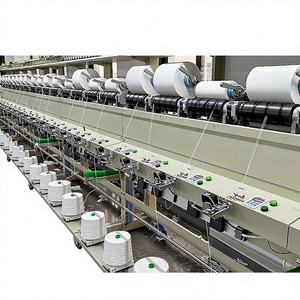
Automatic High Speed Engine Winding Machine 900W 380V Coil Winder for Motor Production Line
View Product SpecificationsNavigating China's Motor Winding Line Industry Ecosystem
The global shift toward high-efficiency electrification—spanning New Energy Vehicles (NEVs), industrial automation, unmanned aerial vehicles (UAVs), and energy-efficient HVAC systems—has radically amplified technical requirements for electromagnetic coil manufacturing. As international original equipment manufacturers (OEMs) attempt to optimize power density and thermal dissipation while keeping unit costs low, selecting the right manufacturing equipment supplier in China has evolved from a simple procurement exercise into a high-stakes capital investment decision.
China maintains an unmatched dominance in industrial motor production line manufacturing, primarily concentrated in high-tech industrial corridors such as Ningbo, Zhejiang. Ningbo Davri Automation Equipment Co., Ltd. (Cefnak) stands at the technical forefront of this manufacturing ecosystem. Operating as an Intertek-verified manufacturer, Cefnak bridges the critical gap between raw equipment fabrication and turnkey electromagnetic process engineering.
Information Gain Key Takeaway: Modern motor stator winding is no longer restricted to simple copper wire insertion. Achieving slot fill ratios exceeding 75% while protecting enamel insulation requires multi-axis servo kinematics, real-time closed-loop tension tracking, and seamless integration with downstream varnish dipping and end-of-line electrical testing.
Global procurement teams evaluating motor winding machinery must look beyond initial hardware costs. Total Cost of Ownership (TCO), tooling versatility, copper wire tension constancy, kinematic synchronization, and sample-based engineering validation represent the modern benchmarks for operational success.
Evaluating Motor Winding Technologies: Needle vs. Flyer vs. Hairpin
Selecting the optimal winding kinematics depends heavily on stator geometry, slot opening dimensions, magnetic wire cross-sections, and target unit-per-hour (UPH) yields. Engineers at Ningbo Davri Automation evaluate four core winding archetypes during the technical design phase:
| Winding Technology | Optimal Stator & Rotor Geometry | Slot Fill Factor (%) | Production Speed & Kinematics | Primary Industrial Applications |
|---|---|---|---|---|
| Needle Type Internal Winding | Inner-rotor BLDC stators, deep slot structures | 45% - 68% | High precision via 3-axis / 4-axis CNC servo needle guides | Automotive pumps, power tools, drone motors, EV compressors |
| Outer Stator Winding | External-rotor stators (teeth pointing outwards) | 40% - 62% | Dual-station indexers with active servo tensioners | UAV outrunners, cooling fans, treadmill motors, HVAC blowers |
| Hairpin Stator Assembly | Rectangular wire stators with open slots | 70% - 82% | Continuous forming, twisting, slot insertion & laser welding | EV main traction drive motors, heavy-duty electric commercial vehicles |
| Armature & Flyer Winder | Slotted rotors with mechanical commutators | 35% - 55% | Ultra-high-speed flyer arm rotation (up to 3,000 RPM) | Universal brushed motors, vacuum cleaners, starter motors |
Core Engineering Parameters Driving Stator Quality
When engineering customized production machinery, our design engineers focus on three primary electromagnetic failure modes:
- Enamel Insulation Micro-Cracking: Caused by erratic dynamic wire tension during high-speed directional changes. Integrated magnetic tensioners and dynamic servo-driven tension controllers eliminate tension spikes, keeping copper wire stretching below 0.5%.
- Phase-to-Phase Voltage Insulation Breakdown: In high-voltage (400V/800V) electric vehicle compressors, improper turn placement causes overlapping phase wires. CNC needle spatial path planning guarantees physical separation and symmetrical phase resistance.
- Thermal Hotspot Formation: Uneven slot filling leads to thermal accumulation in concentrated coils. High precision layer winding ensures consistent heat distribution and improves motor efficiency standards (IE3/IE4/IE5 compliance).
Future Procurement Trends in Automated Motor Production
As global manufacturing shifts toward Industry 4.0 standards and sustainable electrification, global buyers must structure their equipment procurement strategies around five defining trends:
1. Modular Tooling & Rapid Changeover
Production lines now require quick-change modular tooling. Modern CNC winders enable full slot-to-slot fixture swapping in under 15 minutes to support short-run high-mix manufacturing.
2. In-Line AI Vision Inspection
Replacing manual spot checks, integrated optical cameras inspect 100% of stators for turn crossovers, paper alignment, and wire insulation integrity prior to varnish dipping.
3. High-Voltage 800V Hairpin Transition
Electric vehicle traction motors are moving rapidly from round wire slot insertion to flat rectangular hairpin coils, demanding advanced CNC wire stripping, bending, and laser welding.
4. MES & Cloud Data Traceability
Automated winding lines transmit real-time parameters (tension force, winding speed, hi-pot resistance, temperature log) to enterprise MES systems for full 1:1 part traceability.
5. Energy-Efficient Servo Systems
Replacing pneumatic indexing with full multi-axis direct-drive servo motors reduces line energy consumption by up to 35% while eliminating compressed air fluctuations.
6. Closed-Loop Tension Feedback
Active electronic tension control dynamically adjusts breaking force dynamically during acceleration and deceleration phases to preserve wire gauge roundness.
Why Global Tier-1 Buyers Choose Ningbo Davri Automation (Cefnak)
Selecting a machinery supplier in China requires verified engineering capabilities and rigorous quality assurance protocols. Ningbo Davri Automation Equipment Co., Ltd. combines specialized local supplier networks with international project delivery standards.
1. Sample-Based Customization & 3D SolidWorks Tooling R&D
We do not sell rigid off-the-shelf catalog machines. Every project begins with a comprehensive audit of your physical stator/rotor sample or 3D CAD drawing. Our team of 5+ certified mechanical and electrical engineers (each possessing over 5 years of dedicated motor automation experience) models specialized winding nozzles, wire guides, expanding arbors, and clamping jigs in SolidWorks to ensure frictionless slot entry.
2. Six-Tier Quality Control Laboratory Inspection
Quality assurance is embedded at every stage of machine assembly and sample validation using specialized laboratory test equipment:
3. Turnkey Execution Process: From Drawing to Overseas Factory Installation
Overseas buyers benefit from our standardized 6-step project execution workflow:
- Sample & Parameter Review: Analysis of slot counts, wire diameter, turns per coil, and target UPH output.
- Technical Proposal & Layout: 3D kinematic modeling, station sequence planning, and cycle-time calculation.
- Precision Tooling & Assembly: In-house metal stamping, CNC machining, and electrical control panel wiring.
- Lab Sample Trial Winding: Prototype winding performed using client-supplied stators and magnetic copper wire.
- Video Factory Acceptance Test (FAT): High-definition video verification and live remote inspection prior to export packing.
- Overseas Engineer Deployment: On-site installation, line integration, operator training, and fine-tuning by senior engineers.
Frequently Asked Sourcing & Technical Questions
Detailed responses to key technical and operational questions asked by global motor manufacturing engineers and procurement heads.
Which specific motor types can your stator winding machines handle?
Our specialized machine portfolio covers almost all commercial electric motor topologies. Needle type internal stator winders are engineered for inner-rotor BLDC motors, power tools, automotive water/oil pumps, and EV climate control compressors. Outer stator winding equipment serves external-rotor designs including civilian drone/FPV motors, cooling fans, and treadmill motors. Additionally, our automatic armature winders and CNC commutator hot-staking machines handle brushed DC and universal motors.
Do you supply complete turnkey motor production lines or just standalone winders?
We supply both standalone winding units and fully integrated, turn-key automated production lines. Our turnkey assembly lines incorporate insulation paper insertion, slot wedge feeding, high-speed coil winding, intermediate slot taping, terminal soldering/welding, varnish impregnation, dynamic rotor balancing, and final electrical end-of-line (EOL) testing customized to your targeted takt time.
How does your engineering team validate sample-based machine customization?
Sample-based customization is our core strength. Buyers provide physical stator laminations or 3D drawing files. Our engineering design team creates custom tooling, nozzle paths, and expanding fixtures in SolidWorks. Before equipment dispatch, we perform trial winding runs using your exact wire gauge and stator stacks, verifying turn packing, phase resistance, dielectric insulation, and slot fill ratio.
What technical parameters must be provided to receive an accurate quote?
To configure the machine layout and provide an exact quotation on the first technical submission, we require four core parameters: (1) Stator outer/inner diameter and stack height drawing, (2) Slot count and slot opening dimensions, (3) Enamel wire diameter (mm or AWG) and turns per coil, and (4) Target production output (units per hour or annual volume requirements).
What after-sales support and installation services are available for overseas factories?
We provide complete remote support via augmented reality (AR) video commissioning alongside on-site engineer deployment. Our certified field service engineers travel globally to customer facilities for physical machine placement, electrical integration, PLC program tuning, tooling calibration, and comprehensive maintenance training for local operators.
What are the Minimum Order Quantities (MOQ) for machinery and motor components?
For industrial machinery and automated production lines, the MOQ is 1 set. For custom UAV/FPV drone motor stators and OEM motor components, the production MOQ starts at 500 pieces. Complete specialized BLDC or PMSM traction motors carry an MOQ starting at 10 pieces.
Accelerate Your Motor Assembly Automation Today
Send your stator sample drawings, magnet wire specifications, or targeted UPH metrics to our senior engineering team. Receive a tailored 3D technical proposal and line budget within 24 hours.