Featured BLDC & Motor Manufacturing Equipment
Engineered for high slot fill factors, extreme concentricity, and low cycle times across automotive, appliance, drone, and industrial motor production.
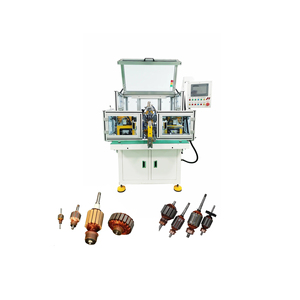
Fully Automatic Rotor & Armature Coil Winding Machine
Designed for high-speed precision flyer winding of electric motor rotors with automated wire indexing and tension control.
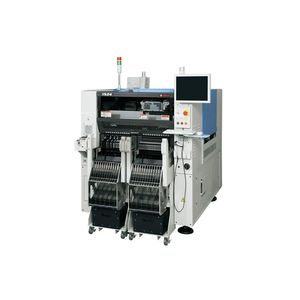
High-Speed SMT Line Pick & Place Machine (Yamaha YS24)
Ultra-high-speed PCB assembly for motor drive controller boards, integrated BLDC driver circuits, and sensor arrays.
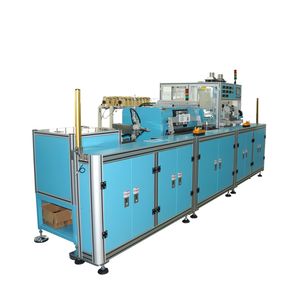
Fully Automatic Multi-Component Coil Winding Production Line
Turnkey coil line for relays, contactors, solenoid valves, transformers, inductors, and specialized motor coils.
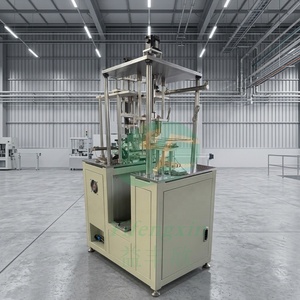
ISO Certified Customized Automatic Motor Assembly Line
Fully integrated modular assembly equipment with automated shaft pressing, bearing insertion, and EOL testing.
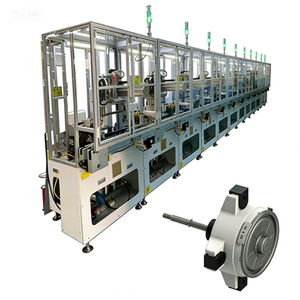
Automatic 45W-10 Pole Appliance BLDC Motor Line
Automated manufacturing system tailored for indoor unit (IDU) air conditioner motors, washing machine drives, and HVAC fans.
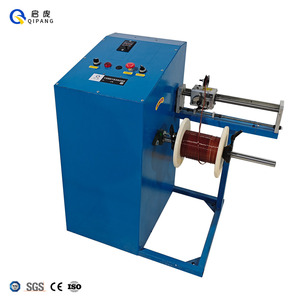
High-Speed Automatic Motor Cable & Wire Coiling Machine
Heavy-duty wire take-up and bobbin coiling machine operating under 380V/220V dual voltage for industrial cable prep.
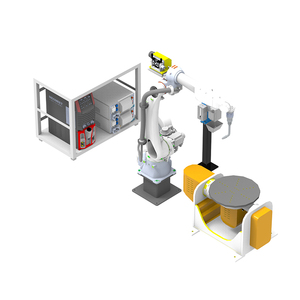
Automotive Assembly Line Welding Robot System
6-axis industrial robotic welding station with PLC synchronization, rated IP65 for automotive gearbox and motor housing assembly.
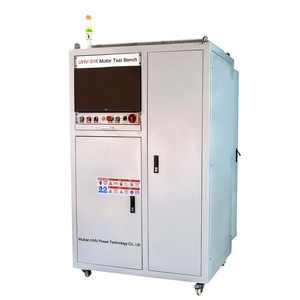
UHV-316 Industrial Customizable Motor Test Bench
Comprehensive End-of-Line (EOL) testing station verifying torque dynamics, back-EMF, vibration, insulation, and thermal efficiency.
Empirical Performance Metrics & Production benchmarks
Quantifiable operational metrics delivered by our automated needle winding systems and turnkey BLDC assembly lines.
Industry White Paper: Next-Gen BLDC Motor Equipment Engineering
An in-depth technical examination of magnetic circuit optimization, needle winding dynamics, and automated process engineering.
Kinematic Needle Trajectory & Servo Closed-Loop Control
Modern Brushless DC (BLDC) and Permanent Magnet Synchronous Motors (PMSM) demand increasingly compact stator slot geometries to maximize power density. Traditional flyer winding often fails when dealing with deep-slot, narrow-opening internal stators. Needle-type internal stator winding machines solve this by executing multi-axis CNC interpolation (X, Y, Z, and C axes), driving a polished tungsten-carbide wire nozzle directly into the stator core channels.
By coupling absolute optical encoders with multi-axis CNC servo systems, our machines maintain continuous closed-loop wire tension (±0.5g precision). This eliminates enamel damage on magnet wire ranging from Ø0.05mm ultra-fine gauge up to Ø2.5mm heavy-duty copper wire, enabling consistent coil packing without crossover defects.
Maximizing Copper Slot Fill Ratios for Efficiency Gains
In thermal management and electromotive torque generation, the copper slot fill ratio directly dictates copper loss ($I^2R$) and overall motor efficiency class (IE4/IE5 compliance). Standard manual or semi-automated winding methods typically yield a 45%–55% slot fill factor due to erratic coil layering.
Through rigid gantry mechanical architecture, active wire-guide nozzle damping, and precision indexing plates, custom equipment manufactured by Ningbo Davri Automation Equipment Co., Ltd. routinely achieves slot fill factors exceeding 78% to 82%. This directly translates into cooler operating temperatures, higher torque density per kilogram of lamination steel, and extended operational lifespan for drone outrunners, EV compressor stators, and industrial forklift traction motors.
Integrated Commutator Hot Staking & Insulation Insertion
For universal motors and brushed DC armatures, the connection between the rotor winding lead and the copper commutator bar represents the primary point of thermal and mechanical failure. Modern automated lines integrate CNC Commutator Hot Staking Machines directly downstream of the winding station.
Utilizing high-frequency inverter DC welding power sources combined with closed-loop electrode force feedback, hot staking fuses the insulated wire directly into the commutator slot. The thermal energy vaporizes the polyurethane/polyamideimide wire insulation in milliseconds, creating a solid molecular fusion (welding joint resistance <15 micro-ohms) without manual stripping operations.
Future Procurement Trends in BLDC Motor Manufacturing
Key technological shifts global procurement directors and plant operations managers must navigate when investing in capital equipment.
1. High-Mix Low-Volume (HMLV) Tooling Flexibility
Global OEMs are moving away from dedicated single-product manufacturing lines toward flexible modular platforms. Equipment must support quick-change tooling modules where stator stacks, slot counts, and wire guide needles can be swapped in under 15 minutes with zero re-calibration required.
2. Automated End-of-Line (EOL) 100% Diagnostic Traceability
Procurement mandates now prioritize lines that integrate in-line vision checks, partial discharge insulation tests, dynamic rotor balancing, and back-EMF waveform analysis with MES (Manufacturing Execution Systems) cloud data collection to ensure complete IOT traceability for automotive and aerospace components.
3. Transition to Direct-Drive Outer Stator Winding for UAV/FPV
With the surge in commercial drones, FPV platforms, and urban air mobility (UAM), demand for external-rotor outrunner motor production lines is soaring. Modern equipment requires precision multi-pin needle winding capable of handling ultra-thin 0.15mm silicon steel lamination stacks without tooth distortion.
Machine Selection Matrix & Technical Comparison
Engineering parameters for selecting the proper winding and assembly machine technology based on motor topology.
| Winding Technology | Target Motor Topologies | Applicable Wire Range | Slot Fill Capability | Typical Cycle Time (12-Slot) |
|---|---|---|---|---|
| Needle Type Internal Winder | Inner-Rotor BLDC, Power Tools, Automotive Pumps, IDU Air Conditioners | Ø0.12mm – Ø1.60mm | up to 80% | 18 – 35 sec / stator |
| Flyer Outer Stator Winder | External-Rotor BLDC, FPV/UAV Drone Outrunners, Treadmill Motors | Ø0.08mm – Ø1.20mm | up to 75% | 12 – 25 sec / stator |
| Armature & Rotor Winder | Brushed DC Motors, Universal Motors, Automotive Starter/Wiper Motors | Ø0.15mm – Ø2.20mm | up to 70% | 8 – 18 sec / rotor |
| Automated Turnkey Line | EV Compressor Motors, PMSM Forklift Traction Drives, Appliance Motors | Full Multi-Strand Range | up to 82% | 15 – 45 sec (Full Line Takt) |
Why Partner with Ningbo Davri Automation Equipment Co., Ltd. (Cefnak)?
As an independently verified manufacturer located in Ningbo, Zhejiang — China's premier electrical equipment manufacturing cluster — we combine 11+ years of dedicated motor automation engineering expertise with robust international support protocols.
- Intertek On-Site Verified Supplier: Facilities, operational legal status, and manufacturing capabilities are verified independently on-site by Intertek.
- Sample-Based Customization: Send your raw stator/rotor laminations or engineering drawings; our R&D team completes SolidWorks 3D tooling design and carries out physical trial winding prior to shipment.
- Comprehensive Quality Inspection Lab: Equipped with 6 dedicated test instruments including digital wire tension meters, hi-pot withstand voltage testers, multi-channel temperature rise benches, and video microscopes.
- Expatriate Technical Support: Experienced senior engineers available for worldwide on-site installation, line commissioning, process tuning, and local operator training.
- Zero Interface Risk: We build both the winding automation machines and raw motor components (UAV stators, PMSM motors), eliminating operational friction between component suppliers and machine vendors.
- Strict ISO Operational Standards: Complete ISO-certified assembly quality control from laser stamping inspection to final export vacuum packaging.
Procurement & Technical FAQ
Essential guidance for international buyers sizing motor winding machinery and automated assembly lines.
Q1: What fundamental parameters are required to generate an accurate winding machine quote?
Q2: How does needle winding compare to traditional flyer winding for BLDC stators?
Q3: Can your automated motor production lines handle multi-model changeovers?
Q4: What after-sales installation and commissioning support is provided to overseas factories?
Q5: What minimum order quantities (MOQs) apply for machinery and motor components?
Scale Your Motor Manufacturing Efficiency Today
Consult with Ningbo Davri's senior SEO growth and engineering team. Send your motor drawings or sample specs to receive a comprehensive technical proposal within 24 hours.