Featured Motor Manufacturing Equipment & Automation Lines
Direct from Ningbo Davri Automation Equipment Co., Ltd. — Engineered to Your Motor Sample & Stack Specifications
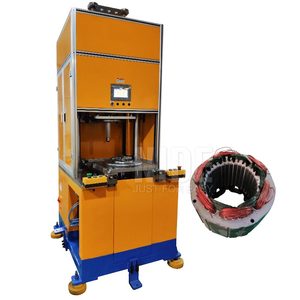
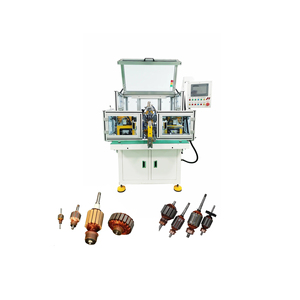
Industry Whitepaper: The Economics & Kinematics of Dual-Station Winding Systems
In the highly competitive global electric motor manufacturing landscape, achieving optimal copper slot fill factors while drastically reducing line cycle times (Takt time) represents the single greatest lever for manufacturing margin improvement. Modern Brushless Direct Current (BLDC), Permanent Magnet Synchronous Motors (PMSM), and automotive traction stators demand precise wire placement, uniform end-turn geometry, and high slot fill ratios (frequently exceeding 75%). Traditional single-station needle winders present an operational bottleneck: while the needle executes complex X-Y-Z-C multi-axis motion curves inside the stator bore, the operator or indexing arm must wait for completion before loading the next lamination stack.
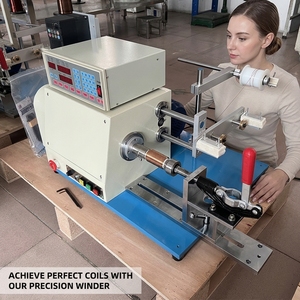
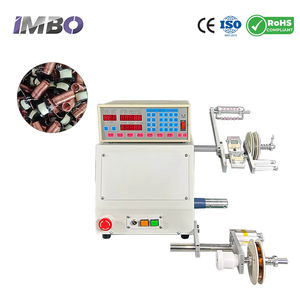
Dual-station automatic internal and external stator winding machines eliminate this zero-productivity dead-time through continuous parallel processing or rapid rotary index loading. By utilizing twin synchronized winding heads or a high-speed rotary indexing table with twin stations, dual-station architecture elevates unit-per-hour (UPH) throughput by 40% to 75% compared to single-station configurations, without scaling machine footprint proportionally.
Furthermore, dual-station winding technology bridges the gap between massive, capital-intensive multi-spindle rotary winders (which require lengthy tool changeovers) and flexible single-station units. For OEM/ODM manufacturers producing high-mix, medium-to-high volume motor lines for power tools, HVAC blowers, EV compressors, and drone propulsion, dual-station machines offer the ultimate sweet spot in total cost of ownership (TCO) and operational agility.
| Performance Metrics | Single-Station Needle Winder | Dual-Station Servo Winder (Cefnak Standard) | Multi-Spindle Rotary Lines |
|---|---|---|---|
| Throughput Capacity (UPH) | Base (30 - 50 pcs/hr) | High (75 - 120 pcs/hr) [+65%] | Ultra High (150 - 350 pcs/hr) |
| Copper Slot Fill Factor | 60% - 70% | Up to 78% (Closed-Loop Servo) | 65% - 72% |
| Tooling Changeover Time | 15 - 25 minutes | 10 - 20 minutes (Quick Clamp) | 2 - 4 hours |
| Floor Space Efficiency | Low ratio per unit output | Maximum Output per m² Footprint | Large dedicated line footprint |
| Capital Investment (CAPEX) | Low Initial Cost | Optimal ROI (10 - 14 months) | High Initial CAPEX |
| Wire Strain & Tension Precision | Passive Friction Tension (±8g) | Active Closed-Loop Servo (±2g) | Electronic Tension (±5g) |
Technological & Development Trends in Motor Winding
How Industry 4.0, Artificial Intelligence, and Advanced Material Engineering Are Shaping Next-Generation Stator Production
1. Closed-Loop Servo Direct-Drive & EtherCAT Motion Control
Legacy mechanical cam-driven winders are rapidly being superseded by multi-axis CNC systems driven by direct-drive linear motors and high-resolution optical encoders. EtherCAT communication protocols enable real-time sub-millisecond needle trajectory adjustments, minimizing wire friction against slot laminations and allowing complex 3D wire-laying algorithms for hairpin and needle winding alike.
2. Active Dynamic Tension Monitoring & Enamel Protection
As motor designs shift toward higher voltage architectures (such as 800V EV compressor drives and high-power UAV stators), micro-cracks in copper wire insulation can cause microscopic partial discharges and premature insulation breakdown. Future dual-station winders incorporate active feedback tensioners that dynamically reduce tension during high-speed needle turnarounds, keeping wire elongation well under critical thresholds.
3. AI-Assisted Machine Vision for In-Line Quality Inspection
Integrating high-speed industrial cameras and AI edge-computing vision algorithms directly onto the dual-station winding fixture allows 100% real-time checking of end-turn crossovers, slot insulation paper placement, and wire crossover errors. Defective coils are flagged instantly prior to the slot middle-forming and varnish impregnation stages, driving scrap rates down to near-zero levels.
4. Industry 4.0 Smart Connectivity & Predictive Maintenance
Modern global OEMs require complete traceability for every manufactured motor stator. Modern dual-station winders come equipped with OPC UA and MQTT industrial protocols, logging winding tension logs, cycle times, operator IDs, and thermal profiles per stator barcode. Predictive maintenance telemetry monitors spindle bearing vibration and servo thermal load to prevent unscheduled line shutdowns.
5. Quick-Change Modular Tooling for High-Mix Manufacturing
Flexible manufacturing lines require rapid changeovers between different stator stack heights and slot configurations. The industry trend emphasizes tool-less or single-screw quick-change needle nozzles, modular clamping plates, and software-driven recipe loading from a central touchscreen HMI, reducing line re-tooling time from hours to minutes.
6. Turnkey Automation Integration (Winding to EOL Test)
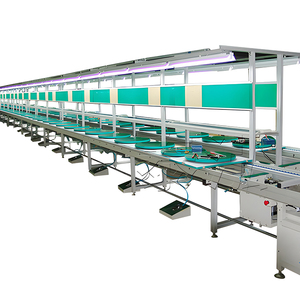
Sourcing standalone winding machines is increasingly replaced by purchasing fully integrated production modules. Dual-station winders are linked seamlessly with automatic paper insertion, wire stripping, lead wire soldering, middle forming, slot lacing, and 5-in-1 End-of-Line (EOL) testing systems (Hi-pot, Surge, Resistance, Inductance, Rotation direction).
Strategic Procurement & Future Sourcing Trends for Global OEM Buyers
Procuring capital equipment from Chinese machinery manufacturers has underwent a structural transformation over the past decade. International buyers from Europe, North America, Southeast Asia, and Latin America no longer evaluate suppliers solely on machine purchase price. Strategic procurement leaders emphasize verifiable engineering standards, transparent quality control infrastructures, and robust overseas technical commissioning capabilities.
Key procurement vectors currently dominating the industrial motor machinery sector include:
- Sample-Based Co-Engineering: Leading buyers demand that machinery suppliers build customized tooling and conduct extensive trial-winding runs using actual customer-supplied stator laminations and magnet wire prior to equipment sign-off and dispatch.
- Third-Party Verification & Auditing: Independent auditing by globally recognized inspection bodies (such as Intertek, TÜV Rheinland, or SGS) provides verified validation of manufacturing facilities, financial standing, R&D staffing, and export capability.
- Total Operating Lifecycle Cost (TCO): Sourcing decisions account for energy consumption (kWh per 1,000 wound stators), spare parts availability, wear-and-tear component longevity (such as tungsten carbide wire guide nozzles), and remote software diagnostic support.
- Modular Line Scalability: Global buyers favor buying base dual-station winding cells designed to accept future robotic arm loading, automated guided vehicle (AGV) integration, and downstream assembly modules when production volumes expand.
Why Partner with Ningbo Davri Automation Equipment Co., Ltd. (Cefnak)?
Situated in Ningbo, Zhejiang — China's premier motor manufacturing cluster — Ningbo Davri Automation Equipment Co., Ltd. brings over 11 years of specialized engineering authority to the global motor manufacturing industry. We design, manufacture, and export specialized stator winding machinery, turn-key automated production lines, custom UAV stators, and permanent magnet synchronous motors (PMSM).
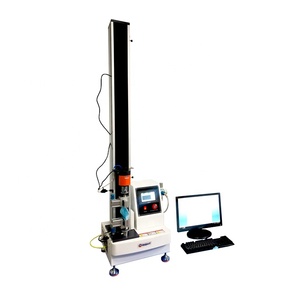
Unlike trading intermediaries, our factory integrates 16 in-house process steps ranging from high-speed precision stamping, stator lamination assembly, CNC winding, automated gluing, dynamic balancing, to burn-in aging and export packaging. Each dual-station winder is customized to your engineering drawing and validated on our 6 specialized testing instruments under strict QA/QC protocols supervised by certified senior engineers.
Frequently Asked Questions (FAQ)
Crucial Insights for Procurement Managers and Motor Engineering Teams
Accelerate Your Stator Production Line Efficiency Today
Send us your motor stator drawing or physical sample parameters. Our engineering director will supply a customized Dual-Station Winding Proposal, line layout, cycle time simulation, and factory-direct price quotation within 24 hours.
Inquire Now