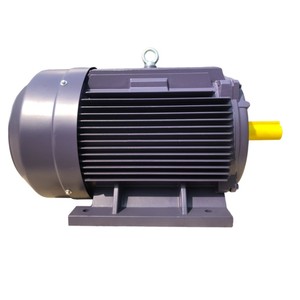
Product Catalog
Featured Motor Manufacturing Equipment & Production Lines
Explore our Intertek-verified winding machinery, automated assembly systems, and high-precision motor components optimized for global OEMs.
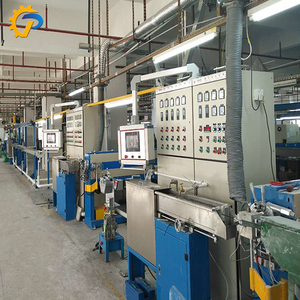
Chipeng Aerial Cable Aluminium Wire Electric Motor Automatic Making Machine Cable Extrusion Production Line
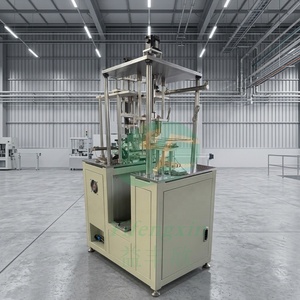
New Fully Automatic ISO Certified Production Line Assembly Machine Motor Customized Automatic Assembly Equipment for Easy
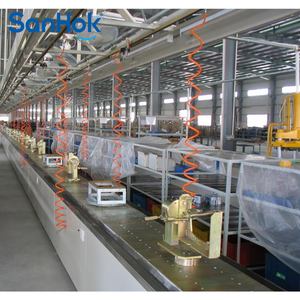
Car Motor Automatic Conveyor Electromobile Production Line Engine Assembly Line
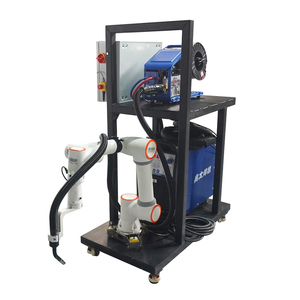
High Quality Electric Motor Arm Automated Production Line Suitable for Various Manufacturing Industries
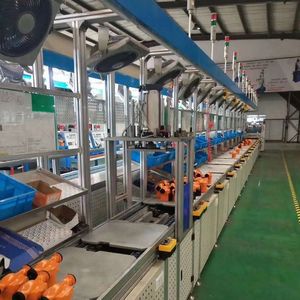
Automatic Machining Assembly Line with up and Down Cycle Comprising Core Components Bearing Motor Gearbox
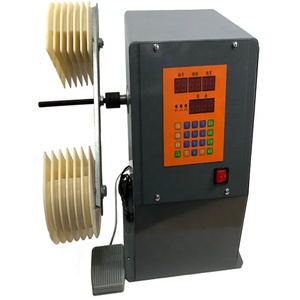
Hot Sale ZX-C75 Electric Motor Winding Machine Equipment
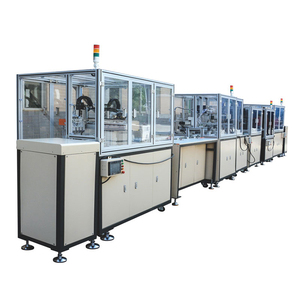
Huiyue Technology Non-standard Customized Fully Automatic Assembly Machine for Electrical Equipment Pump Motor Gear
Industry Whitepaper
Engineering Blueprint: External Stator Winding Technology in High-Efficiency Electric Motors
In the rapidly evolving landscape of global electromechanical manufacturing, the demand for high-torque, energy-efficient, and ultra-compact electric motors has driven a structural shift toward outer rotor Brushless DC (BLDC) motors and Permanent Magnet Synchronous Motors (PMSM). Central to the performance, thermal management, and power density of these motors is the manufacturing precision of the external stator coil winding system. As global original equipment manufacturers (OEMs) transition toward higher copper slot fill factors and fully automated manufacturing ecosystems, selecting the right China-based stator winding machine manufacturer has become a pivotal strategic decision.
External stator winding—where the magnetic poles and winding slots are located on the outer periphery of the lamination stack—presents distinct engineering challenges compared to internal stator geometry. It demands sub-millimeter needle motion accuracy, active tension hysteresis control, and dynamic wire layering to prevent crossover defects while maximizing electromagnetic coupling efficiency.
Key Engineering Metric: Modern external stator winding systems must achieve copper slot fill factors exceeding 75% while maintaining wire insulation integrity across needle acceleration dynamics reaching up to 12G. High-precision CNC needle winding technology guarantees uniform phase resistance, minimal cogging torque, and optimized thermal dissipation curves for heavy-duty industrial applications.
Multi-Axis Servo Synchronization
Utilizing closed-loop CNC architectures (Beckhoff/Mitsubishi), our external stator winding machines synchronize needle trajectory, rotational indexing, and wire tension in real time, delivering precise layer winding without wire overlap.
High Slot Fill Factor Optimization
Engineered specifically for thick wire diameter handling (up to 1.8mm single strand) and parallel multi-wire winding, achieving up to 78% slot fill efficiency for high-torque UAV, FPV drone, and EV compressor stators.
Sample-Based Tooling Customization
Every machine tool, nozzle clearance, and wire guide fixture is custom-designed using 3D CAD/CAM models based directly on your physical stator laminations and wire gauge specifications prior to factory acceptance testing (FAT).
Market Forecast 2025–2030
Future Procurement & Technology Development Trends in Stator Winding
Strategic analysis of global B2B procurement patterns, automation shifts, and engineering innovations shaping the motor production machinery sector.
1. Transition from Standalone Winders to Fully Integrated Turnkey Lines
Global procurement directors are rapidly moving away from sourcing standalone winding units. The modern manufacturing standard prioritizes fully automated, continuous production lines that integrate insulation paper insertion, multi-station needle winding, CNC wire stripping/hot staking, varnish impregnation, dynamic balancing, and automated End-of-Line (EOL) testing. Sourcing an integrated line from a single verified manufacturer eliminates interface protocol friction, reduces overall footprint, and optimizes overall equipment effectiveness (OEE).
2. Rise of High-Frequency Needle Winding for Micro-Mobility & UAV Motors
The explosive growth of civilian UAVs, FPV racing drones, electric scooters, and smart agricultural robotics has triggered unprecedented demand for multi-pole external rotor motors. These applications require high-speed needle winding machines capable of handling extreme slot density (e.g., 12S14P, 24S28P configurations) with needle stroke frequencies reaching up to 1500 cycles per minute while eliminating enamel scraping.
3. Smart Industrial Internet of Things (IIoT) & Traceability Protocol
Next-generation external stator winders exported from top Chinese hubs now incorporate OPC-UA communication protocols, real-time tension sensors, and vision inspection systems. Procurement specifications increasingly require real-time data logging for individual stators—recording exact wire tension curves, turn counts, and phase-to-phase resistance to satisfy Tier-1 automotive quality management standard ISO/IATF 16949.
4. Flex-Tooling & Rapid Changeover Engineering
As product lifecycles shorten, motor manufacturers can no longer afford 4-hour machine setup times. Sourcing trends favor multi-station winding machinery equipped with quick-change modular tooling fixtures and recipe-based CNC control panels, reducing stack height and wire gauge changeover duration to under 15 minutes.
| Winding Technology Type | Suitable Stator Geometry | Typical Slot Fill Factor | Max Winding Speed | Core Application Focus |
|---|---|---|---|---|
| Needle Type External Winder | External teeth / Outer rotor BLDC | 68% – 78% | 1,200 – 1,800 RPM | Drone outrunners, treadmill motors, HVAC blowers |
| Needle Type Internal Winder | Internal slots / Inner rotor BLDC | 60% – 72% | 800 – 1,400 RPM | EV compressors, power tools, automotive pumps |
| Flyer Armature Winder | Slotted armature with commutator | 50% – 65% | 2,000 – 3,000 RPM | Universal motors, starter motors, power tools |
| Linear Spindle Winder | Transformer coils & simple bobbins | 75% – 85% | 3,000 – 6,000 RPM | Solenoids, ignition coils, simple bobbins |
Factory & Production Competence
Why Source from Ningbo Davri Automation (Cefnak)?
Headquartered in Ningbo, Zhejiang—China’s premier industrial automation cluster—we combine 11+ years of motor engineering experience with verified third-party quality credentials.
11+
Years Industry Expertise
5+
Senior R&D Engineers
6+
Quality Control Instruments
16
In-House Quality Steps
Intertek On-Site Verified Supplier Credentials
Unlike trading intermediaries, Ningbo Davri Automation Equipment Co., Ltd. (Cefnak) is an independently audited manufacturer. Our manufacturing facilities, metal stamping equipment, assembly lines, and QC testing laboratories undergo rigorous on-site verification by Intertek. We maintain end-to-end control over metal stamping, lamination stacking, precision machining, software calibration, and export packaging.
End-to-End Quality Assurance & Testing Protocol
Every external stator winding machine undergoes strict pre-shipment validation in our Ningbo testing facility using our 6 specialized QA instruments:
01
Lamination Stamping
High-speed gantry punching presses guarantee sub-micron slot tolerances.
02
Stator Core Assembly
Automated stacking, cleating, and insulating sleeve fitting.
03
CNC Needle Winding
Precision wire laying with digital tension measurement control.
04
Commutator / Lead Welding
CNC hot staking and micro-soldering with microscope verification.
05
Resin Impregnation
Automated stator glue application and thermal curing cycle.
06
Dynamic Balancing
High-speed balance testing machines to eliminate rotational vibration.
07
Hi-Pot & Electrical Testing
Surge, withstand voltage, and multi-channel temperature rise verification.
08
Seaworthy Export Packing
Vacuum foil sealing and heavy-duty fumigated wooden crate packing.
Sourcing Guidance
Frequently Asked Questions for Machinery Sourcing
Clear, technical answers to common questions raised by global procurement officers and automation engineers.
Q1: What is the primary difference between internal and external stator winding machines?
External stator winders direct wire onto teeth protruding outward from the center hub (common in outer-rotor BLDC drone motors and treadmill drives). Internal winders position the needle inside a central bore to wind slots facing inward. Tooling kinematics, needle clearance angles, and tension dynamics differ significantly between the two setups.
Q2: Can machines be customized according to physical stator samples or CAD drawings?
Yes. Sample-based customization is our verified core strength. Buyers provide 3D CAD files (.STEP/.IGES) or physical samples. Our engineering team designs custom needle nozzles, wire guides, indexing chucks, and winding programs tailored precisely to your slot dimensions and wire gauge.
Q3: What information is required to receive an accurate technical quotation?
To provide a precise machine configuration, we require four parameters: 1) Stator outer/inner diameter and stack height, 2) Slot count and teeth geometry, 3) Enamelled wire diameter and turns per coil, and 4) Target Units Per Hour (UPH) or takt time requirement.
Q4: How do you prevent enamel wire insulation damage during high-speed winding?
We utilize polished tungsten carbide wire nozzles, ceramic guide pulleys, and closed-loop active magnetic tensioners. The needle motion trajectory is programmed with smooth acceleration curves (S-curve profile) to prevent wire drag against lamination edges.
Q5: What after-sales installation and commissioning support is provided overseas?
We offer both remote video commissioning and on-site engineering dispatch. Our certified field engineers travel directly to overseas manufacturing facilities to perform machine installation, line integration, operator training, and final process tuning.
Q6: What are the standard Minimum Order Quantity (MOQ) and production lead times?
For standalone winding machines and turnkey production lines, the MOQ is 1 set with a typical manufacturing lead time of 30 to 45 days. For finished OEM UAV stators, the MOQ starts at 500 pieces, and complete PMSM motors start at 10 units.
Q7: How is factory acceptance testing (FAT) conducted for international clients?
Before shipment, we conduct live trial runs using customer-supplied stators and wire. We provide full-definition video documentation, tension inspection logs, phase resistance measurements, and dimensional reports for client sign-off prior to balance payment.
Q8: Are your machines compliant with international electrical and safety standards?
Yes. All Cefnak machinery is designed and built to meet CE directives and ISO 9001 standards. High-voltage electrical cabinets, safety light curtains, and emergency stop systems comply with international industrial automation standards.
Optimize Your Stator Winding & Motor Assembly Line Today
Partner with China's leading external stator winding machine manufacturer. Send us your motor drawings or physical samples to receive a custom engineering proposal within 24 hours.