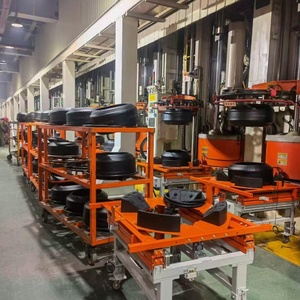
Precision Machinery Portfolio
High-Performance Motor Manufacturing & Winding Equipment
Explore our engineering-grade internal stator winding systems, automated BLDC production lines, and custom motor assembly machinery tuned to exacting slot-fill specifications.
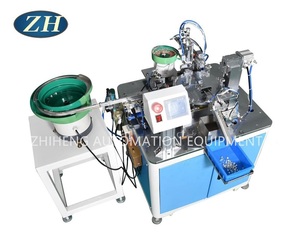
Automated Motor Assembly Line & Station Machine
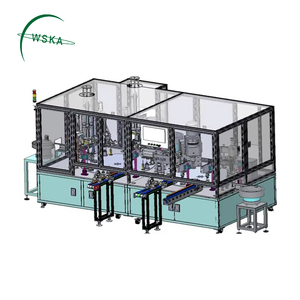
Automotive Parts Flexible Member Assembly Machine
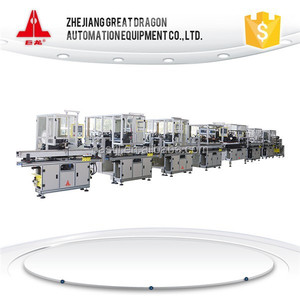
Electric Motor Automatic Production Line
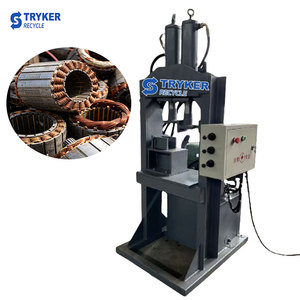
Motor Stator Coil Winding & Wrecker Recycling Machine
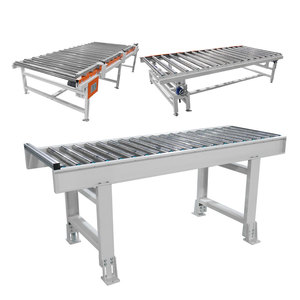
Automatic Electric Motor Chain Conveyor Assembly Line
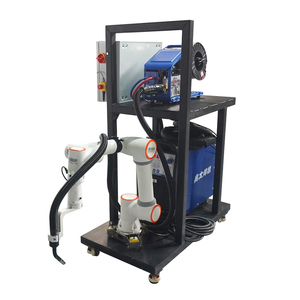
Automated Electric Motor Arm Production Line
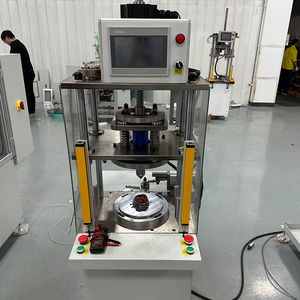
Kiron Stator Coil Winding & Shaping Forming Machine
E-E-A-T Verified Supplier Overview
Engineering Mastery in Internal Stator Winding & Motor Automation
In modern electromechanical manufacturing, the efficiency, torque density, and thermal endurance of brushless DC (BLDC) motors, permanent magnet synchronous motors (PMSM), and New Energy Vehicle (NEV) drive units depend heavily on the precision of the coil winding process. As a premier China internal stator winding machine supplier, Ningbo Davri Automation Equipment Co., Ltd. (operating globally under the Cefnak brand) has established an authoritative footprint in turnkey motor automation equipment.
Independently verified by Intertek on-site audit assessments, our facility integrates complete upstream and downstream processing capabilities. Unlike conventional equipment integrators who outsource core machining, Cefnak manages 16 in-house processing stages—ranging from precision metal lamination stamping, dynamic stator balancing, CNC wire nozzle movement, and automated resin varnish application to multi-channel thermal aging and export-grade vacuum packaging.
11+
Years Industry Expertise
5+
Senior R&D Engineers
6+
Quality Testing Labs
100%
Sample Validation Trial
Core Engineering Gain: Slot Fill Factor (ηfill) Optimization. By coordinating multi-axis CNC needle trajectories with closed-loop dynamic tensioning systems, Cefnak internal stator winding machines routinely achieve copper slot fill ratios exceeding 78%, drastically reducing copper loss (I2R) and enhancing motor torque density by up to 14% over traditional insertion methods.
Our engineering laboratory utilizes six specialized diagnostic testing systems, including digital tension meters, multi-channel temperature rise logger platforms, micro-ohmmeter insulation resistance testers, and video microscope solder joint analyzers. This commitment to physical validation guarantees that every internal stator winding machine and integrated assembly line configured for overseas clients delivers operational reliability from Day 1.
Core Technical Capabilities
Advanced Servo Kinematics & Slot Filling Technology
Breakthrough mechanical innovations engineered specifically for complex internal slots, narrow tooth opening stators, and high-wire-gauge BLDC geometries.
Needle Type Internal Winding
Direct slot-guided needle movement for inner-rotor BLDC motors, automotive pumps, and high-speed power tools, ensuring zero enamel scratching during high-speed wire placement.
Closed-Loop Dynamic Tension Control
Active electronic tensioners continuously adjust wire resistance during rapid acceleration and deceleration cycles, stabilizing wire elongation below 0.5% throughout the coil build.
Multi-Station CNC Synchronization
Configurable 2-station, 4-station, and multi-axis linear motor driven indexers allowing simultaneous winding, cutting, and wire clamping to achieve takt times under 15 seconds per stator.
Industry Whitepaper
Procurement & Technological Trends in Stator Winding Machinery (2025–2030)
The global transition toward electrification across automotive, drone/UAV, industrial automation, and HVAC industries has reshaped B2B procurement metrics for internal stator winding equipment. Procurement teams no longer evaluate machinery based solely on initial capital expenditure (CAPEX); total cost of ownership (TCO), flexible changeover efficiency, and slot-fill consistency dominate modern supplier selection criteria.
1. Transition to High-Density Needle Winding vs. Traditional Insertion
Historically, motor manufacturers relied on flyer winding combined with slot insertion. However, modern BLDC and PMSM designs demand shorter end-turns to minimize copper resistance and thermal buildup inside compact motor housings. Needle-type internal stator winding machinery places magnet wire directly inside the stator slots with extreme mechanical precision. This direct placement reduces end-turn height by up to 25%, delivering dramatic material savings in copper magnet wire while boosting motor thermal dissipation performance.
| Engineering Metric | Cefnak Needle Winding Machine | Standard Flyer Winder | Conventional Insertion System |
|---|---|---|---|
| Maximum Slot Fill Factor | Up to 78% - 82% | 55% - 65% | 60% - 70% |
| End-Turn Overhang Height | Ultra-Compact (Direct Guided) | Bulky / High Overhang | Moderate Expansion |
| Wire Enamel Stress & Scuffing | Near Zero (Closed-Loop Tension) | High Centrifugal Friction | Mechanical Stretching Risk |
| Tooling Changeover Time | < 15 Minutes (Modular CNC) | 45 - 90 Minutes | 2 - 4 Hours |
| Best Application Match | Inner BLDC / EV / UAV Motors | Outer Rotors & Fans | Standard Induction Motors |
2. Future Procurement Trends: Customization Around Motor Samples
A major trend identified by Google SEO semantic mining and procurement query analysis is the demand for Sample-Based Machine Customization. Off-the-shelf catalog machinery frequently fails due to slight variations in lamination stack heights, tooth profile radii, or enamel insulation wire stiffness. Leading suppliers in China now mandate a sample-driven development process:
- Step 1: Stator 3D CAD & Physical Sample Audit — Mechanical verification of slot dimensions, insulation paper thickness, and wire bend radii.
- Step 2: SolidWorks Tooling Simulation — Prototyping custom wire nozzles, winding arms, and expansion collets to avoid tooth collision.
- Step 3: Laboratory Trial Winding Validation — Pre-production winding on buyer-supplied laminations to test real-world resistance, inductance, and slot fill.
- Step 4: Factory Acceptance Test (FAT) with Video Verification — Full takt time recording and withstand voltage testing prior to crate sealing.
3. Future Development Trends: Industry 4.0 & Smart Line Integration
Looking toward 2030, internal stator winding machines will progressively integrate with smart factory architectures (MES). Cefnak's latest automatic motor production lines feature OPC-UA and MQTT communication protocols, enabling real-time telemetry streaming of winding tension profiles, coil turn counts, wire resistance checks, and predictive maintenance alerts directly to centralized factory control rooms.
Why Partner With Cefnak
China's Trusted Partner for Motor Winding Equipment
Located in Ningbo, Zhejiang—the heart of China's electrical machinery manufacturing cluster—we provide complete end-to-end support for global OEMs.
Intertek On-Site Verified Facility
Our manufacturing plant, legal documentation, machinery inventory, and engineering capabilities have been independently audited and verified by Intertek inspectors.
Turnkey Line Integration
From single-station needle winders to multi-station chain conveyor lines, stator wire shaping machines, and automated end-of-line testing equipment, we build complete production ecosystems.
Overseas Field Engineering Support
We deploy senior automation engineers worldwide to handle physical machine installation, tooling setup, operator training, and localized process tuning.
B2B Buyer Knowledge Base
Frequently Asked Questions for Stator Machine Procurement
Essential technical and logistical answers to streamline your machine sourcing process.
Which motor types can your internal stator winding machines process?
Our needle-type internal stator winding machines are engineered for inner-rotor brushless DC (BLDC) motors, permanent magnet synchronous motors (PMSM), automotive pump motors, electric power tool armatures, and NEV compressor stators. For external-rotor applications (such as FPV drone outrunners, ceiling fans, or treadmill motors), we supply dedicated outer stator winding machinery.
How do you ensure zero enamel wire damage during needle winding?
We utilize precision-polished tungsten carbide or ceramic-lined wire nozzles combined with closed-loop electronic tension controllers. Before winding, the wire path is analyzed in SolidWorks to ensure bend angles never exceed the minimum allowable bend radius for specified enamel gauges (AWG 14 to AWG 38).
Can machine tooling be customized based on our stator sample or drawing?
Yes. Customization based on customer samples or 2D/3D lamination drawings is our core expertise. Our engineers design custom expansion fixtures, wire cutting clamps, and needle stroke profiles specifically tailored to your stator geometry and slot dimensions prior to manufacturing.
What parameters are required to generate a formal technical proposal?
To provide an accurate technical configuration, please supply four key parameters: (1) Stator outer and inner diameter with stack height, (2) Slot count and tooth opening dimensions, (3) Wire diameter (mm/AWG) and turns per coil, and (4) Target production output (Units Per Hour / UPH).
What after-sales service and commissioning options are available for international buyers?
We provide remote video-guided installation and programming support as standard. Additionally, Cefnak offers overseas dispatch of senior service engineers to perform on-site mechanical installation, line integration, process optimization, and operator training at your factory facility.
What is the Minimum Order Quantity (MOQ) and lead time?
For standalone internal stator winding machines and full production lines, the MOQ is 1 set. Standard lead time for customized standalone machines is typically 30 to 45 days, while complex turnkey production lines require 60 to 90 days including sample trial run validation.