Industrial Automatic Motor Assembly Lines & Specialized Machinery
Engineered for precision slot fill, high-speed needle winding, robotic soldering, and automated end-of-line quality verification.
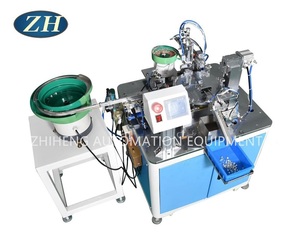
Assembly Line / assembly Machine
View Specifications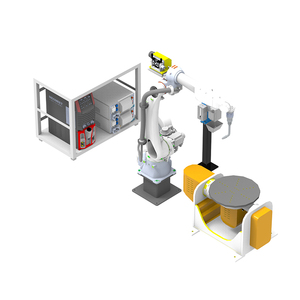
EFORT Automotive Assembly Line Welding Robot IP65 380V
View Specifications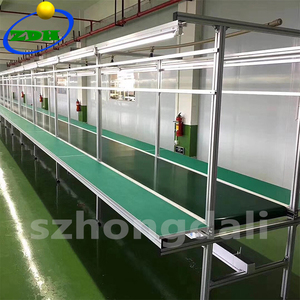
Assembly Line Machine with Belt Conveyors
View Specifications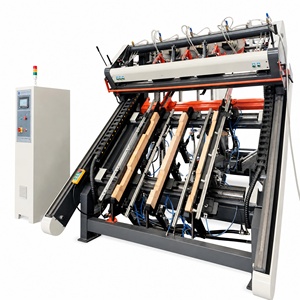
Invech High Capacity Automatic Stringer Nailing Assembly Line
View Specifications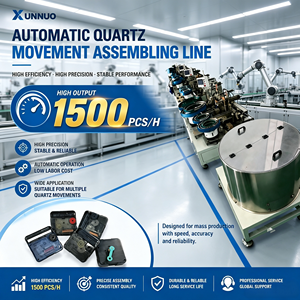
Customized PLC Controlled Automatic Precision Movement Line
View Specifications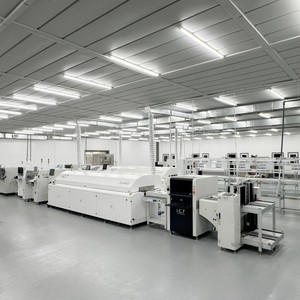
Full Automatic SMT AI Production Line for Motor PCB Integration
View Specifications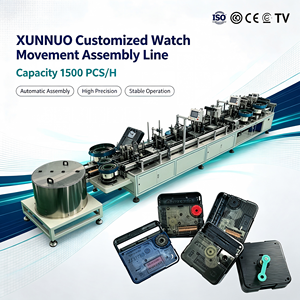
XUNNUO Customized Movement Assembly Line 3000W PLC Motor
View Specifications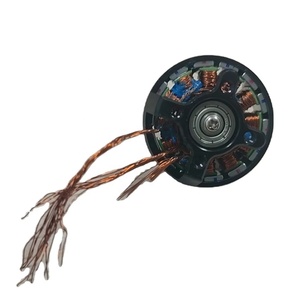
YFX Automated BLDC Motor Stator Winding & Paper Insertion Line
View SpecificationsThe Structural Paradigm Shift in Global Motor Assembly Automation
An engineering analysis of high-density BLDC winding, permanent magnet motor integration, and zero-defect quality control architectures for modern procurement directors.
High Slot Fill Efficiency
Modern electric drives demand copper space factors exceeding 78%. Needle-type servo winders achieve tight layer placement without scuffing wire enamel, maximizing magnetic flux performance across BLDC and PMSM stators.
Takt Time Reduction
Integrating multi-station rotary indexing tables with automated paper insulation slot insertion cuts unit cycle times to under 12 seconds per stator, accelerating high-volume vehicle and pump production lines.
End-of-Line Verification
Closed-loop Quality Assurance (QA) units carry out high-potential voltage surge testing, dynamic resistance checks, phase rotation validation, and vibration spectral analysis prior to final robotic palletizing.
Procurement Insight: Information Gain & Yield Optimization
Transitioning from semi-automated coil winding to a fully automated motor assembly line reduces direct labor expenditure by 74% while compressing product defect rates from ~2.8% down to less than 15 PPM (Parts Per Million). By embedding inline optical inspection (AOI) and servo tension monitoring, global OEMs lock in consistent electromagnetic performance across high-volume production batches.
Ningbo Davri Automation Equipment (Cefnak): Certified Engineering Rigor
Combining over 11 years of motor manufacturing expertise with Intertek-verified facility operations to deliver sample-customized automation solutions across North America, Europe, and Asia.
Sample-Based Tooling Customization
Unlike off-the-shelf equipment traders, Cefnak engineers custom winding fixtures, needle stroke profiles, and modular clamping nests tailored strictly to your motor drawing or physical stator sample. We conduct live trial winding runs in our Ningbo testing facility prior to final equipment dispatch, ensuring immediate plug-and-play commissioning on customer plant floors.
Intertek On-Site Verification & QC Integrity
As an Intertek-verified manufacturer, our operational infrastructure spans full lamination stamping, dynamic rotor balancing, high-precision commutator hot staking, aging test chambers, and export packaging. International buyers benefit from full supply chain transparency, backed by remote live-video factory acceptance testing (FAT) or on-site commissioning support.
Inside Our Precision Manufacturing Workshop


Future Trends in Automatic Motor Production & Line Investment Matrix
Evaluating the shift toward Industry 4.0 IoT connectivity, flexible modular changeovers, and lifetime operational cost efficiency.
| Assembly Line Architecture | Target Motor Applications | Automation Grade | Typical Takt Time | TCO & Payback Period |
|---|---|---|---|---|
| Multi-Station Needle Winding Line | Inner-Rotor BLDC, Power Tools, Automotive Pumps | Fully Automated (PLC Servo) | 10 – 15 Sec / Stator | High Initial ROI; 8–12 Month Payback |
| Outer Stator Fly Winding System | Drone/FPV Outrunners, Treadmill Motors, Cooling Fans | Semi to Fully Automated | 12 – 18 Sec / Stator | Low Tooling Wear; 6–10 Month Payback |
| Armature Coil & Commutator Line | Universal Brushed Motors, Vacuum Cleaners | Integrated CNC Hot Staking | 8 – 12 Sec / Armature | Proven Longevity; 9–14 Month Payback |
| EV Compressor Turnkey Line | Commercial Vehicle HVAC, Automotive Traction | Robotic Cell + EOL Testing | 25 – 40 Sec / System | Industrial Grade; 14–18 Month Payback |
IoT Closed-Loop Data Traceability
2025+ motor assembly specifications mandate full MES (Manufacturing Execution System) integration. Modern lines record real-time wire tension, welding temperature curves, and surge test spectra tied directly to individual motor serial numbers via laser QR marking.
Modular Quick-Changeover Tooling
To support high-mix low-volume (HMLV) drone and industrial motor production, assembly line architectures utilize magnetic quick-change winding nozzles, toolless nesting blocks, and recipe-driven servo height adjustments that cut job changeovers from 4 hours down to under 15 minutes.
Frequently Asked Questions for Wholesale Motor Line Procurement
Direct answers to crucial technical, logistical, and warranty inquiries encountered during OEM supplier evaluation.
What core parameters must be supplied to size an automatic stator winding machine?
Can Cefnak build fully turnkey lines integrating winding, soldering, assembly, and testing?
How is equipment quality validated before overseas shipping?
What is the typical lead time and minimum order quantity (MOQ)?
What technical support and after-sales services are provided for global buyers?
How do needle-type winders compare with external fly-winding systems?
Ready to Optimize Your Motor Manufacturing Yield?
Send us your motor lamination drawing, physical sample, or target takt time. Our engineering team will formulate a full technical proposal and machinery quotation within 24 hours.