Featured BLDC & Motor Production Machinery
Explore our flagship automated winding systems, assembly lines, and precision motor components engineered for global OEMs and tier-1 electrical equipment suppliers.
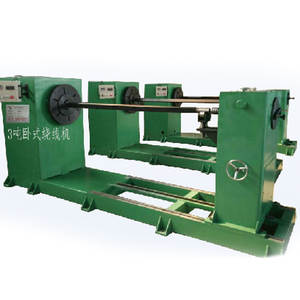
LEADWIN High Capacity Automatic Toroidal Low Voltage Motor & Engine Winding Machine
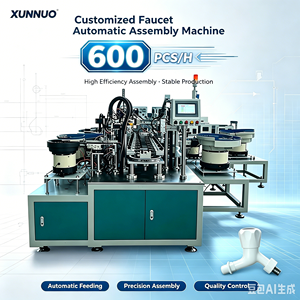
XUNNUO Automatic PLC Motor Engine Faucet Assembly Line 5000W with 1 Year Warranty
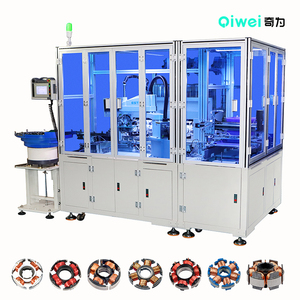
CNC Fully Automatic Production Line for Motor Stator Winding Machine with Gear Components
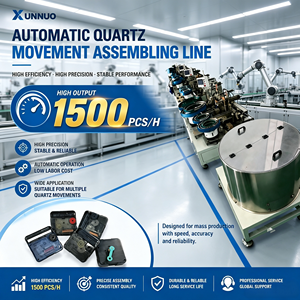
Customized PLC Controlled Automatic Watch Movement Assembly Line Motor Engine
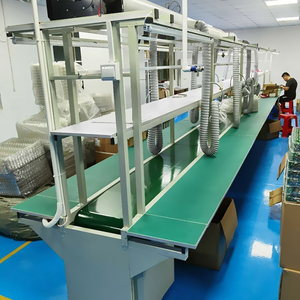
High Speed Adjustable Electric Motor Conveyor Belt Assembly Line for Electrical Workshop
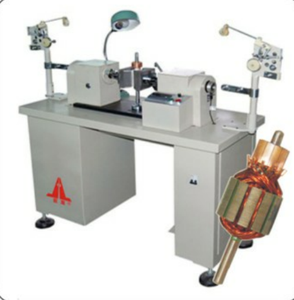
ZB-2GB Model Semi-automatic Rotor Wire Winding Machine Armature Winding Machine
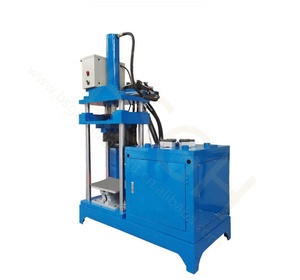
Electric Motor Stator Coil Winding Final Forming Machine for Copper/Aluminum Wire
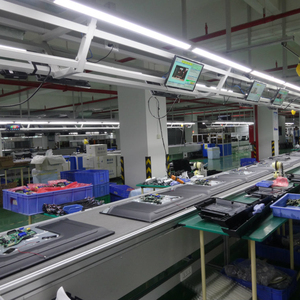
Customized Automatic TV and Mobile Phone Production Assembly Line 380V 400kg
Engineering Complete BLDC Motor Manufacturing Lines
Modern Brushless DC (BLDC) and Permanent Magnet Synchronous Motors (PMSM) require extreme precision across electromagnetic winding, mechanical assembly, and end-of-line quality validation.
1. Stator Core Stamping & Insulation
The production chain begins with high-precision silicon steel lamination stacks. High-speed gantry punching presses handle metal stamping, followed by automated slot cell paper insertion or electrostatic epoxy powder coating to ensure thermal Class H/N dielectric insulation.
2. CNC Needle Type Winding
Utilizing multi-axis servo control, needle winding heads deposit copper magnet wire directly into internal stator slots with minimal tension variance. This process achieves high copper slot fill factors (up to 78%) while maintaining exact turn counts and preventing wire crossover enamel damage.
3. Lead Termination & Hot Staking
Automatic lead wire routing, fusing, and CNC hot staking link coil ends to commutators or PCB lead frames. Closed-loop temperature monitoring guarantees cold-weld-free metallurgical joints capable of handling high continuous surge currents.
4. Varnish Impregnation & Curing
To safeguard stators against moisture, thermal shock, and vibration, complete lines integrate automatic trickling, dip-tinning, or vacuum pressure impregnation (VPI) units combined with energy-efficient induction drying tunnels.
5. Precision Rotor Assembly
Automated rare-earth permanent magnet insertion modules position Neodymium (NdFeB) blocks with exact polar orientation. Dynamic balancing machinery corrects residual unbalance down to G1.0 quality grades, mitigating acoustic noise and bearing wear.
6. End-of-Line (EOL) Testing & MES
Every line features integrated EOL testing stations measuring surge insulation resistance, Hi-Pot voltage breakdown, phase resistance, back-EMF, and hall-sensor alignment, logging trace data directly to Manufacturing Execution Systems (MES).
Winding Process Comparison Matrix
Selecting the optimal winding methodology depends heavily on your motor topology, slot geometry, and volume targets:
| Winding Technology | Target Motor Topology | Max Copper Fill Factor | Takt Time Efficiency | Primary Industrial Applications |
|---|---|---|---|---|
| CNC Needle Winding | Internal-Rotor BLDC / PMSM | 68% - 78% | High (Multi-station multi-needle) | EV Air Compressors, Power Tools, Automotive Pumps |
| Outer Stator Winding | External-Rotor BLDC (Outrunner) | 60% - 72% | Very High (Flyer / Needle combination) | UAV / FPV Drone Motors, Ceiling Fans, Treadmills |
| Toroidal Winding | Closed-Loop Ring Cores / Low Volt | 55% - 65% | Medium (Specialized shuttle head) | Toroidal Power Inductors, Low-Voltage Heavy Engines |
| Armature Flyer Winding | Slotted Brushed DC / Universal | 50% - 65% | Extremely High (Dual flyer arms) | Home Appliance Motors, Automotive Starters |
Future Procurement Trends in BLDC Line Automation
Global sourcing managers and manufacturing executives must align equipment procurement strategies with emerging industry shifts over the next 5 to 10 years.
1. Hairpin & High Slot-Fill Adoption
While traditional round-wire needle winding remains dominant for low-to-medium power motors, high-power traction motors (EVs, heavy logistics forklifts) are shifting rapidly toward flat-wire Hairpin technology. Procurement pipelines are prioritizing suppliers offering combined round-wire and hairpin tooling engineering flexibility.
2. Smart Factory & IoT Connectivity
Procurement requirements now standardly demand OPC-UA protocols, real-time wire tension logging, predictive spindle maintenance alerts, and seamless cloud integration. Equipment must support full serial-number-level traceability for tier-1 automotive supply audits.
3. Modular & Flexible Takt Architecture
With product lifecycles shortening, fixed-geometry production lines risk fast obsolescence. Forward-thinking buyers insist on modular cell layouts with quick-change pallet conveyors, adjustable stack-height tooling, and software-reconfigurable winding trajectories.
Key Technological Development Trends of BLDC Lines
How manufacturing line suppliers are innovating to address higher power density, lower thermal losses, and ultra-quiet motor acoustic profiles.
- Closed-Loop Active Wire Tension Control: Replacing manual mechanical tensioners with active servo-driven tension regulators that adjust force dynamically during high-speed acceleration/deceleration phases, eliminating wire elongation and micro-cracks in insulation enamel.
- Vision-Guided Robotic Tooling Placement: High-resolution industrial cameras locate slot openings and commutator hook orientations in real time, automatically compensating for mechanical core stamping tolerances prior to winding nozzle entry.
- Zero-Emission Impregnation Systems: Transitioning away from traditional solvent varnish dip tanks toward fast UV-curing resin trickling systems that reduce thermal curing times from hours to minutes while reducing volatile organic compound (VOC) emissions to zero.
Why Partner with Ningbo Davri Automation (Cefnak)
Backed by 11+ years of dedicated motor automation experience in Ningbo, China, we deliver end-to-end engineering excellence from initial physical motor sample validation to complete turnkey factory commissioning.
Our 8-Stage In-House Quality & Manufacturing Workflow
BLDC Line Procurement FAQ
Expert technical answers to common questions raised by factory managers, industrial engineers, and global procurement buyers.
Accelerate Your BLDC Manufacturing Capacity Today
Connect directly with our senior motor automation engineers in Ningbo, China. Request a customized technical proposal, line layout design, or trial winding evaluation tailored to your motor specifications.