High-Performance Motor Coil Winding Equipment Catalog
Precision-engineered automated winding machinery custom-built for BLDC stators, electric vehicle traction armatures, drone motors, and industrial transformers.
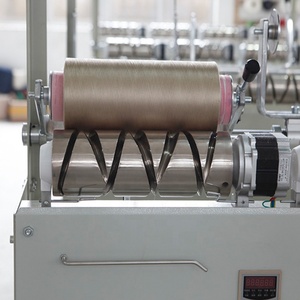
Grooved Drum Motor Winding Machine
Customized high-efficiency grooved drum winder designed for cost-effective wire guiding and low-maintenance continuous coil production.
View Product Details →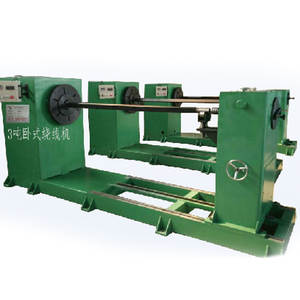
LEADWIN High Capacity Automatic Toroidal Motor Winder
High-capacity toroidal winder for low voltage motors & engines featuring heavy-duty core rotation and minimal servicing downtime.
View Product Details →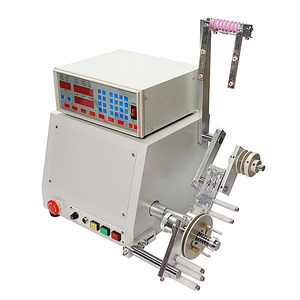
LY 810 Brushless DC Motor Electric Automatic Winder
400W dual-voltage (220V/110V) electric coil winder equipped with high-torque brushless DC motor drive for precise speed dynamics.
View Product Details →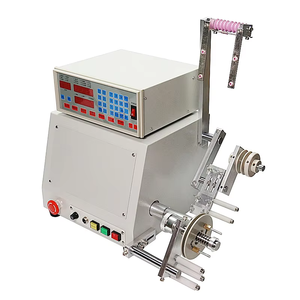
LY 810 CNC Copper Wire Voice Coil & Motor Winder
CNC keyboard-controlled fine copper wire winder specialized for acoustic voice coils, micro-motors, and high-density electronic inductors.
View Product Details →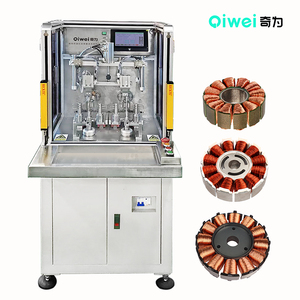
Automatic BLDC Ceiling Fan Stator Coil Winder
Multi-station automated needle winding machine optimized for BLDC ceiling fan stators, outer-rotor armatures, and toroidal cores.
View Product Details →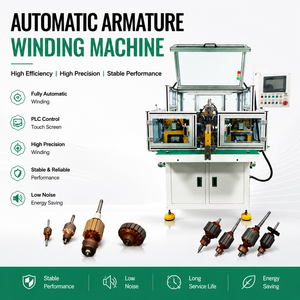
Fully Automatic Rotor & Armature Winder RIMY-01A
Industrial-grade automatic armature coil winder for slotted motor armatures, featuring automatic wire hooking, winding, and indexing.
View Product Details →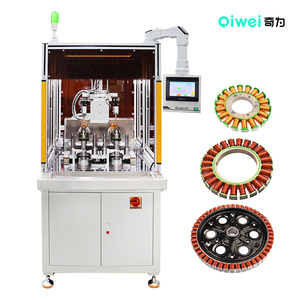
Automatic CNC BLDC Drone Motor Stator Winder
PLC-controlled high-precision needle winder designed for UAV/FPV drone brushless outrunner motors, supporting ultra-fine copper wire alignment.
View Product Details →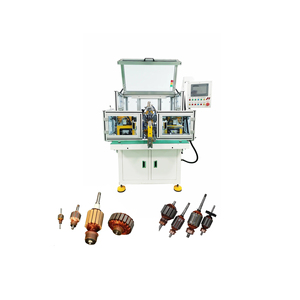
High-Efficiency Electric Motor Rotor Winding Machine
Heavy-duty automatic rotor coil winder tailored for universal electric tool motors, automotive starters, and high-speed armatures.
View Product Details →Ningbo Davri Automation Equipment Co., Ltd. (Cefnak)
Headquartered in Ningbo, Zhejiang — China's premier electrical machine manufacturing hub — Ningbo Davri Automation Equipment Co., Ltd. (Cefnak) represents over 11 years of engineering leadership in stator winding machinery, rotor manufacturing equipment, and fully integrated BLDC motor production lines. As an Intertek On-Site Verified Supplier, Cefnak bridges the gap between hardware engineering, precision tool design, and end-of-line quality validation.
Unlike standard machinery brokers, our multi-disciplinary engineering team operates on a sample-driven customization model. Whether manufacturing high-slot-fill needle winders for electric vehicle (EV) thermal management compressors or automated production lines for high-KV FPV drone motors, our machinery is custom-machined, programmed, and calibrated against physical customer stators.
Engineering White Paper: Motor Winding Kinematics & Slot-Fill Factor Optimization
Modern electric motor manufacturing demands maximum power density, minimized thermal resistance, and high electrical efficiency. Achieving these metrics relies directly on the copper slot-fill factor (η), defined mathematically as:
Where N is the number of turns per coil, d is the bare conductor diameter, and Aslot_bare is the uninsulated lamination slot area. Higher slot fill factors (>75%) reduce copper losses (I2R) but introduce physical winding challenges, including enamel wire scraping, turn crossing, and insulation breakdown. Chinese wholesale manufacturers have evolved sophisticated machinery classifications to solve these kinematic constraints.
| Winding Technology Type | Kinematic Mechanism | Max Slot Fill Factor (η) | Optimal Motor Applications | Key Engineering Advantage |
|---|---|---|---|---|
| Needle Type Internal Winding | Multi-axis servo needle moves axially & rotationally inside internal slots | 72% – 78% | Inner-rotor BLDC, EV pumps, power tools, HVAC blowers | Zero wire twisting; high precision tensioning per turn |
| Outer Stator Fly-Winding | High-speed flyer arm rotates around external stator teeth | 65% – 72% | Drone/UAV outrunners, ceiling fans, treadmill motors | Ultra-high RPM cycle speed; simplified tooling changeover |
| Toroidal Core Winding | Shuttle ring passes copper wire through closed annular cores | 80% – 88% | Low-frequency inductors, toroidal transformers, specialized BLDC | Uniform flux distribution; minimal magnetic leakage |
| Multi-Spindle CNC Flyer | Synchronized multi-head spindles wrap wire onto bobbinless coils | 60% – 70% | Voice coils, solenoids, small transformer assemblies | Mass manufacturing throughput; low cost per unit |
Future Global Sourcing & Technical Procurement Trends
Strategic insights for procurement directors, plant managers, and industrial buyers sourcing motor production lines from OEM manufacturers in China.
Shift Toward Turnkey Modular Automation
Global buyers are abandoning standalone winding machines in favor of modular turnkey lines. Integrating slot paper insertion, needle winding, wire stripping, lead soldering, electrical hi-pot testing, and varnish dipping into a single continuous cell eliminates intermediate WIP buffer stock and lowers labor expenditure by up to 65%.
Hairpin & Flat Wire Coil Adoption
Driven by the rapid growth of Electric Vehicles (EVs) and industrial electric forklifts, flat wire hairpin winding equipment is replacing round wire in high-power PMSM motors. Flat copper wire elevates slot fill factors beyond 82%, dramatically boosting thermal conductivity and motor torque density.
Total Cost of Ownership (TCO) Prioritization
Leading buyers look beyond initial FOB equipment costs, evaluating overall life-cycle expenditure. Key procurement metrics now focus on servo tensioner wear rates, nozzle replacement costs, spare part interchangeability (e.g., standardizing on Siemens PLCs and SMC pneumatics), and kWh consumed per 1,000 wound stators.
Next-Generation Manufacturing & Technological Trends in Motor Coil Winding
As electric motor topologies evolve toward ultra-high speed and compact footprints (such as 100,000+ RPM UAV motors and 96V PMSM traction motors), motor coil winding machinery is undergoing a technological transformation driven by four core developments:
1. AI Closed-Loop Tension Feedback
Traditional mechanical friction tensioners are being replaced by closed-loop magnetic hysteresis tensioners with real-time digital strain gauge monitoring. Any micro-fluctuation in copper wire tension is compensated within milliseconds by servo torque control, preventing micro-fractures in dielectric wire varnish.
2. Multi-Tooth Simultaneous Winding
To achieve maximum units-per-hour (UPH) targets, modern needle winders use multi-needle gantry kinematics that wind 4, 6, or 8 stator teeth simultaneously. High-resolution absolute optical encoders ensure multi-axis sync accuracy within 0.005 degrees.
3. Green Recycling & Scrap Reduction
With copper material costs remaining volatile, new generation automatic scrap-reclaiming winders feature automatic lead-wire trimming and coil recovery algorithms, reducing raw copper waste during initial setup and batch changeover to under 0.1%.
Frequently Asked Questions for Global Equipment Buyers
Direct technical answers to common questions asked by international OEMs, procurement engineers, and factory managers when sourcing Chinese winding machines.
How do I determine whether my BLDC stator requires needle winding or outer flyer winding?
If your motor stator has teeth facing inward (internal rotor BLDC), needle winding is required so the wire guide needle can travel axially through the bore. If teeth face outward (external rotor BLDC, such as drone outrunners or ceiling fans), outer flyer winding is recommended due to higher rotational speeds and simplified tooling.
What information is necessary to receive a precise technical quote for custom tooling?
To engineer custom winding nozzles, wire guides, and holding fixtures, we require: (1) 2D/3D lamination stack drawings with slot dimensions, (2) bare copper wire diameter range, (3) target turns per coil & wiring schematic (Star/Delta), and (4) required Units Per Hour (UPH).
How does Cefnak guarantee enamel wire insulation protection during high-speed needle movement?
We use mirror-polished tungsten carbide wire nozzles (surface roughness Ra < 0.05 μm) combined with electronic hysteresis tension feedback. This prevents physical scraping of the polyurethane enamel film and guarantees dielectric strength exceeding 2,500V during post-winding hi-pot testing.
What after-sales installation, commissioning, and engineering support do you provide overseas?
Cefnak provides complete remote commissioning guidance via AR software, as well as on-site deployment of senior field engineers for line installation, PLC sequence customization, operator training, and process tuning at customer facilities globally.
Can machine settings accommodate rapid tooling changeover for multiple stator stack heights?
Yes. Our CNC needle winding machines feature quick-change stack height spacers and recipe-driven servo stroke adjustment in the HMI screen. Operators can switch between different stack heights of the same stator diameter in under 15 minutes.
What quality control instruments test the machinery before export shipment?
Every equipment unit undergoes a 72-hour continuous trial run in our quality lab. Validation instruments include handheld digital tension meters, multi-channel temperature rise recorders, DC insulation resistance meters, dynamic rotor balancers, and video microscope solder joint analyzers.
What standard electrical components and PLCs are integrated into your machine control cabinets?
We standardize on premium international components, including Innovance or Panasonic servo drives, Siemens or Mitsubishi PLCs, Schneider low-voltage electricals, and SMC pneumatic cylinders, ensuring easy local spare parts sourcing anywhere in the world.
What is the typical manufacturing lead time for custom sample-based winding production lines?
Standard standalone winding machines require 25 to 35 business days. Complex fully automated turnkey motor assembly lines (incorporating paper insertion, winding, hot staking, and end-of-line testing) typically require 50 to 70 business days following 3D design approval.
Transform Your Motor Coil Manufacturing Efficiency
Connect directly with our senior automation engineers to review your stator drawings, compute target UPH, and request a comprehensive custom machinery proposal within 24 hours.