Featured Wholesale Stator Winding & Assembly Equipment
Engineered for high slot-fill ratios, precise magnetic wire tensioning, and high-speed multi-axis motion control. Explore our verified machinery for BLDC motors, automotive pumps, drones, and industrial machinery.
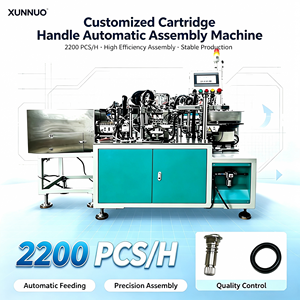
XUNNUO Fully Automatic PLC Controlled 3000 W Cartridge Handle Assembly Machine Motor Engine 2200 PCS/H Capacity 1 Year Warranty
View Specifications
NDQ240308GM01 Electric Motor Assembly Line Electric Motor Processing Line
View Specifications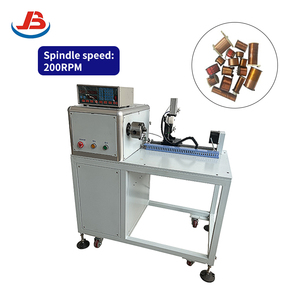
Jianbo CNC 50sqmm Copper Flat Wire Coil Winding Machine PLC for Easy Operation Making Transformer Coils Motor Core Components
View Specifications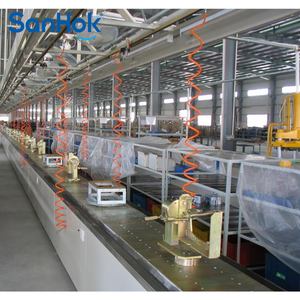
Car Motor Automatic Conveyor Electromobile Production Line Engine Assembly Line
View Specifications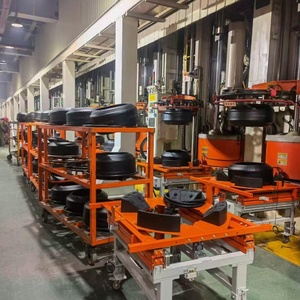
Custom New Energy Vehicle Engine Assembly Production Line with Automatic Workbench High Efficiency Low Cost 500-1500 Pcs/hour
View Specifications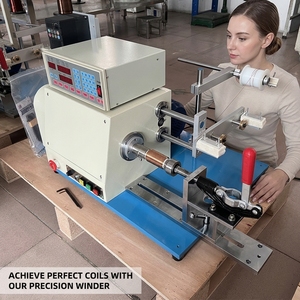
Automatic Motor Coil Winding Machine Multi-Spindle High Speed for Transformer Production
View Specifications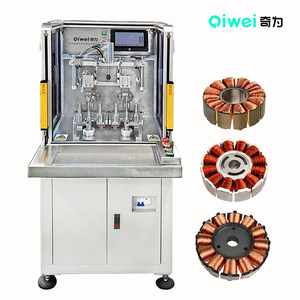
Automatic Drone Motor Stator Winding Machine | Toroidal Armature Winding Equipment
View Specifications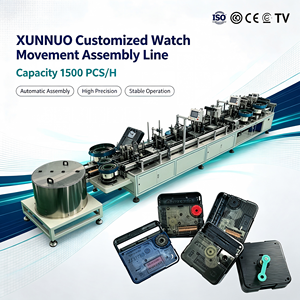
XUNNUO Customized Clock Movement Assembly Line with Engine PLC Motor-1 Year Warranty 3000W
View SpecificationsState of the Art in Stator Needle Winding Equipment & Turnkey Automation
In modern electric motor manufacturing, the shift toward Brushless DC (BLDC), Permanent Magnet Synchronous Motors (PMSM), and high-efficiency induction systems has transformed stator coil winding technologies. Traditional flyer winding and transfer insertion methods frequently fail to achieve the strict thermal management, high slot-fill packing factors, and compact spatial dimensions demanded by next-generation automotive electric compressors, power tools, drone propulsion systems, and industrial robotics. Needle winding technology—specifically multi-axis CNC internal stator needle winding—has emerged as the definitive standard for manufacturing high-performance slotted stators.
Kinematic Fundamentals of Internal Stator Needle Winding
Needle winding operates via a hollow ceramic or tungsten carbide nozzle (the needle) carrying magnet wire through the internal bore of a laminated stator core. Controlled by multi-axis CNC servo systems, the needle executes a synchronized spatial trajectory combining linear stroke movement (Z-axis), rotational indexing (θ-axis), radial positioning (X/Y-axis), and wire guiding. Unlike external flyer winders that loop wire around exposed teeth from the outside, needle winders deposit enamel wire directly into internal slots with millimeter-level spatial precision.
Orthocyclic Wire Layering
Achieves perfect dense packing where turns in each successive layer nest precisely into the grooves formed by the preceding layer, driving slot-fill rates up to 75%–85%.
Enamel Protection & Friction Control
Mirrored ceramic nozzle tips and dynamic closed-loop servo tensioners eliminate micro-scratches on enamel insulation, keeping breakdown voltage over 2.5 kV.
Multi-Axis Servo Synchronization
Coordinated motion profiles between needle stroke and indexing tables eliminate coil end-turn wire crossing, lowering parasitic inductance and thermal hotspots.
Technical Matrix: Needle Winding Equipment vs. Alternative Winding Technologies
To evaluate equipment selection for wholesale and high-volume factory procurement, engineering teams must benchmark internal needle winding against conventional transfer/flyer systems across critical operational metrics:
| Parameter / Feature | Needle Winding Machine | Flyer Winding Machine | Manual / Semi-Auto Winding |
|---|---|---|---|
| Target Stator Geometry | Slotted Inner-Rotor BLDC / PMSM | External Rotor / Open Armature | Prototyping / Low-Volume Custom |
| Copper Slot Fill Factor | 68% - 82% (High Density) | 45% - 58% (Medium Density) | 35% - 50% (Variable) |
| Tension Precision | ±0.5g (Closed-Loop Servo) | ±3.0g (Friction / Magnetic) | ±10.0g (Manual Mechanical) |
| Wire Diameter Handling | 0.08 mm - 1.80 mm (Copper/Flat) | 0.12 mm - 1.20 mm | 0.05 mm - 2.50 mm |
| Max Spindle / Stroke Speed | Up to 3,000 RPM / 800 Strokes/min | Up to 2,500 RPM | Operator Dependent (< 300 RPM) |
| Tooling Changeover Time | < 15 Minutes (Modular Quick-Release) | 30 - 60 Minutes | N/A |
Product Development Trends in Electric Motor Manufacturing
The global motor equipment landscape is experiencing structural shifts driven by electrification, drone technology, and high-efficiency energy directives (IE4/IE5 standards). Sourcing managers and automation engineers must prepare for key technological developments:
- High-Power Density & Hairpin / Flat Wire Winding Integration: Driven by New Energy Vehicle (NEV) electric traction drives, stator design is adopting rectangular copper conductor profiles. Modern needle winding systems are adapting to bend, index, and guide flat wires up to 50 sq mm, drastically lowering copper losses (I²R) and improving heat dissipation.
- Multi-Station Integrated Automation Cells: Standalone winding machines are giving way to fully turnkey production lines. These lines integrate stator lamination stacking, slot insulation paper insertion, multi-station needle winding, automatic wire termination/fusing, trickle varnishing, dynamic balancing, and End-of-Line (EOL) electrical testing into unified PLC-controlled environments.
- Real-Time Vision & AI Trajectory Correction: Advanced needle winders incorporate high-speed CCD camera vision systems to inspect slot opening alignment prior to needle stroke insertion. AI software compensates for lamination stack rotational tilt or axial tolerances in real time, preventing needle-to-tooth collisions.
Future Procurement Trends for Overseas OEM Buyers
As global supply chains demand shorter lead times, operational flexibility, and localized maintenance, global buyers sourcing stator needle winding machinery from China are prioritizing specific supplier capabilities:
Sample-Based Tooling Engineering
Leading Chinese OEMs no longer ship rigid standard off-the-shelf catalog units. Instead, machine tooling, nozzle trajectories, and gripper mechanisms are tailored to actual physical stator laminations or 3D STEP CAD files supplied by the buyer.
Open Modular Control Architectures
Buyers prefer platforms running industrial standards (Beckhoff, Siemens PLC, or custom high-speed motion controllers) with multi-language HMI screens, Industry 4.0 OPC-UA data output, and remote Ethernet diagnostic capability.
Independent Verification & Audits
Procurement managers mandate third-party factory inspection certificates (e.g., Intertek, TÜV Rheinland) verifying production facility scale, machinery ownership, and QA testing instruments prior to issuing POs.
Enterprise Advantages: Ningbo Davri Automation Equipment Co., Ltd. (Cefnak)
Located in Ningbo, Zhejiang—one of China's primary high-precision electric motor manufacturing centers—Cefnak combines 11+ years of specialized motor equipment R&D with complete internal manufacturing control. We design and deliver turnkey stator and rotor production systems, UAV drone motor winders, and heavy-duty electric vehicle traction components.
- Intertek On-Site Verified: Independently audited premises, manufacturing lines, and trade credibility.
- Sample-Based Customization: SolidWorks 3D tooling design validated via trial winding prior to shipment.
- Comprehensive QA Testing Lab: 6 in-house testing instruments including dynamic balance, hi-pot, and tension meters.
- Global On-Site Service: Certified expatriate engineers available for installation, commissioning, and operator training.
Frequently Asked Procurement & Engineering Questions
Clear answers to help procurement managers, manufacturing engineers, and motor factories evaluate stator winding equipment and factory capabilities.