Featured Motor Assembly Equipment & Solutions
High-throughput, OEM-customized production lines engineered for electric armatures, BLDC stators, automotive engines, and industrial motor testing.
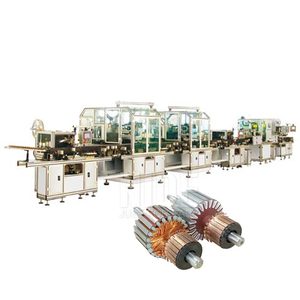
Full Automatic Electric Motor Armature Manufacturing Production Assembly Line
View Details →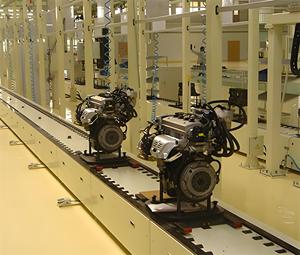
Engine Production Assembly Line Manufacturer Automatic Car Motor Assembly Line
View Details →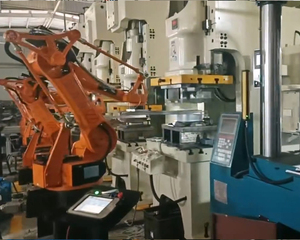
Industrial Automation & Robots PLC Motor Production Line for Appliances
View Details →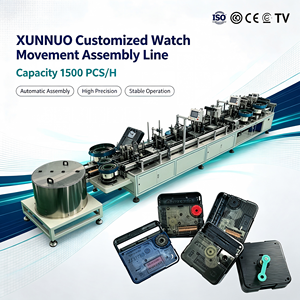
XUNNUO Customized Clock Movement Assembly Line with Engine PLC Motor
View Details →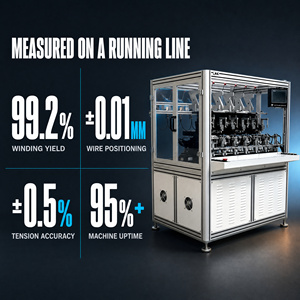
Custom Automated Brushless Motor Winding Machine OEM Equipment
View Details →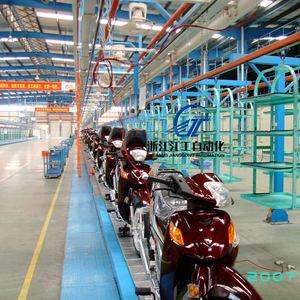
Tricycle/Electric Bike Assembly Line Conveyor Production System
View Details →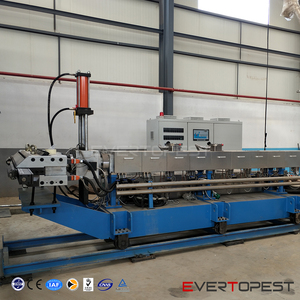
High-Speed Electric Motor Assembly Line & Electronic Manufacturing Machine
View Details →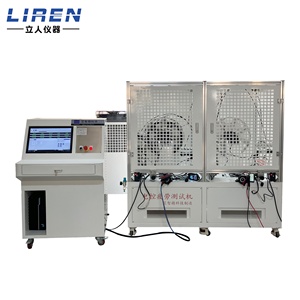
Two-Station Motor and Controller Durability & Performance Tester
View Details →Proven Engineering & Custom OEM Capabilities
Operating from Ningbo, Zhejiang—China's advanced manufacturing cluster—we combine equipment engineering with deep motor design expertise to eliminate integration friction.
Sample-Based Customization
We build production lines custom-engineered around your actual motor stators, rotors, or technical drawings. Before equipment shipment, process validation is conducted using sample-based trial runs.
Intertek-Verified Quality
Our manufacturing plant, operational status, and trade background have undergone rigorous third-party on-site verification by Intertek. Quality controls are strictly audited across every assembly module.
6 Internal QC Testing Labs
Equipped with specialized testing instruments including withstand voltage testers, handheld tension meters, multi-channel temperature rise devices, aging rigs, and dynamic balancing stations.
Expert Senior R&D Engineers
Our engineering division houses senior design specialists with 5+ years of dedicated industrial experience. Tooling, fixtures, and winding kinematics are calculated using SolidWorks 3D modelling.
Global Technical Support
We provide comprehensive global installation guidance, operator training, process tuning, and spare parts supply to ensure seamless factory integration across North America, Europe, and Asia.
Complete Supply Chain Coverage
From turnkey manufacturing systems to standalone needle winders, drone outrunner stators, and explosion-proof PMSM forklift motors, we support the full motor manufacturing value chain.
Technical Whitepaper: Engineering High-Efficiency Custom OEM BLDC Motor Assembly Lines
The global shift toward electrification—spanning Electric Vehicles (EVs), Unmanned Aerial Vehicles (UAVs), high-efficiency HVAC units, power tools, and smart home appliances—has created unprecedented demand for Brushless DC (BLDC) and Permanent Magnet Synchronous Motors (PMSM). Modern motor buyers no longer evaluate assembly equipment purely on static mechanical speed; the market demands custom OEM automatic BLDC motor assembly lines capable of achieving maximum copper slot fill factor, minimal cogging torque, full process traceability, and sub-micron repeat accuracy.
As an industry-leading OEM manufacturer and supplier, our automated production systems address the inherent challenges of modern motor production: tight space envelopes, heat dissipation management, winding tension consistency, and automated end-of-line quality validation.
1. Key Architectural Modules of an Automated BLDC Motor Production Line
An automated BLDC motor assembly line integrates several sophisticated sub-systems into a unified, synchronized manufacturing cell. Below is an engineering overview of the critical operational stations embedded in our custom lines:
| Assembly Module | Core Technologies Integrated | Key Performance Indicators (KPIs) | Industrial Application |
|---|---|---|---|
| Stator Lamination & Insulation Staking | High-speed servo feeding, automatic slot paper insertion, epoxy insulation film pressing. | Insulation breakdown voltage > 2.5kV; Cycle time < 1.2s/slot. | Inner-rotor BLDC, EV Compressors, Power Tools. |
| Multi-Axis Needle / Flying Winding | CNC Closed-loop servo tensioning, multi-station needle winding heads, wire guide nozzle kinematics. | Slot fill factor up to 78%; Tension stability ±0.05 N. | UAV & FPV Drone Motors, Automotive Pumps, Treadmills. |
| Commutator / Terminal Hot Staking | CNC resistance spot welding, pulse heating controls, wire stripping, automatic lead wire routing. | Zero-cold-solder rate; Weld resistance ≤ 0.02 mΩ. | Brushed DC Armatures, Universal Motors, Automotive Accessories. |
| Rotor Magnet Insertion & Balancing | Robot-assisted magnet placement, structural adhesive dispenser, dynamic two-plane balancing. | Residual imbalance ≤ 0.5 g·mm/kg; Glue weight control ±0.01g. | High-RPM Drone Outrunners, Traction PMSM Motors. |
| End-of-Line (EOL) Functional Testing | Integrated testing of back-EMF, phase resistance, inductance, high-pot insulation, noise/vibration (NVH). | 100% automated data logging; MES/SCADA integration. | All OEM Commercial & Industrial Motor Lines. |
2. Precision Needle Winding vs. Outer Stator Winding Dynamics
Choosing the correct winding technology is foundational to motor efficiency and thermal performance. In Internal-Rotor BLDC Motors, wire must be guided through narrow slot openings. Our 4-Station and Dual-Station Automatic Needle Winding Machines utilize synchronized multi-axis servo movement, ensuring that enamel wire is laid smoothly without scraping the protective insulation coating.
Conversely, for External-Rotor Motors (such as Drone/FPV Outrunners), the teeth point outward. Our Outer Stator Winding Machines feature specialized fly-winding tooling capable of achieving rapid angular acceleration while maintaining consistent copper coil layering. This precision directly reduces internal electrical resistance ($R_ph$) and increases torque density ($N\cdot m / kg$).
Future Procurement Trends in Automatic BLDC Assembly Lines (2025–2030)
Procurement directors, plant managers, and manufacturing engineers evaluating production lines for upcoming product cycles must align their capital expenditure (CAPEX) with rapid shifts in industrial automation. Based on global purchasing data and OEM engineering demands, five dominant trends are reshaping the procurement landscape:
Trend 1: Smart Data Traceability & Industry 4.0 MES/IoT Integration
Modern motor buyers—especially in automotive (IATF 16949 compliant) and medical sectors—demand individual component traceability. Future assembly lines require embedded sensors at every station. Our modern lines automatically upload winding tension curves, terminal welding voltage logs, varnish curing temperatures, and EOL test profiles to centralized Manufacturing Execution Systems (MES). If a motor fails in the field, factory engineers can trace its exact production parameters down to the timestamp and wire lot number.
Trend 2: Adoption of Hairpin Winding & High-Slot-Fill Technologies
In electric vehicle traction motors and high-power industrial drives, traditional round-wire random winding is rapidly giving way to rectangular wire "Hairpin" technology. Hairpin stators increase copper slot fill factor from ~45% to over 70%, dramatically reducing heat buildup while boosting torque output. B2B buyers must partner with machine suppliers capable of engineering complex precision bending, laser stripping, slot insertion, and laser welding modules.
Trend 3: Modular Tooling & Ultra-Fast Line Changeover
Product lifecycles are shrinking while SKU diversity is expanding. Procurement managers are steering clear of single-purpose machines that become obsolete when a motor stack height or stator diameter changes. The market now prioritizes flexible, modular assembly cells. Our custom OEM lines incorporate quick-change fixture plates, recipe-driven CNC servo adjustments, and magnetic quick-release winding nozzles, allowing operators to execute complete product changeovers in under 15 minutes.
Trend 4: AI-Vision-Guided Inspection & Adaptive Process Control
Manual visual inspection is no longer acceptable for high-speed assembly lines. Integrated high-resolution CCD cameras paired with AI vision models now inspect lead-wire routing, solder joint integrity, magnet placement accuracy, and slot paper overhang in real time. If a slight dimensional drift occurs, the system automatically triggers adaptive closed-loop servo corrections to prevent scrap production before it happens.
Trend 5: Carbon-Neutrality & Energy-Efficient Pneumatic/Servo Automation
Global OEMs are setting stringent Scope 1 and Scope 2 carbon reduction goals. Traditional pneumatic actuators are being systematically replaced by high-efficiency electromechanical servo cylinders. Servo-driven assembly cells consume up to 65% less energy than compressed-air equivalents while delivering superior positional accuracy and lower acoustic noise on the factory floor.
Key Industry & Product Technological Trends in Motor Manufacturing
The global transition from brushed DC technology to Brushless DC and Permanent Magnet Synchronous Motors (PMSM) has fundamentally altered manufacturing requirements. Understanding these technology vectors enables procurement teams to specify the correct machine configurations:
- Transition to Ultra-High-Speed Motors: Drone outrunner motors and high-efficiency power tools now operate at rotational speeds exceeding 20,000 to 60,000 RPM. This necessitates automated dynamic balancing modules operating at sub-milligram precision to prevent premature bearing failure and acoustic resonance.
- Advanced Varnish Impregnation & Trickling Techniques: Traditional dip-coating is being superseded by automated trickling and induction heating lines. Trickling ensures 100% resin impregnation within wire bundles, eliminating air pockets (voids) that cause partial discharge and thermal breakdown under high inverter switching frequencies ($PWM$).
- Direct-Drive Servo Wire Tensioning: Mechanical friction tensioners cause tension spikes during rapid needle acceleration, leading to stretched enamel wire and insulation micro-cracks. Modern lines utilize direct-drive servo tensioners with active magnetic braking to maintain uniform tension (±0.05N accuracy) across all winding speeds.
Comprehensive Procurement FAQ for B2B Buyers & Engineers
Request a Custom Technical Proposal & Line Layout
Send us your motor drawings, stator samples, or output targets. Our senior engineering team will design a customized BLDC assembly solution engineered for maximum efficiency and ROI.
Get Catalog