Featured OEM Motor Manufacturing & Testing Solutions
Engineered to order: High-precision coil winders, automated assembly lines, and performance testing systems built from sample specifications.
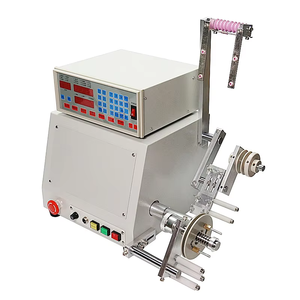
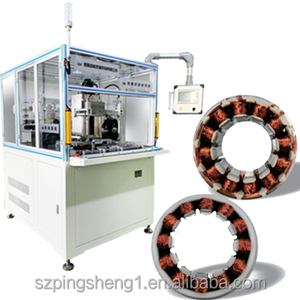
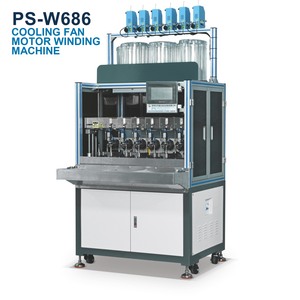
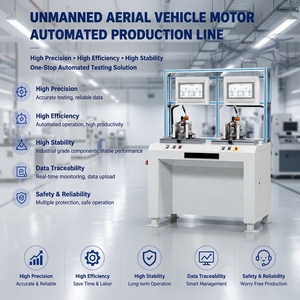
Engineering Whitepaper: Next-Generation OEM Custom Motor Production Lines
The global transition toward high-efficiency electromechanical drive systems—spurred by rapid electrification in automotive transport, unmanned aerial vehicles (UAVs), industrial automation, and smart HVAC infrastructure—demands a fundamental transformation in electric motor manufacturing. As a leading custom OEM motor production line exporter, Ningbo Davri Automation Equipment Co., Ltd. (Cefnak) delivers purpose-engineered automated production lines that resolve the traditional trade-offs between winding velocity, slot fill factor, thermal dissipation, and structural repeatability.
Key Engineering Insight: Achieving high copper packing density (>75% slot fill factor) while maintaining zero enamel degradation requires multi-axis CNC needle winding kinematics coupled with real-time closed-loop tension regulation. Legacy flyer winders can no longer satisfy modern BLDC and PMSM thermal envelope standards.
Architectural Breakdown of a Modern Automated Motor Production Line
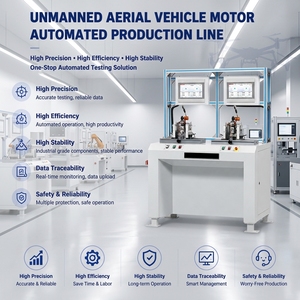
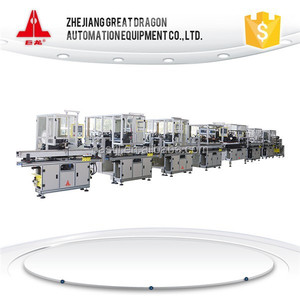
Custom OEM motor manufacturing equipment spans a continuous multi-station layout. Rather than combining isolated standalone machines, an integrated production line streamlines material movement via high-speed indexing pallets, magnetic levitation tracks, or robotic gantry systems. The automated lifecycle of a high-performance stator and armature assembly encompasses several critical steps:
Slot Insulation & Paper Insertion
High-speed servo-driven insulation paper cutting, forming, and insertion into stator slots with micro-precision edge cuffing to prevent dielectric breakdown under stress.
CNC Needle & Fly Winding
Multi-station synchronous needle winding for internal stators and outer-rotor BLDC configurations, featuring electronic wire tension feedback and automatic coil lead wrapping.
Hot Staking & Commutator Welding
Precision CNC hot staking and pulse TIG/laser welding for commutator connections, delivering ultra-low electrical resistance and maximum mechanical shear resistance.
Lacing, Shaping & Trickle Impregnation
3D servo lacing of coil heads followed by automatic trickling or vacuum pressure impregnation (VPI) with resin, eliminating air voids to optimize heat transfer.
Dynamic Rotor Balancing
Dual-plane dynamic balancing with automated material removal (milling/drilling) to guarantee vibration spectrum compliance (ISO 1940 Grade G1.0/G2.5).
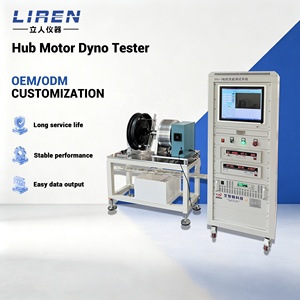
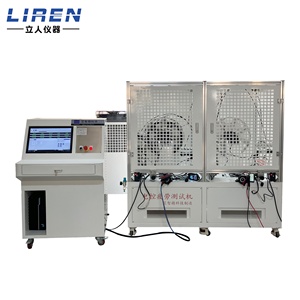
End-of-Line (EOL) Dynamometer Testing
Automated electrical parameter verification (Hi-Pot, surge, phase resistance, inductance) and dynamic back-EMF, torque-speed curve mapping via integrated dynamometers.
Future Procurement Trends in OEM Electric Motor Manufacturing Equipment
As global procurement teams evaluate capital expenditure (CapEx) for new motor lines, purchasing criteria have shifted from purely initial equipment cost to total cost of ownership (TCO), operational adaptability, and digital integration. International OEMs seeking customized motor production lines prioritize suppliers based on four evolving industry trends:
1. Extreme Modularization and Fast Changeover Architecture
Modern production schedules demand rapid transitions between different motor stack heights, slot counts, and wire gauges. OEM exporters now engineer quick-change tooling modules with zero-point clamping systems and software-driven parameter recalling. Operators can complete complete line retooling in under 15 minutes, drastically reducing batch downtime.
2. AI-Driven Quality Assurance and Closed-Loop Process Tuning
Industry 4.0 connectivity is no longer optional. Leading custom motor line exporters integrate high-speed vision sensors, acoustic emission monitoring, and laser profiling directly into the assembly flow. Machine vision algorithms inspect coil geometry and slot alignment in real-time. If winding tension deviates by more than 0.5%, the closed-loop servo controller adjusts wire payout speed dynamically, eliminating scrap before defects occur.
3. High Slot Fill Factors & Hairpin Winding Paradigm Shifts
In electric vehicle (EV) traction and high-density industrial drives, rectangular copper wire (hairpin technology) and concentrated needle winding are replacing random round wire winding. High slot fill factors (>75%) improve thermal conductivity and increase motor torque density by 20% to 35%. Exporters who master specialized tooling for heavy wire bending and continuous hairpin insertion hold a distinct competitive edge.
4. Energy Efficiency & Carbon Footprint Traceability
Global regulations demand low standby power consumption and sustainable manufacturing practices. Modern motor lines incorporate regenerative braking drives on spindle motors, returning kinetic energy to the local factory grid during rapid decelerations. Furthermore, line-level controllers track raw material usage (copper, silicon steel, varnish), generating automated carbon footprint reports for downstream regulatory compliance.
Engineering Matrix: Comparing Motor Line Production Topologies
Selecting the optimal line configuration requires balancing production volume, flexibility, and capital investment. The table below outlines key technical tradeoffs across standard industry configurations exported by Cefnak.
| Performance Metrics | Semi-Automated Flexible Line | High-Speed Dedicated Line | Modular Turnkey OEM Line |
|---|---|---|---|
| Target Annual Capacity | 50,000 to 200,000 units | 1,000,000+ units | 250,000 to 800,000 units |
| Average Takt Time | 15.0 - 30.0 seconds | < 3.5 seconds | 4.5 - 8.0 seconds |
| Tooling Changeover Time | 10 - 20 minutes | 4 - 8 hours | 15 - 30 minutes |
| Slot Fill Factor Capability | Up to 68% | Up to 72% | Up to 78% (Needle Winding) |
| Traceability & MES Interface | Basic Data Logging | Full SCADA System | OPC-UA / MQTT Cloud Native |
| Floor Space Requirement | Compact (~80 - 150 m²) | Extensive (~400 - 800 m²) | Flexible (~150 - 300 m²) |
Enterprise Strengths: Why Overseas OEMs Partner with Cefnak
Ningbo Davri Automation Equipment Co., Ltd. combines specialized electromechanical engineering with deep export expertise. We eliminate the risk of sourcing complex automation lines overseas.
Intertek On-Site Verified Manufacturer
Our manufacturing plant, legal standing, production workshop, and engineering workflow are independently verified by Intertek with transparent credit reporting.
Sample-Based Custom Engineering
We do not sell rigid standard catalogs. Send us your stator/rotor core samples or 3D drawings, and our 5+ certified senior engineers will design customized winding profiles and station layouts.
In-House Component & Equipment Production
From high-speed gantry punching of silicon steel laminations to CNC machine assembly and QA lab testing, our 16 in-house process steps guarantee absolute quality control and schedule accuracy.
Global On-Site Commissioning & Technical Support
We deploy senior installation engineers directly to your overseas facility for line setup, PLC debugging, operator training, and pilot batch validation before final sign-off.
Frequently Asked Questions (FAQ) for OEM Buyers
Comprehensive engineering insights for global procurement managers, technical directors, and plant automation engineers.
What key parameter data do you require to generate a technical proposal and quotation?
To accurately size your winding stations, indexing mechanisms, and tooling, our engineering team requires four primary inputs: (1) Stator/rotor 2D drawing or physical sample showing slot dimensions, stack height, and outer/inner diameter; (2) Enamel wire gauge/type and target turns per coil; (3) Motor electrical schematic (star/delta connection method); and (4) Your required Takt Time or annual Units Per Hour (UPH) output target.
How do your lines handle internal needle winding versus outer-rotor flyer winding?
We configure separate needle-type and outer-rotor winding modules depending on your motor magnetic topology. For inner-slot BLDC stators (e.g., automotive pumps, power tools), our multi-axis CNC needle winders guide wire directly into tight slots. For external-rotor outrunners (e.g., drone motors, ceiling fans), we utilize high-speed external winding heads with automatic wire clamping and stripping units.
Can one automated production line manufacture multiple motor models?
Yes. We design flexible assembly platforms capable of multi-model production. Stack height variations can be accommodated via software servo adjustments within seconds. For slot count or wire gauge changes, our quick-change modular tooling sets allow operators to complete retooling within 15 to 30 minutes without special alignment gauges.
What testing instruments are integrated into End-of-Line (EOL) stations?
Our standard EOL testing stations integrate multi-function electrical safety and performance analyzers. Core tests include: Insulation Resistance (IR), Withstand Voltage (Hi-Pot), Surge Impulse, Phase Winding Resistance, Inductance, Direction of Rotation, and Dynamic Back-EMF testing. Advanced stations also include dynamometer torque-speed curve analysis and vibration spectrum testing.
What is the typical factory lead time and Factory Acceptance Test (FAT) protocol?
Standard standalone winding equipment requires 45 to 60 days, while complete turnkey automated lines typically take 90 to 120 days from drawing freeze to shipment. Prior to export, we execute a rigorous FAT in our Ningbo factory using your supplied raw materials. We run full-speed trial production over 72 hours to verify CPK index, takt time, and defect-free yield rates before crating.
How do you provide after-sales engineering support for international factories?
We provide dual-layer international support. Remote diagnosis is performed via secure PLC Ethernet gateways for instant programming updates or troubleshooting. Additionally, our field service engineers provide on-site installation, line integration, and operator training worldwide. Spare parts are dispatched within 24 hours via express air cargo.