Featured OEM Motor Winding & Assembly Machinery
Precision-engineered automated coil winding equipment, stator shape forming systems, and turnkey BLDC motor assembly lines configured to custom technical specifications.
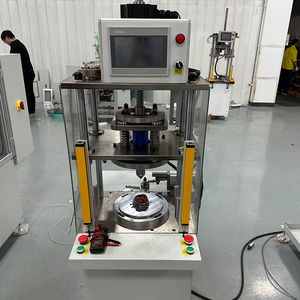
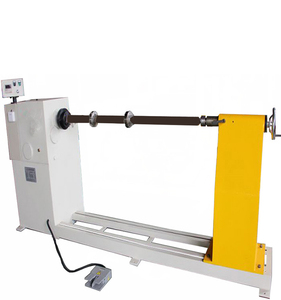
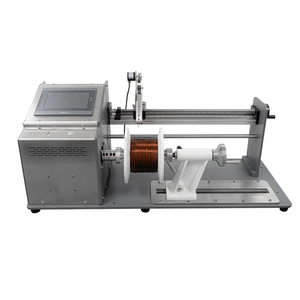
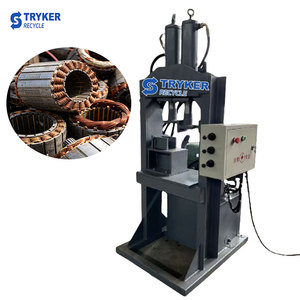
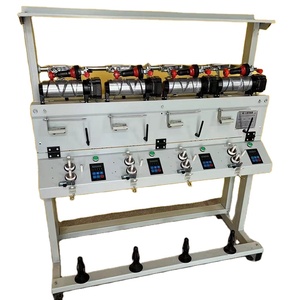
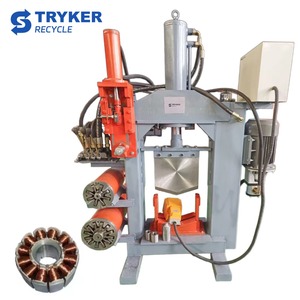
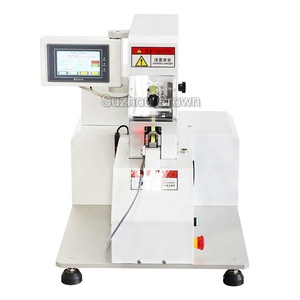
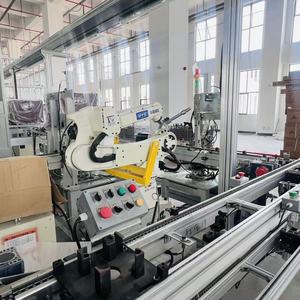
Enterprise Manufacturing Capabilities & Verified Engineering Strengths
As an Intertek On-Site Verified Supplier located in Ningbo, Zhejiang—China’s premier manufacturing hub for advanced electromechanical automation—Ningbo Davri Automation Equipment Co., Ltd. (Cefnak) stands as an authoritative pioneer in modern stator winding technology, armature assembly systems, and complete Brushless Direct Current (BLDC) motor manufacturing turnkey solutions.
With over 11 years of specialized industry experience, Cefnak bridges the complex technical gap between raw electromagnetic component design and mass production automation. Unlike standard machinery trading intermediaries, we operate complete in-house mechanical design workstations (SolidWorks 3D CAD modeling), CNC machining centers, precision stamping shops, and automated assembly test bays. This end-to-end integration ensures that every custom OEM motor winding machine is tailored specifically to your lamination stack dimensions, copper wire gauge constraints, and target units-per-hour (UPH) cycle times.
Strict Quality Control & Inspection Protocols
Our quality assurance laboratory is equipped with 6 specialized testing instruments, including handheld digital wire tension meters, hi-pot withstand voltage testers, multi-channel temperature rise logger stations, and optical video microscopes. Every winding machine undergoes a continuous 72-hour load aging trial and full electrical function inspection to guarantee zero defect delivery.
Turnkey Line Integration & Global Support
From single-station needle-type internal stator winders to full EV compressor motor assembly and plasma welding production lines, Cefnak provides complete system integration. We support our international clientele with remote video commissioning guidance and on-site expatriate engineer installation, operator training, and technical process tuning.
Technological Innovations & Industrial Development Trends (2025–2030)
The global electric motor manufacturing industry is undergoing a structural paradigm shift driven by the rapid expansion of Electric Vehicles (EVs), Unmanned Aerial Vehicles (UAVs/FPV drones), high-efficiency HVAC compressors, and industrial robotics. To meet rigorous international energy efficiency standards (IE3, IE4, and IE5 under IEC 60034-30-1), OEM motor winding machinery must evolve beyond traditional mechanical cam mechanisms toward multi-axis CNC digital servo synchronization.
1. High Slot-Fill Ratio & Hairpin / Flat-Wire Winding Technologies
Traditional round enamel-insulated copper wire winding faces thermal and volumetric density limitations. Emerging automotive traction motors and high-torque drone outrunner BLDC stators demand slot-fill ratios exceeding 65% to 75%. Modern OEM winding equipment increasingly adopts precision needle-winding and rectangular flat-wire hairpin technology. Needle-type internal stator winding machines utilize multi-axis CNC interpolation to lay copper wire directly into concentrated inner slots with ultra-high precision, minimizing end-turn coil overhang and dramatically reducing copper resistance losses.
2. Real-Time Closed-Loop Wire Tension Monitoring Systems
Wire insulation degradation during the coil winding process is a leading cause of inter-turn short circuits and early motor burnout. Advanced automatic winding machines now integrate closed-loop electronic tension controllers. By continuously measuring dynamic wire friction and adjusting magnetic hysteresis brake tensioners in real time, modern winding equipment prevents enamel coating stretching, micro-fractures, and wire snapping—even during high-speed spindle rotation exceeding 3,000 RPM.
3. Flexible Modular Production for UAV, FPV, and BLDC Motors
The skyrocketing growth of commercial UAV platforms, agricultural spraying drones, and high-performance FPV racing quadcopters has created massive demand for lightweight, high-power-density outer-stator BLDC motors (e.g., 2207, 2807, 8318 series). Machinery trends favor dual-station and 4-station CNC outer-stator winding machines equipped with quick-change tooling fixtures. This modular architectural approach enables factory operators to execute total tooling and program changeovers in less than 15 minutes, accommodating flexible multi-model batch production.
4. Industry 4.0 Connectivity & AI-Assisted Defect Inspection
Contemporary automated coil winding and taping production lines are fully integrated with industrial Internet of Things (IIoT) protocols (OPC UA, Modbus TCP). Real-time telemetry monitoring tracks winding cycle duration, total wire length consumed, coil resistance tolerances, and machine vibration spectral data. Combined with inline machine vision cameras, automatic optical inspection (AOI) systems scan coil lead wire placement and commutator hot-staking spot welds, instantly flagging microscopic defects before stators proceed to varnish dipping or encapsulation.
Future Global Procurement Trends for OEM Motor Manufacturers
Strategic sourcing managers and plant automation directors face mounting pressure to reduce Total Cost of Ownership (TCO) while ensuring maximum production scalability. When procuring custom motor winding equipment from overseas manufacturers and wholesalers, leading global buyers are pivoting toward four critical procurement strategies:
Turnkey Line Sourcing vs. Fragmented Equipment Purchasing
Procuring isolated winding machines, coil insertion tools, paper insulation cutters, and lacing machines from disparate vendors introduces severe interface integration risks and software protocol incompatibilities. The future of B2B procurement relies on single-source turnkey suppliers who take end-to-end engineering responsibility for the entire stator line—from raw lamination stack loading to final hi-pot and back-EMF testing.
Sample-Validated Customization & Tooling Flexibility
Off-the-shelf catalog machinery frequently fails to accommodate specialized wire diameters, non-standard stack heights, or tight slot openings. Strategic buyers now insist on pre-commissioning sample validation. Working directly with specialized OEM exporters who maintain dedicated tooling design teams guarantees that machine kinematics are physically validated on actual production stators before export shipping.
Furthermore, sustainability compliance is reshaping international machinery procurement. Modern motor production lines must comply with stringent CE electromagnetic compatibility (EMC) regulations, ISO 9001 quality management systems, and energy-efficient pneumatic servo drive design. Sourcing equipment engineered for lower power consumption and minimal copper wire scrap rate directly enhances factory ESG (Environmental, Social, and Governance) benchmark ratings.
Technical Comparison: Selecting the Right Winding Technology
To assist procurement specialists in evaluating equipment options, the matrix below outlines core operational parameters across primary motor winding machine categories:
| Winding Machine Category | Suitable Stator/Rotor Architecture | Typical Target Applications | Dominant Advantages | Typical Output (UPH) |
|---|---|---|---|---|
| Needle Type Internal Stator Winder | Concentrated inner-slot stators, BLDC inner-rotors | Power tools, automotive water/oil pumps, robotics actuators | Direct slot wire placement, minimal wire scrap, high fill factor | 40 - 120 pcs/hr per station |
| Outer Stator Winding Machine | External tooth diameter stators (Outrunner BLDC) | UAV & FPV drone motors, ceiling fans, treadmill motors | High rotation speed, ultra-neat coil layering, fast changeover | 60 - 200 pcs/hr per station |
| Rotor & Armature Coil Winder | Slotted armature rotors with commutators | Universal motors, vacuum cleaners, auto starter motors | Simultaneous dual-spindle winding, automated flyer wire hooking | 100 - 300 pcs/hr |
| Fully Automated Turnkey Line | Complete stators & rotors (BLDC / PMSM / Induction) | EV air conditioning compressors, logistics forklift traction | Zero manual handling, integrated welding, lacing, & testing | 500 - 2,000+ pcs/shift |
Frequently Asked Questions (FAQ) for Global Machinery Buyers
Which specific motor types can your custom stator winding machines process?
Our custom OEM motor winding equipment covers a comprehensive spectrum of electromechanical designs. Needle-type internal stator winders handle inner-rotor BLDC motors, high-torque power tools, automotive thermal management pumps, and industrial servo motors. Outer stator winding machines serve external-rotor outrunner configurations used in civilian UAVs, FPV drone motors, ceiling fans, and treadmill drive systems. Additionally, our armature coil winders process universal brushed DC motors and automotive starters, while our specialized toroidal and transformer winders accommodate magnetic rings, solenoids, and HVAC compressor stators.
Can machinery tooling be fully customized based on our physical motor sample or CAD drawing?
Yes. Sample-based customization is an independently audited and verified core strength of Ningbo Davri Automation Equipment Co., Ltd. (Cefnak). Overseas buyers can send engineering DXF/DWG files or ship physical stator lamination samples directly to our facility. Our senior engineering team utilizes SolidWorks 3D CAD modeling to customize winding nozzles, needle stroke lengths, clamping fixtures, and wire guide arrays. We execute rigorous trial winding runs in our laboratory and provide comprehensive video proof before shipment approval.
What parameters are required to generate an accurate technical proposal and quotation?
To provide an optimal technical proposal and cost estimate, our engineers require four fundamental inputs: 1) Stator/Rotor physical dimensions (inner diameter, outer diameter, and lamination stack height); 2) Slot count and slot opening geometry; 3) Copper wire diameter (AWG/mm) and turns per coil specification; and 4) Target production throughput (Units Per Hour / UPH). Providing these metrics along with your motor drawing allows us to configure station layouts and dynamic servo drives accurately in our initial proposal.
What after-sales installation, training, and technical support services do you provide for overseas shipments?
We provide comprehensive global technical support. Every machine is shipped with detailed English instruction manuals, PLC wiring diagrams, and step-by-step video operation guides. For full production line installations, we dispatch certified expatriate field engineers to customer factory sites worldwide to oversee physical installation, perform mechanical calibration, conduct PLC program tuning, and train your plant operators. Remote diagnostic support is also available via secure industrial online connections.
What are your standard Minimum Order Quantities (MOQ) and lead times for OEM machinery orders?
For standalone coil winding machines, shaping equipment, and automated production lines, the Minimum Order Quantity (MOQ) is 1 set. For custom motor components such as UAV drone stators, the standard MOQ starts from 500 pieces, while finished BLDC/PMSM electric motors start from 10 pieces. Standard delivery lead times for custom CNC winding machines range between 25 to 45 business days, depending on tooling complexity and custom PLC programming requirements.
How do your machines ensure zero wire enamel damage during high-speed coil winding?
Our machinery incorporates dynamic closed-loop electronic tension controllers coupled with magnetic hysteresis brakes and ceramic-coated wire guide nozzles (mirror polished to Ra 0.2 surface roughness). By continuously counteracting acceleration spikes and maintaining constant dynamic tension, the machine prevents insulation wire stretching, micro-scratching, and enamel breakdown, ensuring complete electrical compliance with hi-pot dielectric strength tests.
What international quality certifications do your winding machines and production lines carry?
All Cefnak automated machinery and production lines are manufactured in strict alignment with ISO 9001 quality management guidelines and carry full CE Certification for European compliance (covering Machinery Directive 2006/42/EC and Low Voltage Directive 2014/35/EU). Furthermore, our business premises, manufacturing facilities, and trade capabilities are third-party verified on-site by Intertek.