Featured Industrial Motor Assembly Equipment
High-efficiency, automated machinery engineered for EV traction, BLDC outrunners, micro linear actuators, and industrial machinery components.
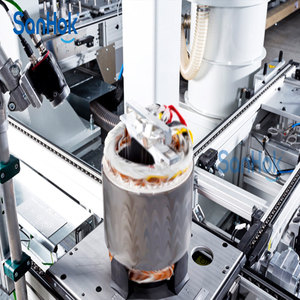
Sanhok Semi-Automatic Motor Assembly Line
Flexible AC/DC/BLDC motor manufacturing line integrating coil insertion, slot insulation, and electrical testing.
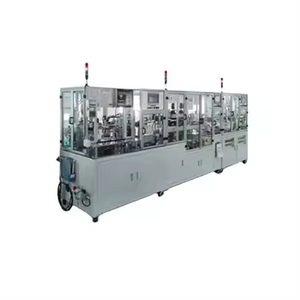
Automatic Automotive Motor Assembly Line
Automotive-grade high-precision assembly cell engineered for EV traction, window lift, and wiper motors.
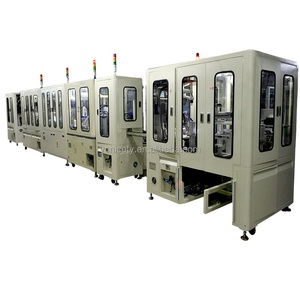
Driving Gear & Bearing Assembly Line
Automated press-fitting and alignment line designed for high-load gearbox, bearing, and drive shaft integration.
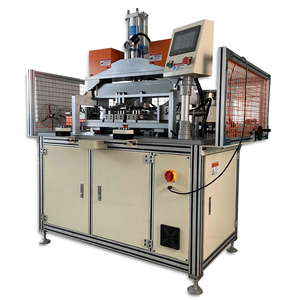
Industrial Core Component Assembly Machine
Heavy-duty core assembly platform featuring Siemens/Mitsubishi PLC control for hydraulic pump and engine gearboxes.
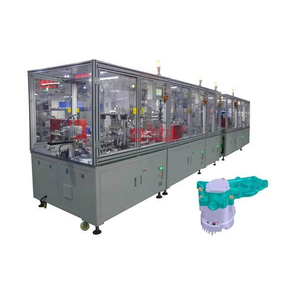
Micro Linear Motor Automatic Assembly Cell
Sub-micron precision winding and magnetic track assembly system designed for camera modules and surgical robots.
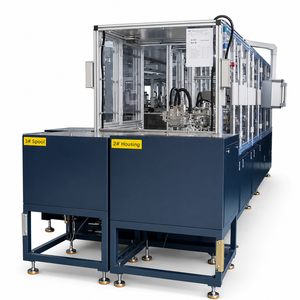
Custom Curtain Motor Assembly System
High-speed tubular and curtain BLDC motor line with automated housing crimping and silent noise testing.
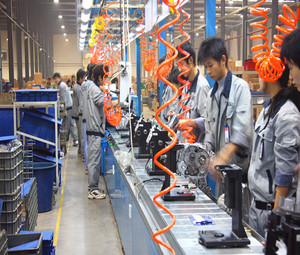
Motorcycle Engine & Motor Line
Heavy-duty palletized conveyor network engineered for multi-station engine block and starter motor integration.
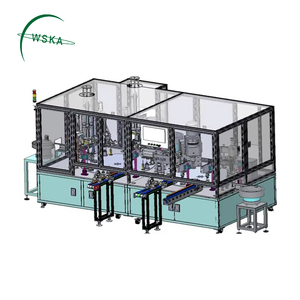
Flexible Automotive Sub-System Assembler
ISO 9001 certified robotic cell for flexible member mounting, internal rotor magnet gluing, and visual inspection.
State of Global Electric Motor Manufacturing Equipment (2025–2030)
The global transition toward high-efficiency electric power systems—ranging from automotive traction drives (EV/HEV) and industrial HVAC blowers to precision UAV/FPV drone outrunner motors—has radically altered requirements for electric motor manufacturing lines. Modern motor production is no longer defined merely by speed; it is governed by Stator Slot Fill Factor (exceeding 78% in premium designs), dynamic wire tension management, closed-loop process control, and immediate line changeover versatility.
Procurers seeking to select a reliable motor manufacturing partner must evaluate suppliers not only on initial capital expenditure (CAPEX), but on operational efficiency (OPEX), scrap rate reduction, technical tooling durability, and sample-based process customization capabilities.
| Technology Benchmark | Legacy Assembly Lines | Modern Automated Lines (2025 Standards) | Strategic Impact on OEM Output |
|---|---|---|---|
| Winding Precision & Tension Control | Mechanical friction tensioners (±12% variation) | Closed-Loop CNC Servo Tensioning (±1.5% accuracy) | Prevents enamel cracking; eliminates short-circuits during high-voltage hi-pot tests. |
| Line Takt Time (BLDC Stators) | 45 – 65 seconds per unit | 12 – 18 seconds per unit (Multi-station needle winder) | Multiplies factory output by up to 350% without expanding workshop footprint. |
| Process Traceability | Manual paper logs / offline batch testing | MES Integration + Inline Vision Inspection | 100% individual part tracking, automated back-EMF, and surge voltage recording. |
| Changeover Flexibility | 4 – 8 hours manual mechanical reset | < 30 minutes quick-change tooling modules | Enables high-mix low-volume (HMLV) contract manufacturing efficiency. |
Top 10 Motor Assembly Equipment Manufacturer Benchmarks
Navigating the international supplier landscape requires separating standard machine assemblers from true precision engineering manufacturers. Below is the technical evaluation framework used by Fortune 500 automotive Tier-1 suppliers and global motor OEMs when auditing the top motor assembly equipment providers.
Internal Needle Winding Expertise
Leading suppliers utilize multi-axis CNC needle winding technology specifically optimized for inner-rotor BLDC stators, electric power tool armatures, and automotive pump motors. The ability to control nozzle trajectory at high speeds without damaging fine enamelled copper wire is the primary indicator of engineering maturity.
Turnkey Line Integration (Winding to EOL Test)
Procuring winding, slot insulation paper insertion, hot staking/soldering, varnish impregnation, and End-of-Line (EOL) testing from disparate vendors creates severe integration bottlenecks. Top suppliers design modular single-source automated lines that share unified PLC software architecture.
Engineering Strength: Ningbo Davri Automation Equipment (Cefnak)
As an independently audited Intertek-Verified Supplier headquartered in the Ningbo industrial manufacturing hub (Zhejiang, China), Ningbo Davri Automation Equipment Co., Ltd. (Cefnak) operates a specialized 16-step manufacturing workflow dedicated to high-precision motor assembly machinery, UAV outrunner stators, and permanent magnet synchronous motors (PMSM).
1. Sample-Driven Custom Engineering
Rather than forcing standard catalog machinery onto custom motor geometries, our engineering team designs tooling, needle paths, and fixture clamping directly from customer-supplied laminations or 3D drawings.
2. In-House Quality Assurance Lab
Equipped with 6 specialized testing instruments—including digital wire tension meters, high-voltage withstand pressure testers, multi-channel thermal rise loggers, dynamic rotor balancing rigs, and video inspection microscopes.
3. On-Site Overseas Commissioning
We back every international line installation with on-site engineer deployment for physical setup, operator training, tool calibration, and preliminary volume production verification.
16-Step Quality Assurance & Assembly Process
High-speed gantry punching of silicon steel sheets.
Automated skew stacking & insulating sleeve fitting.
CNC servo-controlled copper wire distribution.
Resistance spot welding of coil leads.
Precision epoxy dispensing for coil anchoring.
Dual-plane mass balancing for vibration elimination.
No-load/loaded RPM, current, torque verification.
Continuous thermal testing & vacuum sea-freight packing.
Future Equipment Procurement & Manufacturing Trends
When investing in capital equipment with an expected lifespan of 10–15 years, procurement teams must align specifications with upcoming electric motor technology shifts:
Hairpin Winding Automation
In EV traction manufacturing, flat-wire "hairpin" stators are rapidly displacing traditional stranded round wire due to higher slot fill factor (>80%) and superior thermal conductivity. Assembly lines must incorporate CNC wire bending, slot paper insertion, twisting, and laser welding modules.
Drone & Robotics Outrunner Specialization
The booming UAV, FPV drone, and robotic joint market demands outer stator winding machines capable of handling small slot pitches, thin laminations (0.15mm–0.2mm silicon steel), and multi-strand parallel winding without wire crossing.
AI Vision & Zero-Defect Closed Loop
Integration of high-resolution CCD cameras with deep-learning visual algorithms inspects enamel scuffing, solder joint void ratios, and winding overlap in real time—instantly adjusting servo tensioners before defective stators exit the cell.
Frequently Asked Questions (FAQ)
1. What fundamental parameters are required to generate an accurate winding machine quote?
2. What is the technical difference between Needle Type Winding and Outer Stator Winding?
3. Can machine tooling be customized for multiple motor models on a single production line?
4. How is enamel insulation protected during high-speed CNC winding?
5. What after-sales warranty and international support protocols are provided?
6. What is the typical lead time for custom automated motor production lines?
Request a Customized Technical Proposal
Send your motor drawings, stator samples, or line output targets to our engineering team for a detailed engineering evaluation, CAD layout, and formal commercial quotation.