Intertek Verified Supplier Ningbo, Zhejiang, China info@cefnakauto.com

Top 10 Motor Assembly Line Factories & Wholesalers

2025–2030 Global Industrial Sourcing Whitepaper & Technical Benchmarking Report

Industry Benchmark Selection

Featured Motor & Automation Assembly Line Systems

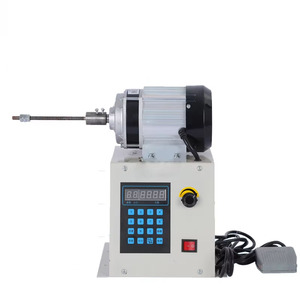
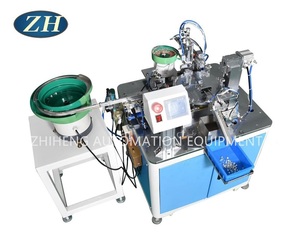
Selected based on operational uptime efficiency, precision winding tolerance, and OEM modularity. Explore top-rated turnkey systems manufactured by vetted production leaders.

Automated Turnkey Assembly Line Machine
Turnkey Line Integration

Assembly Line /assembly Machine

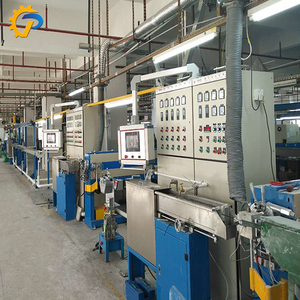
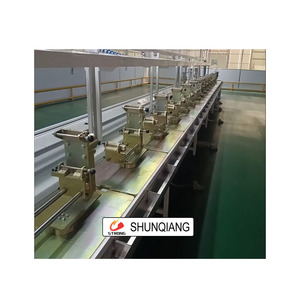
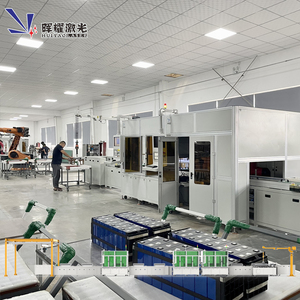
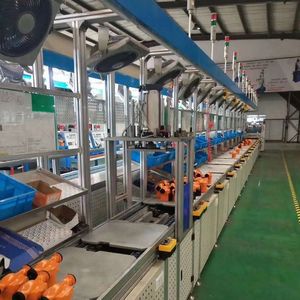
Customizable industrial assembly line system integrating pallet transfer conveyors, robotic pick-and-place, online testing units, and MES data synchronization for modern smart factories.

Global Motor Assembly Line Procurement & Supply Chain Analysis

As electric vehicles (EVs), industrial automation, unmanned aerial vehicles (UAVs), and high-efficiency home appliances proliferate worldwide, demand for advanced electric motor manufacturing equipment has experienced exponential growth. Selecting the ideal OEM factory or wholesaler requires evaluating technical capabilities, sample-based customization velocity, and end-of-line quality assurance.

88.5%
Global Market Shift to BLDC & PMSM
99.2%
Target First-Pass Yield (FPY)
< 15s
Automated Takt Time Efficiency
100%
Traceable In-Line Data Logging

The Strategic Shift: From Rigid Automation to Modular Cell Lines

Historically, motor manufacturing relied on rigid, single-purpose assembly lines with long changeover times. Modern manufacturing requires flexible, multi-station modular automation. Leading factories now engineer custom tooling capable of switching between multiple stator stack heights, wire gauges, and slot configurations in under 30 minutes. This agility allows OEMs to produce diverse BLDC, drone outrunner, and EV traction motors on a single unified line.
Strategic Procurement Horizon

Future Procurement Trends in Motor Assembly Lines

Procurement managers and engineering heads must align equipment acquisitions with upcoming technological shifts. Below are four key trends shaping global motor manufacturing investments over the next five years.

1. Shift Towards Hairpin Winding & High-Slot-Fill Needle Winding

Conventional fly-winding is rapidly being superseded by 4-station needle winding and hairpin technology. Needle winders provide high slot-fill factors exceeding 75%, directly boosting motor torque density and thermal dissipation. Global buyers are prioritizing manufacturers offering precision servo tension control to prevent insulation breakdown during tight slot feeding.

2. Deep AI Vision Inspection & Online End-of-Line (EOL) Testing

Modern procurement specifications require integrated 2D/3D visual AI inspection. Optical sensors verify pin alignment, commutator hot staking quality, and enamel wire integrity at micro-scale tolerances. Integrated EOL testing stations measuring surge voltage, insulation resistance (Hi-Pot), phase angle, and dynamic balance prevent defective stators from proceeding down the assembly sequence.

3. Sample-Based Rapid Prototyping & Digital Twin Simulation

Top-tier suppliers no longer build machines solely off static 2D drawings. Buyers demand sample-based customization backed by SolidWorks 3D kinematic simulation. By physically testing customer-supplied stators or rotors prior to line fabrication, equipment suppliers validate winding trajectory, nozzle clearance, and cycle times beforehand, eliminating commissioning delays.

4. Turnkey Single-Source Supply Chains

Procurement teams are reducing vendor fragmentation by sourcing complete manufacturing ecosystems—stator stamping, winding equipment, varnish trickle impregnation machines, and final assembly automation—from single verified integrators. This ensures single-point warranty accountability and uniform PLC software architecture.

Next-Generation Product Development Trends

How leading assembly line manufacturers are updating mechanical design, electrical control, and tooling systems to meet 2025 motor performance standards.

Motor Application Type Key Winding & Assembly Trend Required Machine Specifications Impact on OEM Production
UAV & FPV Drone Motors Outer-stator high-speed needle winding with ultra-fine wire control Dual-station CNC, 0.05mm tension accuracy, quick-change tooth fixtures Yields lightweight, vibration-free outrunner stators with zero wire crossover.
EV Air Compressors & Pumps Inner-stator high-voltage insulation & automated wire termination CNC multi-axis servo, inline hot staking, automatic slot paper insertion Ensures zero insulation breakdown under high peak electrical stress.
Electric Forklift Traction Motors Heavy-gauge permanent magnet BLDC/PMSM stator assembly Automated magnet insertion, heavy-wire winding, dynamic rotor balancing Delivers rugged, explosion-proof motor assemblies with high low-end torque.
Power Tools & Appliances Continuous multi-station armature coil winding & hot staking 4-station indexing table, automatic commutator spot welding, trickle resin line Achieves ultra-fast takt time (<12 sec/unit) for high-volume consumer goods.
Factory Audited Capability

Enterprise Advantages: Engineering Rigor & Manufacturing Scale

Benchmarked against global standards, our featured partner — Ningbo Davri Automation Equipment Co., Ltd. (Cefnak) — brings over 11 years of dedicated expertise to custom motor manufacturing equipment, stators, and automated assembly solutions.

Intertek On-Site Verified Manufacturer

Production facilities, legal compliance, engineering workshops, and trade capabilities are independently audited and verified on-site by Intertek. Buyers gain transparent sourcing security backed by official documentation.

Sample-Based Custom Engineering

Equipped with SolidWorks 3D modeling workstations and a dedicated R&D team (certified engineers with 5+ years of experience), winding tooling and fixtures are engineered directly from your physical motor sample or CAD file.

16 In-House Manufacturing Operations

From gantry high-speed lamination punching, stator stacking, and CNC needle winding to glue application, rotor balancing, aging testing, and export packing — full vertical integration guarantees strict quality control and predictable lead times.

Rigorous QA/QC Testing Laboratory

Quality assurance utilizes 6 dedicated testing instruments, including digital wire tension meters, Hi-Pot electrical withstand testers, multi-channel temperature rise recorders, digital video microscopes, and dynamic stator balancers.

Overseas Engineer Deployment & FAT/SAT

We mitigate international procurement risk by offering on-site technical deployment. Senior engineers handle installation, operator training, process optimization, and Factory Acceptance Testing (FAT) on your factory floor.

Agile MOQs & Direct Factory Pricing

Capital equipment and customized production lines start from an MOQ of just 1 set. Component supplies like UAV motor stators start at 500 pieces, enabling seamless scaling from pilot testing to mass volume.

Buyer Knowledge Base

Frequently Asked Questions for Sourcing Motor Equipment

Detailed technical answers addressing core engineering, lead time, and customization queries commonly raised by international procurement managers.

Q1: Which specific motor types can needle type vs. outer stator winding machines process?
Needle Type Internal Stator Winders are specifically designed for inner-rotor stators where wire must be routed precisely into internal slots (e.g., BLDC motors, electric power tools, automotive pumps, and EV HVAC compressors).

Outer Stator Winding Machines cater to external-rotor motors where coils are wound around teeth on the outer perimeter. Typical applications include UAV outrunners, FPV drone motors, ceiling fans, and treadmill drive motors.
Q2: What essential technical data is required to obtain an accurate machine proposal?
To provide an engineered proposal with exact station layouts and cycle time estimates, buyers should provide four key parameters:
  1. Stator Geometry: Inner/outer diameter, stack height, and number of slots (2D/3D CAD drawing preferred).
  2. Winding Parameters: Enamel wire diameter (mm/AWG), turns per coil, and wiring connection style (Star/Delta).
  3. Output Target: Desired Units Per Hour (UPH) or target takt time per stator.
  4. Physical Sample: Sending a sample stator core enables live trial winding in our application lab.
Q3: How is international after-sales support and machine commissioning handled?
Support structured for overseas clients includes:
  • Remote Diagnostics: Real-time PLC remote access for troubleshooting, software updates, and parameter tuning.
  • On-Site Field Support: Certified automation engineers dispatched to your facility for hardware installation, line integration, and operator training.
  • Spare Parts Availability: Wear-and-tear items (winding nozzles, wire guides, tensioner felts) are kept in stock for express dispatch.
Q4: Can complete turnkey production lines integrate existing third-party machinery?
Yes. Modular line architectures utilize standardized industrial communication protocols (EtherCAT, Profinet, Modbus TCP). This enables seamless synchronization between new winding cells, automated varnish impregnation units, existing stamping presses, and plant-wide MES systems.
Engineering Consultation

Accelerate Your Motor Manufacturing Project

Collaborate directly with senior automation engineers. Send your motor sample, drawing, or line target to receive a full technical proposal and trial winding analysis within 24 hours.

Contact Us