Turnkey Automated Motor Assembly & Production Lines
Explore industry-proven automated equipment tailored for HVAC compressor motors, EV traction stators, drone BLDC components, and heavy-duty industrial armatures.
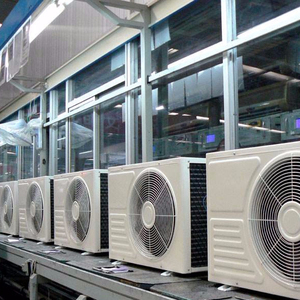
Automatic Electric Motor Assembly Line Air-conditioner Production Line
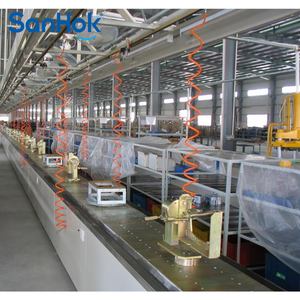
Car Motor Automatic Conveyor Electromobile Production Line Engine Assembly Line
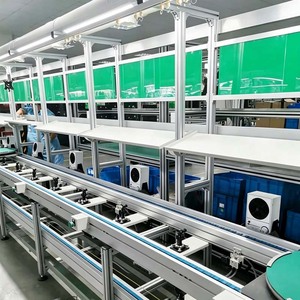
Professional High Performance Fully Automatic Assembly Line for Electric Motors
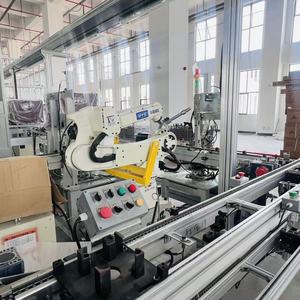
CE Certified Automatic Compressor Motor Assembly and Welding Production Line
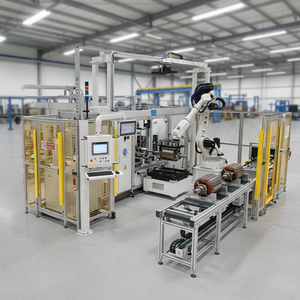
EV Motors Turnkey Automated Packaging Line Fully Filling Automatic Rotor Assembly Line
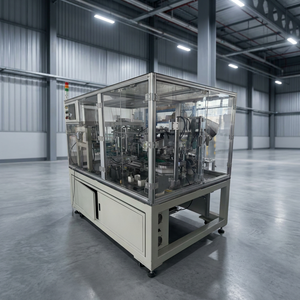
Heavy Duty/Precision Motor Automated Custom Assembly Line for Turnkey Engineering
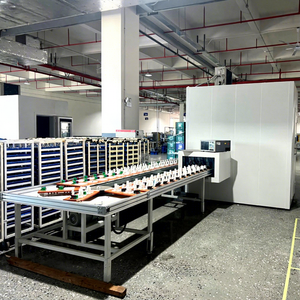
New Automatic Shaded-pole Motor Assembly and Inspection Assembly Line 380V/220V
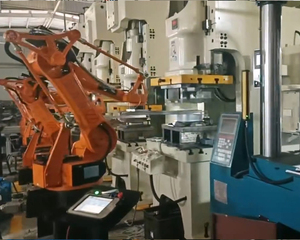
Industrial Automation PLC Motor Production Line for Electric Appliances
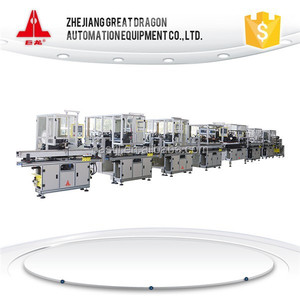
Electric Motor Automatic Production Line System
Industry 4.0 Smart Production Line Full Automation Unmanned Motors Set
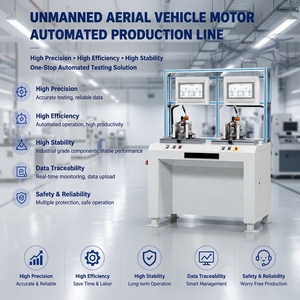
High Performance Automatic Brushless DC Motor Line for Civilian FPV Drone Motors
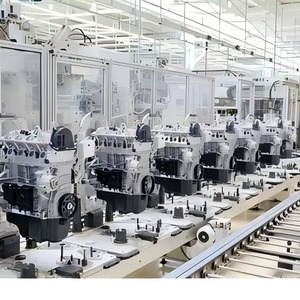
Efficient Semi-Automatic Motor Assembly Line Solution Multi-Voltage Compatibility
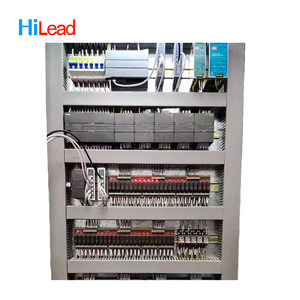
Production Line Intelligent Electronic Control System for Motor Lines
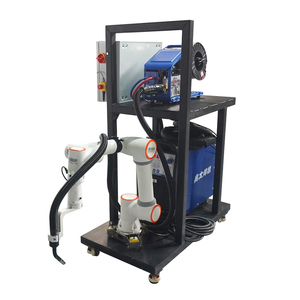
High Quality Electric Motor Arm Automated Production Line
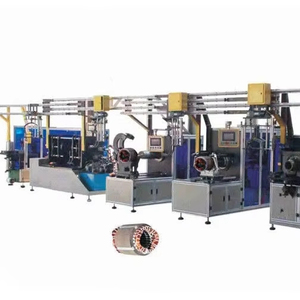
NDQ Series Electric Motor Assembly Line & Processing Machinery
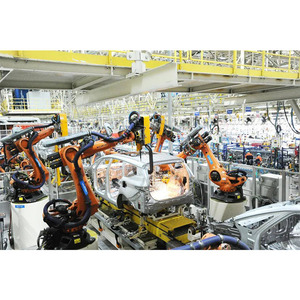
New Automatic Bus Motor Assembly Line with PLC+Touch Screen Control
Global Benchmark: Top 10 Motor Automation Line Factories & Tier-1 Systems
Selecting the optimal motor production line factory is one of the most critical decisions for automotive original equipment manufacturers (OEMs), appliance titans, and industrial motor builders. Modern manufacturing demands go far beyond simple coil winding; they mandate integrated end-of-line (EOL) testing, real-time statistical process control (SPC), high slot-fill factor optimization, and seamless traceability to Industry 4.0 MES ecosystems.
Below is an authoritative technical comparison matrix evaluating the premier global factories and systems integrators specializing in custom motor automation lines.
| Factory / Integrator | Core Specialization | Key Technical Strengths | Takt Time Efficiency | Best Suited Procurement Scale |
|---|---|---|---|---|
| Ningbo Davri / Cefnak Automation | Turnkey BLDC, EV Compressor & Drone Motor Lines | Sample-based custom tooling, integrated needle winding, 100% EOL testing, cost-effective custom automation. | High (< 10s - 18s) | Flexible Mid-to-Large Scale, OEM Customized |
| Grob-Werke GmbH | Automotive EV Traction Motor Lines | Hairpin stator assembly, high-speed wave winding, large-scale automotive robot integration. | Ultra-Fast (< 45s/stator) | Tier-1 Automotive Mega-Factories |
| ATS Automation Tooling Systems | High-Precision Industrial & Medical Motor Systems | SuperTrak linear motor conveyance, cleanroom automated assembly, vision-guided robotics. | High Precision (< 8s) | Global Multi-National Enterprise Lines |
| Thyssenkrupp Automation Engineering | E-Mobility Drive Unit & Rotor Assembly | Complete powertrain testing, magnet insertion, balancing & laser welding integration. | High Automotive Standard | High-Volume EV OEMs |
| Teamtechnik (Stram确定 Group) | Solar & Small Electric Motor Lines | Modular platform architecture, rapid fixture changeover, micro-winding precision. | Flexible (< 15s) | Specialized Precision Motor Builders |
| Odawara Engineering | Home Appliance & Automotive Stator Winding | In-slot needle winders, flyer winding, high slot-fill factor slot paper insertion. | High Volume Standard | HVAC & White Goods Manufacturers |
| Aumann AG | E-Mobility Coil Winding & Hairpin Technology | Enamel stripping, laser welding of hairpin wire ends, automated stator impregnation lines. | High Automotive Standard | European & Global EV Powertrain Plants |
| Kuka / MVTec Custom Robotics | Robotic Stator & Rotor Palletizing Lines | 6-axis heavy payload handling, automated dynamic balancing, adaptive vision alignment. | Modular Speed | Heavy Industrial & Traction Motors |
| Marsilli S.p.A. | Precision Winding & Bobbin Insertion Lines | Fine wire handling, multi-axis CNC fly winders, automated pin soldering stations. | Ultra-Fine Precision | Solenoid, Sensor & Micro-Motor Factories |
| Duoyuan / Industrial Automation Specialists | Heavy-Duty Bus & Appliance Conveyor Lines | PLC+Touch Screen modular lines, robust mechanical transfer systems, budget-friendly automation. | Medium (15s - 30s) | Regional Industrial Motor Manufacturers |
Information Gain Insight: Beyond Supplier Brand Recognition
While European tier-1 integrators dominate high-end automotive hairpin traction lines with multi-million dollar budgets, leading specialized Chinese automation factories like Ningbo Davri (Cefnak) offer unparalleled capital efficiency for BLDC outrunners, HVAC compressors, drone stators, and shaded-pole motors. They deliver identical component-level reliability (utilizing Siemens, Omron, SMC, and Schneider electronics) at 40% to 60% lower initial capital expenditure (CapEx).
Future Procurement Trends for Motor Automation Lines
The global transition toward electrification—spanning electric vehicles, unmanned aerial vehicles (UAVs), high-efficiency HVAC units, and smart home robotics—has drastically reshaped how procurement officers and plant managers evaluate capital investments in motor assembly equipment. Procurement strategies are shifting from purchasing isolated machines toward acquiring reconfigurable, intelligent manufacturing cells.
1. Shift from CapEx to TCO Evaluation
Modern procurement teams no longer choose lines based solely on sticker price. Total Cost of Ownership (TCO) models prioritize energy consumption per unit, tooling wear rates, spare parts availability, and mean time to repair (MTTR).
2. Demand for Rapid Takt Time & High OEE
Buyers are setting strict Overall Equipment Effectiveness (OEE) targets (typically > 88%) with guaranteed takt times under 12 seconds per stator to handle soaring production volumes without expanding physical factory footprints.
3. Modular Tooling & Quick Changeover
With product lifecycles shrinking, procurement specifies flexible lines equipped with quick-change tooling fixtures. Lines must support multiple stator stack heights and wire gauges with changeover times completed in under 30 minutes.
4. Remote FAT/SAT & Virtual Commissioning
Post-pandemic procurement standards mandate high-definition video Factory Acceptance Testing (FAT) and digital twin simulations, enabling overseas engineers to validate line sequencing prior to international freight dispatch.
5. Sample-Driven Custom Engineering
Off-the-shelf equipment frequently fails to meet proprietary motor designs. Procurement preferences have moved decisively toward vendors capable of engineering winding needles, wire tensioners, and hot staking heads tailored to actual physical samples.
6. Integrated Quality Gateways
Instead of testing completed motors at the end of the line, modern procurement requires inline quality checks—such as surge insulation testing, resistance measurement, and 3D visual inspections—at every individual station.
Key Industry & Technological Trends in Motor Automation
The motor manufacturing industry is undergoing a paradigm shift driven by high-density magnetic topologies, alternative winding geometries, and Industry 4.0 data convergence. Manufacturers who fail to upgrade legacy flyer winders risk obsolescence as thermal efficiency and copper fill factors become competitive battlegrounds.
1. High-Density Needle Winding vs. Hairpin Technology
For inner-rotor BLDC and outrunner drone motors, multi-axis CNC needle winding has replaced traditional insertion methods. Controlled needle movement allows wire placement directly into narrow stator slots, reaching slot-fill factors exceeding 75%. Simultaneously, in EV traction motors, 8-layer hairpin stator technology is gaining traction, requiring high-precision CNC stripping, bending, inserting, and 3D laser welding automation.
2. AI Vision Inspection & Optical Defect Recognition
Integrating AI-powered vision sensors into automated assembly lines eliminates human error during critical phases: verifying wire enamel insulation integrity, detecting misaligned slot paper, validating solder joint topography, and checking magnet surface flaws. Deep-learning algorithms adapt to subtle variance, ensuring zero defect escapes.
3. Smart MES & SCADA Cloud Integration
Modern motor assembly lines act as data hubs. Programmable Logic Controllers (PLCs)—such as Siemens S7-1500 or Omron Sysmac—stream realtime metrics to Manufacturing Execution Systems (MES). Parameters such as winding tension curves, hot staking temperatures, press-fit insertion forces, and hi-pot insulation resistance are automatically bound to individual motor serial numbers for 100% component-level traceability.
4. Linear Magnetic Levitation & Flexible Conveyance
Replacing traditional friction-driven belt conveyors with magnetic levitation pallets (e.g., Beckhoff XTS or SuperTrak systems) reduces mechanical wear, eliminates dust contamination, and enables independent speed control for separate assembly cells. This allows bottleneck operations (such as varnish dipping or spot welding) to operate in parallel without halting the main line.
Why Top Global Manufacturers Partner with Cefnak / Davri Automation
As an audited, Intertek-verified motor manufacturing equipment leader based in Ningbo, China, Ningbo Davri Automation Equipment Co., Ltd. (Cefnak) bridges the gap between high-precision mechanical engineering and scalable factory automation. Backed by over 11 years of hands-on industry experience, we specialize in needle-type internal stator winders, outer stator assembly lines, drone motor equipment, and EV compressor production lines.
Intertek On-Site Verified
Our production facilities, machine shops, and engineering offices are independently inspected and verified on-site by Intertek, assuring international buyers of real manufacturing capacity and transparent corporate governance.
Sample-Based Customization
We do not force standard catalog machines onto custom motor designs. Send us your stator/rotor samples or technical CAD drawings, and our senior engineering team will design custom winding tooling, nozzles, and fixtures tailored to your exact geometry.
Senior Engineering Workforce
Our technical team comprises certified engineers with an average of over 5 years of dedicated motor automation experience. We utilize advanced SolidWorks 3D simulation to eliminate mechanical collisions prior to machining.
6 In-House QC Testing Stations
Every machine undergoes rigorous pre-shipment quality verification using digital tension meters, hi-pot insulation testers, multi-channel temperature rise loggers, dynamic rotor balancing rigs, and video microscopes.
On-Site Overseas Support
We back global sales with complete field support. Our expatriate engineers travel directly to your facility for line installation, operator training, process tuning, and ramp-up optimization.
Complete Vertical Integration
From lamination stamping and stator frame assembly to automated winding, trickling, shell pressing, and final electrical testing—we deliver end-to-end line integration under unified PLC controls.
Have a custom motor drawing or target takt time requirement? Consult directly with our engineering department:
Frequently Asked Procurement & Technical Questions (FAQ)
Accelerate Your Motor Manufacturing Line Today
Whether you need a standalone 4-station needle winding machine or a complete turnkey BLDC / EV compressor motor assembly line, our application engineering team is ready to analyze your sample specs and optimize your production yield.