Featured Winding Machinery & Testing Platforms
Explore high-performance single-station and automated coil winders, motor durability dynamometers, and assembly production lines engineered for global electric motor OEMs.
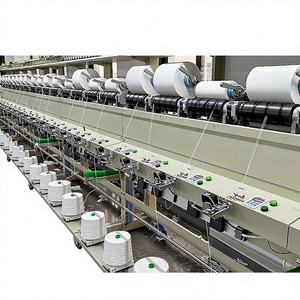
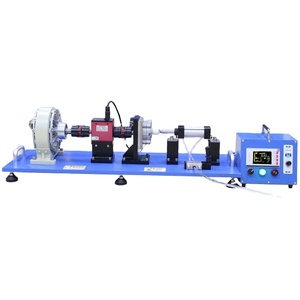
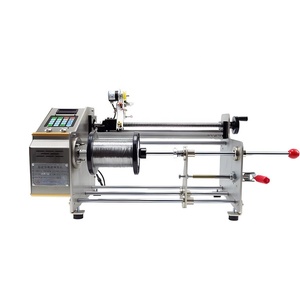
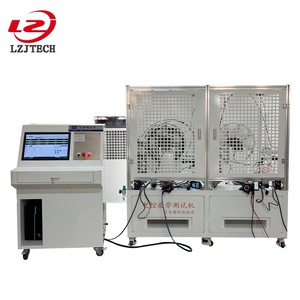
The Role of Single Station Winding Machinery in Modern Motor Manufacturing
Analyzing why agile single-station CNC winders are outperforming traditional rigid transfer lines in multi-spec motor manufacturing ecosystems.
In the rapidly evolving landscape of global electric motor manufacturing, the demand for high-efficiency Brushless DC (BLDC), Permanent Magnet Synchronous Motors (PMSM), and high-torque industrial stators has driven capital equipment purchasers to re-evaluate coil winding architectures. While mass multi-station inline transfer systems dominate ultra-high volume, low-mix production (such as standard ceiling fans), the global shift toward specialized automotive pumps, EV thermal management compressors, UAV drone outrunners, and premium power tools requires an unprecedented degree of manufacturing agility.
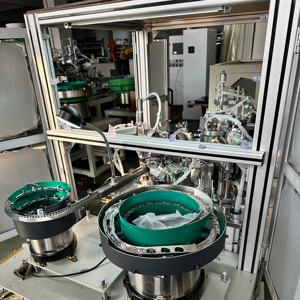
This is where Single Station Winding Machines deliver their decisive competitive advantage. By concentrating precision CNC needle winding, flyer rotation, or spindle wrapping into a single modular cell, manufacturers achieve minimal tooling changeover times (often under 15 minutes), localized tension control, and slot fill ratios exceeding 78% to 82% without risking copper wire enamel degradation.
Modern electric motor designs require maximized copper volume within restricted stator slot geometry. A single station winder allows dedicated multi-axis servo control to lay wire turn-by-turn with absolute geometric repeatability. Increasing slot fill from 65% to 78% reduces stator electrical resistance, cuts $I^2R$ copper losses by up to 18%, and significantly improves heat dissipation in compact motor housings.
Top 10 Single Station Winding Machine Manufacturers & Factories
A global comparative analysis based on tooling versatility, tension accuracy, CNC motion control integration, and aftermarket commissioning support.
When selecting a single-station winding machinery vendor, engineering teams evaluate suppliers across critical technical metrics: motion control responsiveness (closed-loop servo vs. open-loop stepper), wire tension consistency (mechanical hysteresis vs. active closed-loop electronic tensioners), customized tooling lead times, and global on-site commissioning capabilities. Below is an authoritative technical overview of the top 10 global manufacturers defining industry standards in 2025.
| Manufacturer / Brand | Primary Technology Focus | Wire Gauge Range | Tension Control Type | Key Strengths & Market Position |
|---|---|---|---|---|
| Cefnak (Davri Automation) | Needle Type Internal & Outer Stator Winders | 0.08 mm – 2.2 mm | Closed-Loop Active Servo | Verified sample-based custom tooling, turnkey line integration, on-site engineer deployment. |
| Statimat (Germany) | Heavy-Duty Stator Insertion & Needle Winders | 0.20 mm – 3.5 mm | Electronic Closed-Loop | High capital investment, premium automotive EV traction stators, specialized tooling. |
| Aumann (Germany) | Automated Winding & E-Mobility Assembly | 0.15 mm – 2.8 mm | Multi-Axis Synchronized | Tier-1 automotive electrification systems, integrated coil transfer stations. |
| Marsilli (Italy) | Precision Spindle & Flyer Winding Systems | 0.02 mm – 1.8 mm | Precision Magnetic/Servo | Ultra-fine wire coils, ignition coils, sensor winding, high-speed spindle motion. |
| Odawara Engineering (Japan) | Automated Stator Winding & Inserters | 0.12 mm – 2.0 mm | Mechanical & Servo Hybrid | Renowned durability, home appliance compressor motors, long equipment service life. |
| Nidec / SWA (USA/Japan) | Industrial Motor Stator & Armature Winders | 0.25 mm – 4.0 mm | Pneumatic / Servo Tension | Large frame industrial motors, heavy-gauge wire handling, rigid mechanical build. |
| Tanac (Japan) | Multi-Axis CNC Coil Winders | 0.015 mm – 1.2 mm | Micro-Tension Control | High precision miniature transformer coils, electronic relay components. |
| REA Automatizari (Romania) | Custom Single-Station Linear Winders | 0.10 mm – 2.5 mm | Closed-Loop Tensioner | European custom automation cells, specialized industrial solenoid winders. |
| Shinko Electric (Japan) | Dedicated BLDC Needle Winding Machinery | 0.08 mm – 1.8 mm | Servo Closed-Loop | High-speed indexing tables, compact footprint single station cells. |
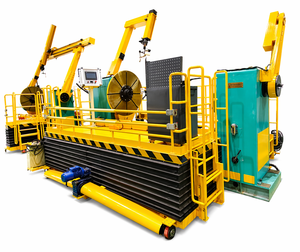
| Leadwin Automation (China) | Heavy Torque VFD & Horizontal Winders | 0.50 mm – 6.0 mm (Flat) | VFD Speed Torque Dynamic | Power transformers, massive industrial stators, high torque capacity up to 25,000 N.m. |
Future Procurement Trends in Single Station Winding Technology (2025–2030)
Key technological shifts shaping capital expenditure decisions for motor manufacturers worldwide.
1. AI-Assisted Closed-Loop Tensioning
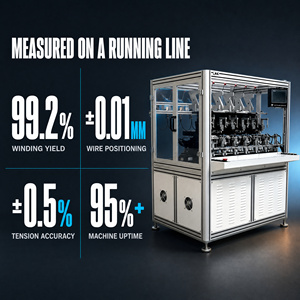
Traditional friction tensioners fail to compensate for microscopic wire enamel variations or spindle acceleration spikes. Next-generation single station winders incorporate real-time piezoelectric load cells paired with servo feedback algorithms. If wire tension fluctuates beyond ±0.05N, the system adjusts spindle speed within milliseconds, preventing micro-fractures in copper insulation.
2. Rapid Modular Tooling (SMED)
Single Station Winding Machines are increasingly deployed in high-mix environments where batch sizes range from 50 to 2,000 units. Future procurement specs prioritize Single-Minute Exchange of Die (SMED) features: quick-release needle nozzles, magnetic core clamp plates, and automated CNC program retrieval via QR code scanning on the motor lamination stack.
3. IoT & OPC-UA Data Integration
Procurement teams from Tier-1 automotive and industrial sectors now demand native OPC-UA and MQTT protocol compatibility. Modern single station winders continuously stream operational parameters—including total turns count, instantaneous tension curves, cycle times, and wire feed speeds—directly to Manufacturing Execution Systems (MES) for complete traceability.
Needle Winding vs. Flyer Winding: Selecting the Right Architecture
Understanding how stator geometry dictates kinematic machine choice for maximum output efficiency.
A frequent dilemma for motor production engineers is deciding between Needle Type Internal Stator Winding and Flyer Type Winding platforms. Choosing the wrong kinematic design can lead to wire abrasion, slow cycle times, or physical tooling collisions with stator tooth tips.
Needle Type Internal Stator Winding
Kinematic Principle: A CNC-guided hollow needle moves linearly ($Z$-axis) and rotates ($C$-axis) inside the inner diameter of the stator stack, feeding wire directly into internal slots.
Outer Stator / Flyer Winding
Kinematic Principle: The stator remains fixed or indexes on an axis while an external flyer arm rotates rapidly around the tooth exterior, guiding wire into outer slots.
Integrated Manufacturing: From Machinery Engineering to Motor Production
Leveraging 11+ years of dual expertise in capital equipment building and precision motor component manufacturing in Ningbo, China.
Unlike pure equipment brokers who purchase standard chassis and resell them, Ningbo Davri Automation Equipment Co., Ltd. (Cefnak) operates as an independently verified, end-to-end manufacturing power. Located in Ningbo, Zhejiang—China's primary hub for motor innovation—our facility integrates metal stamping, stator stack lamination assembly, CNC winder fabrication, dynamic balance testing, and custom motor assembly under one rigorous Quality Management System verified by Intertek.


Overseas buyers frequently face risks when purchasing custom winding machinery based solely on 2D drawings. At Cefnak, our technical protocol mandates physical trial winding on your actual motor samples prior to machine dispatch. Our engineering team designs custom winding nozzles, clamping jaws, and wire guides, executes sample winding runs in our QA lab, and sends full video verification and micro-sectional wire inspection reports before final FAT sign-off.
Frequently Asked Questions (FAQ)
Expert engineering answers to common procurement, technical sizing, and international service questions.
Which specific motor types can your single station winding machines process?
Our single station winding portfolio covers three major kinematic configurations:
- Needle Type Internal Winders: Designed for inner-rotor BLDC stators, automotive water/oil pumps, power tool stators, and electric vehicle HVAC compressor motors.
- Outer Stator Winders: Designed for external-rotor motors such as FPV drone outrunners, civilian UAV motors, ceiling fans, and treadmill drive motors.
- Rotor & Armature Winders: Designed for slotted armatures used in universal motors, automotive wiper motors, and brushed DC power tools.
What key parameters are required to generate a precise machine sizing proposal?
To provide an accurate engineering proposal and tooling quotation during the first technical review, our team requires four key parameters:
- Stator or Rotor Dimensions (Outer Diameter, Inner Diameter, Stack Height, and Slot Opening Width).
- Number of Slots and Winding Diagram (Phase connection scheme, delta or star configuration).
- Copper Wire Gauge (Bare wire diameter and enamel thermal class insulation rating).
- Target Production Capacity (Units Per Hour / UPH or desired line cycle time).
Can Cefnak machinery be customized from our physical motor sample or CAD drawing?
Yes. Sample-based customization is an independently verified core competency of Cefnak. Overseas customers can send physical stator laminations or 3D STEP files. Our R&D department creates SolidWorks tooling assemblies, calculates motion trajectory paths, fabricates custom tungsten-carbide lined winding nozzles, and conducts physical trial winding validation prior to shipment.
Do you provide full turnkey automated production lines beyond standalone winders?
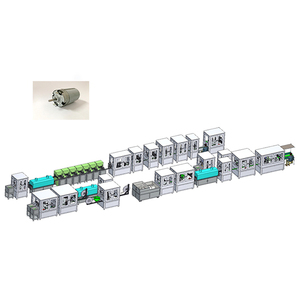
Absolutely. In addition to single station standalone machinery, Cefnak designs and installs turnkey automated production lines for FPV/UAV drone motors, BLDC stators, treadmill motors, and EV compressor assemblies. These integrated lines seamlessly combine automatic insulation paper insertion, CNC coil winding, wire terminal stripping/crimping, spot welding/hot staking, automated lacing/taping, and 100% End-of-Line (EOL) electrical withstand and dynamometer testing.
What after-sales technical support and overseas commissioning services are provided?
We provide comprehensive support for global installations:
- Remote Technical Guidance: High-definition video commissioning support, PLC remote diagnostics via Ethernet modules, and detailed step-by-step operation manuals.
- On-Site Overseas Engineer Support: Verified capability to dispatch certified senior engineers directly to buyer facilities worldwide for mechanical installation, operator training, and process fine-tuning.
What is the standard Minimum Order Quantity (MOQ) and production lead time?
Our MOQs are structured to accommodate both capital equipment buyers and motor component OEM customers:
- Single Station Winding Machines & Testing Platforms: MOQ = 1 Set (Standard lead time: 30 to 45 days depending on tooling complexity).
- Custom UAV / Drone Motor Stators: MOQ = 500 Pieces.
- Finished BLDC & Permanent Magnet Synchronous Motors: MOQ = 10 Pieces.
Accelerate Your Motor Production Efficiency
Partner with an Intertek-verified capital equipment manufacturer. Send your stator drawings or sample requirements today to receive a comprehensive technical proposal within 24 hours.
Send an Inquiry