Featured Stator Winding Lines & Industrial Motor Automation Systems
Explore high-precision stator winding machinery, automated assembly lines, and motor testing setups engineered for BLDC, EV traction, drone outrunners, and industrial induction motors.
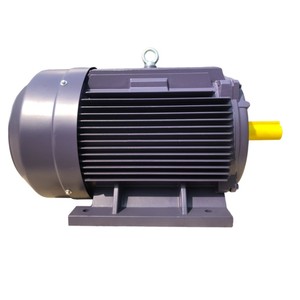
5.5kw 3 Phase Asynchronous Electric Three Phase Induction Motor Production Line
High-torque 30kW induction motor winding line equipped with 134Nm encoder integration and automated slot insertion.
Explore Product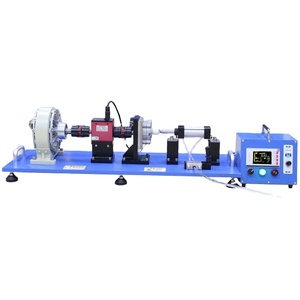
Dynamometer Motor Testing Machine & Inspection Test Equipment
End-of-line (EOL) dynamometer testing rig designed for torque performance measurement and back-EMF diagnostic verification.
Explore Product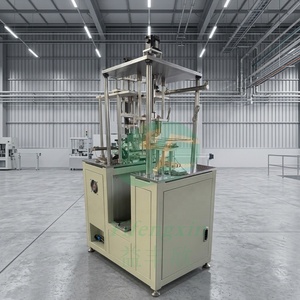
Fully Automatic ISO Certified Motor Assembly & Winding Production Line
Turnkey multi-station automated line integrating lamination stacking, coil winding, varnish potting, and final EOL testing.
Explore Product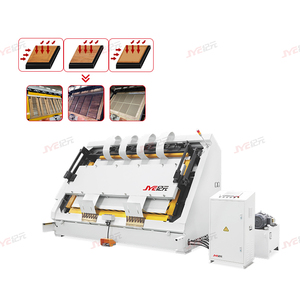
JYC High Frequency 20KW Motor Frame & Component Assembly Machine
Heavy-duty high-frequency heating and motor housing shrink-fitting press machine with precision thermal controls.
Explore Product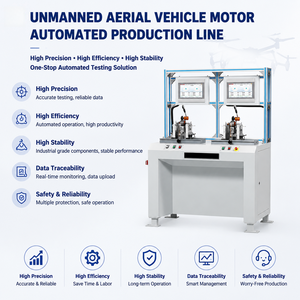
Custom OEM/ODM BLDC Motor Production & Winding Line for FPV Drones
Ultra-fine wire outer-stator flyer winding system optimized for drone brushless outrunner motors (12S14P, 2207, 2806).
Explore Product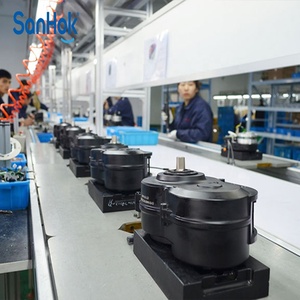
Semi-Automatic Modular BLDC Motor Stator Winding & Assembly Line
Modular 380V/220V flexible assembly line designed for low-to-medium volume multi-SKU BLDC motor manufacturing.
Explore Product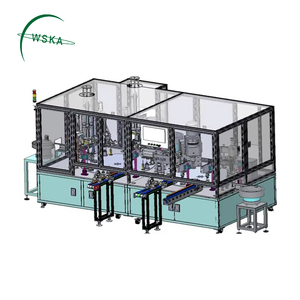
Automotive Parts Equipment Flexible Member Winding & Assembly Line
PLC-controlled automotive electric pump and compressor motor stator winding machine with high-precision servo insertion.
Explore Product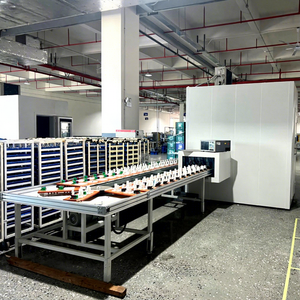
Automatic Shaded-Pole Motor Assembly & Inspection Winding Line
High-speed 4-station shaded-pole motor winding machine integrating automatic copper ring insertion and surge testing.
Explore ProductExecutive Summary: The Evolving Stator Winding Ecosystem
The global electric motor manufacturing industry is undergoing a structural paradigm shift. Accelerated by the mass electrification of commercial vehicles, drone mobility (UAV/FPV), high-efficiency industrial pumps (IE4/IE5 compliance standards), and automotive HVAC compressors, the demand for automated stator winding lines has transitioned from standard mass-production units to hyper-flexible, high-precision automation systems.
Stator winding represents the heart of electric motor production. The slot fill factor, copper wire tension stability, insulation slot paper insertion quality, and phase-to-phase electrical isolation directly dictate motor energy efficiency, torque density, and operational lifespan. Procurement officers, plant managers, and industrial process engineers face increasing complexity when sourcing stator winding equipment due to varying slot geometries (internal vs. external rotor), wire gauges (ultra-fine 0.05mm copper wire to heavy-duty 3.5mm rectangular copper wire), and takt time demands.
Technical Deep-Dive: Key Evaluation Metrics for Stator Winding Lines
Evaluating a stator winding line factory requires analyzing fundamental electromechanical metrics rather than relying solely on catalog pricing. High-tier suppliers set themselves apart through mechanical rigidity, closed-loop servo control dynamics, and software-driven process optimization.
1. Winding Kinematics & Topology
Selection between Needle Type Internal Winding, Flyer Outer Stator Winding, and Hairpin Wave Winding depends strictly on rotor orientation and slot width opening. Needle winders utilize multi-axis CNC motion to lay wire directly inside narrow internal slots with minimal wire stretch, achieving slot fill ratios up to 75%.
2. Dynamic Wire Tension Management
Micro-scratches on enamel copper wire lead to inter-turn short circuits during high-voltage surge testing. Premium winding lines incorporate dynamic closed-loop magnetic or hysteresis tensioners coupled with real-time tension feedback sensors to maintain force consistency within ±2% across high-speed acceleration phase (>2500 RPM).
3. In-Line Quality Metrology (EOL)
World-class winding lines feature fully integrated End-of-Line testing modules. This includes 3000V AC withstand voltage testing, insulation resistance testing (>500MΩ), coil DC resistance balancing, surge impulse wave comparison, and high-resolution optical vision inspection for terminal wire lead alignment.
Standard Technical Benchmarks by Motor Application
| Application Domain | Primary Winding Method | Slot Fill Factor | Wire Tension Control | Typical Cycle Time / Stator |
|---|---|---|---|---|
| UAV / FPV Drone Outrunner | Flyer / Outer Needle Winder | 60% - 68% | Hysteresis / Closed-Loop Servo | 45s - 90s |
| EV Compressor & Pump BLDC | CNC Needle Internal Winder | 68% - 75% | Electronic Tensioner (±1.5%) | 35s - 65s |
| Industrial 3-Phase Induction | Coil Inserting / In-Slot Winder | 55% - 65% | Mechanical Friction / Magnetic | 120s - 300s |
| Automotive Traction (EV) | Hairpin 3D Wave Winding | 75% - 82% | Servo Linear Forming Press | 20s - 40s |
Top 10 Stator Winding Line Factory & Supplier Benchmark (2025 Evaluation)
Based on manufacturing footprint, patent portfolios, customization agility, engineering support, and third-party verification credentials, the following ten manufacturers represent the leading tier of global stator winding equipment suppliers.
Ningbo Davri Automation Equipment Co., Ltd. (Cefnak)
Headquarters: Ningbo, Zhejiang, China
Core Focus: Turnkey BLDC Winding Lines, Drone Motor Stators, EV Compressor Lines, Needle Internal Winders.
Key Advantage: Verified sample-based custom tool design. 16 full in-house processes ranging from lamination metal stamping and stator assembly to precision needle winding, commutator hot staking, vacuum varnish potting, and EOL dynamic testing. Supported by Intertek on-site verified audit reports and overseas expatriate commissioning engineers.
Odawara Engineering Co., Ltd.
Headquarters: Japan
Core Focus: Automotive Traction Motor Lines, Household Appliance Winding Systems.
Key Advantage: Renowned for extreme high-speed coil winders and automated inserting lines catering to global tier-1 automotive OEMs with ultra-high reliability.
Marsilli S.p.A.
Headquarters: Italy
Core Focus: Fine Wire Winding, Automotive Actuators, Solenoids.
Key Advantage: Excellence in fine wire winding kinematics, high-precision tension control systems, and automated palletized assembly system integration.
Statomat GmbH
Headquarters: Germany
Core Focus: Heavy Industrial Motor Winding, EV Hairpin Stator Lines.
Key Advantage: Pioneering patents in hairpin stator forming, twisting, laser welding, and automated wire insulation stripping for electric vehicles.
Scheugenpflug Process Automation
Headquarters: Germany
Core Focus: Resin Potting & Thermal Compound Dispensing for Stators.
Key Advantage: Specialized in vacuum impregnation and resin potting integration for high-thermal-demand stator winding applications.
Felsomat GmbH & Co. KG
Headquarters: Germany
Core Focus: Flexible Hairpin Manufacturing Lines.
Key Advantage: Complete e-mobility turnkey automation combining CNC bending, slot paper insertion, wave winding, laser welding, and trickling varnish units.
Why Cefnak (Ningbo Davri) Stands Out: Manufacturing & Engineering Capabilities
Sourcing custom motor winding equipment requires an OEM partner capable of bridging theoretical electromechanical design with physical factory production. Located in Ningbo, Zhejiang—China's primary hub for motor automation engineering—Ningbo Davri Automation Equipment Co., Ltd. (Cefnak) operates as both an equipment machine builder and a precision motor component manufacturer.
Intertek-Verified Operations
Our facility, operational legal status, manufacturing workshop, and export capabilities have been audited and verified on-site by Intertek. Buyers receive full transparency through third-party audited documentation and credit reports.
16 In-House Production Steps
We control quality across the entire vertical supply chain: silicon steel metal stamping, stator core assembly, slot paper insulation, needle winding, wire stripping, hot staking, dynamic balancing, varnish potting, aging test, and export packing.
Overseas Technical Support
We provide remote digital commissioning assistance alongside overseas expatriate engineer dispatch. Our certified automation engineers deliver on-site machine installation, operator training, process tuning, and custom tooling setup.
Metrology & Quality Assurance Infrastructure
Equipped with 6 specialized testing instruments managed by 5+ senior engineers (each possessing 5+ years of motor automation experience), ensuring zero-defect output before shipment.
Wire Tension Meters
Digital tension measurement prevents enamel micro-fractures during high-speed needle travel.
Hi-Pot & Surge Testers
AC/DC withstand voltage testers verify slot dielectric insulation up to 3000V AC.
Temperature Rise Testing
Multi-channel thermal loggers record continuous loaded continuous thermal behavior.
Optical Microscope Lab
High-magnification video inspection of terminal hot-staking solder joint integrity.
Future Trends: Stator Winding Procurement (2025–2030)
As global manufacturing shifts toward Industry 4.0 standards, stator winding production line procurement is being reshaped by four definitive technological developments:
Trend 1: Modular Quick-Changeover Tooling
Modern motor production environments demand smaller batch sizes across multiple SKUs. Future stator winders feature servo-controlled needle stroke adjustment, quick-release fixture plates, and automated software recipe selection—reducing tooling changeover time from 4 hours down to under 15 minutes.
Trend 2: AI Vision Inspection & In-Line Analytics
Integrating industrial AI cameras directly over the winding needle path allows for real-time detection of wire overlapping, loose turns, enamel coating tears, and terminal misalignments. Defective stators are automatically routed to reject stations before reaching varnish potting.
Trend 3: Shift Toward Direct Hairpin & Wave Winding
Automotive traction and heavy-duty industrial motors are increasingly adopting rectangular copper wire (Hairpin technology) to maximize slot copper density (>80%), enhance direct thermal heat dissipation, and reduce total stator stack length.
Trend 4: Energy-Efficient Closed-Loop Power Units
Next-generation winding lines incorporate regenerative multi-axis servo drives that recycle kinetic energy generated during rapid deceleration phases back into the factory power grid, cutting machine operational power consumption by 18-25%.
Frequently Asked Procurement Questions (FAQ)
Addressing essential engineering, commercial, and technical evaluation questions for global B2B procurement managers.
Which motor types can your stator winding machines handle?
Do you supply complete turnkey motor production lines?
Can machines be engineered from our physical motor sample or CAD drawing?
What after-sales and installation support is available for overseas buyers?
What is the Minimum Order Quantity (MOQ) and lead time?
What key information is required to receive a formal technical proposal?
Ready to Optimize Your Stator Winding Line Project?
Send us your stator sample specifications, motor drawings, or required production capacity targets. Our senior automation engineers will evaluate your project and deliver a comprehensive technical proposal.
Contact Us