State of Automated Motor Manufacturing Equipment in China
The global electric motor manufacturing sector is experiencing a paradigm shift driven by high-efficiency requirements (IE3/IE4/IE5 standards), EV traction demands, and UAV/FPV brushless motor proliferation. As the world's primary hub for motor manufacturing automation, Chinese factories lead in turn-key internal stator needle winding, outer stator outrunner assembly, and servo-controlled armature production lines. This technical procurement report evaluates industrial solutions, vendor capabilities, total cost of ownership (TCO), and automated assembly line trends for global OEM buyers.
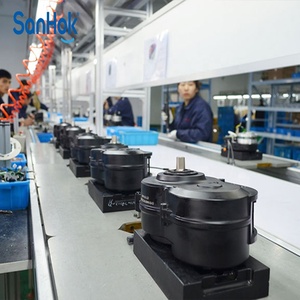
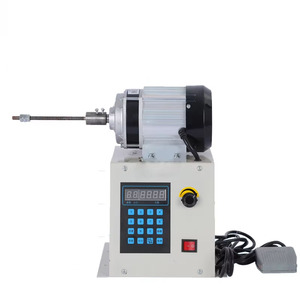
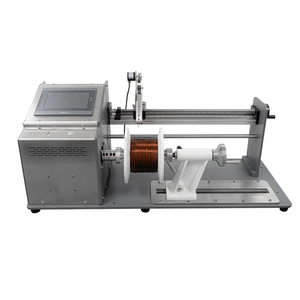
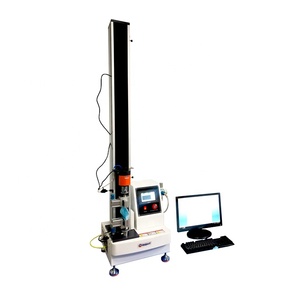
Featured Automatic Motor Production Lines & Machinery
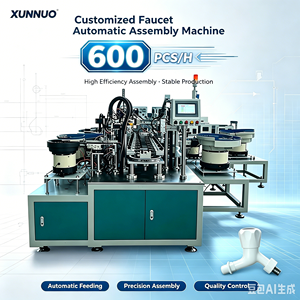
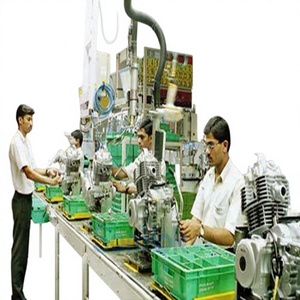
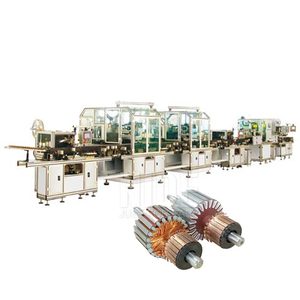
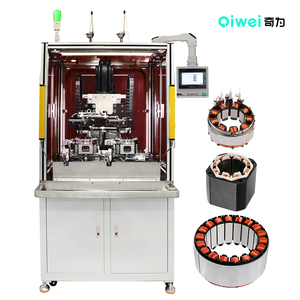
High-precision motor assembly systems, stator coil winders, and quality assurance testing units from top-tier Chinese manufacturers.
1. Key Technical Criteria when Sourcing Chinese Motor Winding Equipment
Sourcing an automated motor assembly line requires rigorous evaluation of mechanical design, multi-axis motion control protocols, and electrical safety standards. Modern electric motors—ranging from high-power BLDC industrial drives to micro FPV drone outrunners—require precise slot fill ratios, minimal copper wire tension fluctuation, and strict inter-turn insulation integrity.
A. Motion Control Architecture: Servo Synchronization & PLC Integration
Leading Chinese machine builders utilize high-speed Industrial Ethernet protocols (such as EtherCAT or PROFINET) coupled with 4-to-12-axis CNC servo control systems. High-precision needle winders employ absolute optical encoders on all rotary and linear axes, eliminating homing routines while securing a positioning accuracy of ±0.005 mm. This servo synchronization prevents wire overlap, minimizes enamel coating degradation, and ensures uniform coil distribution across all stator slots.
B. Dynamic Wire Tension Management
Dynamic tension control directly dictates motor longevity and thermal resistance. Traditional mechanical tensioners are increasingly replaced by active electronic servo tensioners. These systems real-time adjust copper wire feed rates during rapid needle motion, suppressing tension spikes to within ±2% of target Newton values. Maintaining stable tension prevents micro-cracks in the insulation enamel, reducing post-winding hi-pot test failures significantly.
Winding Technology Architectural Matrix
Engineered selection framework for electric motor topology vs. automation technology
| Winding Technology | Target Motor Applications | Max Slot Fill Factor | Takt Time Efficiency | Primary Engineering Advantage |
|---|---|---|---|---|
| Internal Needle Winding | Inner-Rotor BLDC, Automotive Water Pumps, Power Tools | up to 78% | High (< 8 sec / stator) | Direct slot guiding; optimal for high-slot-number narrow openings. |
| Outer Stator Flyer Winding | FPV Drone Outrunners, Fitness Treadmills, HVAC Fans | up to 72% | Ultra-High (< 5 sec / stator) | High-speed rotary flyer head; minimal mechanical complexity. |
| Armature Slot Winding | Universal Motors, Brushed DC Motors, Starter Motors | up to 68% | Medium-High | Integrated commutator hot staking & automatic hook wrapping. |
| Hairpin Stator Winding | EV Traction Motors, High-Voltage Compressors | up to 85% | Automated Batch Line | Maximum slot copper density, superior thermal dissipation profile. |
2. Enterprise Strength & Manufacturing Verification (E-E-A-T)
When investing in custom automation machinery, verified supplier credentials and sample-validated tooling design are essential to mitigate international trade risks. Verified by independent third-party inspection firms (such as Intertek), specialized Chinese equipment manufacturers such as Ningbo Davri Automation Equipment Co., Ltd. (Cefnak) provide turnkey reliability backed by robust in-house infrastructure:
Sample-Based Customization
Complete custom design of winding nozzles, wire guides, and clamping fixtures generated directly from customer-provided stator samples or 3D STEP drawings in SolidWorks.
Intertek Verified Facilities
On-site audited workshop capabilities featuring high-speed gantry punch presses, CNC machining centers, and 6 specialized electronic testing instruments.
Global On-Site Service
Bilingual field engineers trained for international dispatch to handle machinery placement, line commissioning, operator technical training, and production tuning.
Future Procurement & Technology Development Trends (2025–2030)
Strategic intelligence for motor engineering directors planning next-generation capital expenditures.
1. Transition to Industry 4.0 & Digital Twin Line Supervision
Future assembly lines are embedding IoT vibration sensors, temperature tracking, and real-time wire tension logging directly into MES (Manufacturing Execution Systems). Procurement officers are prioritizing machines equipped with OPC-UA protocols for seamless cloud monitoring and predictive maintenance alerts.
2. Ultra-High-Speed Outer Winding for Drone & Robotics BLDC
With the exponential demand for FPV racing drones, commercial delivery UAVs, and humanoid robot actuators, outrunner stator winding speed requirements have doubled. Modern CNC winding machines now achieve spindle speeds exceeding 3,000 RPM while maintaining zero scrap rates.
3. Flexible Modular Assembly Lines for Fast Model Changeovers
OEM buyers are shifting away from rigid single-product lines. The trend favors modular cell designs where changeover between different stator stack heights and diameter geometries can be completed in under 15 minutes using quick-release servo tooling.
4. Integrated EOL (End-of-Line) Automated Testing Stations
Modern production lines incorporate automated vision alignment, micro-soldering inspection, surge/hi-pot insulation testing, dynamic rotor balance checking, and digital reporting within a unified assembly loop to ensure zero-defect shipment.
3. Step-by-Step Quality Control & Acceptance Protocol
To prevent commissioning delays, international buyers must establish clear Factory Acceptance Testing (FAT) and Site Acceptance Testing (SAT) guidelines prior to shipping machinery from China.
- Pre-Winding Core Inspection: Verify lamination stack height tolerance, slot paper insulation presence, and stator epoxy coating integrity before feeding into the winder.
- In-Process Tension Audit: Utilize handheld digital tension meters to check dynamic tension during high-speed needle movement across all phases (U, V, W).
- End-of-Line Insulation Check: Apply 100% surge voltage testing (impulse winding insulation test) and DC resistance measurement across terminals to detect turn-to-turn short circuits.
- Mechanical Alignment Test: Perform dial indicator runout checks on moving tooling spindles to confirm radial and axial play remain within < 0.01 mm.
Frequently Asked Questions (FAQ) for Procurement Managers
Addressing technical, logistical, and commercial inquiries for motor manufacturing machinery sourcing.
Which motor topologies can Chinese automatic winding lines handle?
Chinese automated winding systems cover a vast spectrum of motor topologies: inner-rotor BLDC stators (needle winding), outer-rotor outrunner stators (flyer winding for drone/treadmill motors), universal motor armature rotors (hook winding with automatic commutator hot staking), EV traction motors (hairpin winding), and shaded-pole/transformer coils.
Can custom winding machinery be built based on our existing stator samples or 3D STEP files?
Yes. Customization based on sample stators or CAD drawings is a core competency of specialized Chinese machine manufacturers. Engineers design custom winding needles, wire guides, expansion collets, and indexing plates specifically tailored to your stator slot geometry and wire gauge prior to assembly line fabrication.
What parameters are required to generate an accurate machinery quotation?
To provide a precise technical proposal and quotation, suppliers require four core engineering metrics: (1) Stator outer/inner diameter and stack height range, (2) Wire gauge diameter (mm) and number of turns per coil, (3) Slot count and slot opening width, and (4) Target production output volume (units per hour / takt time).
What international quality certifications and electrical standards do these lines comply with?
Premium export-grade automatic motor lines comply with international safety regulations, including CE Directive compliance, ISO9001 Quality Management standards, ROHS compliance, and optional UL-compliant electrical panel wiring (featuring Schneider/Siemens electrical switchgear and multi-voltage transformers for 380V/220V/480V 50/60Hz grid compatibility).
How is overseas installation, commissioning, and technical training managed?
Suppliers provide comprehensive FAT (Factory Acceptance Test) video validation prior to shipment. Upon machine arrival at your factory, senior field engineers can be dispatched to your site to perform physical installation, pneumatic/electrical hookup, HMI recipe setup, line commissioning, and hands-on operator maintenance training.
Need a Custom Motor Production Line Solution?
Send your stator/rotor drawing, wire specifications, and target UPH to receive a complete engineering proposal, 3D tooling layout, and factory-direct quotation within 24 hours.
Get a Quote