Intertek Verified Supplier Ningbo, Zhejiang, China info@cefnakauto.com
Industrial Automation White Paper

Top China BLDC Stator Production Line Manufacturer & Exporter

Next-Generation Needle Winding Solutions, Turnkey Assembly Systems & High Fill-Factor Engineering for Global Electric Motor OEMs

Turnkey Industrial Lineup

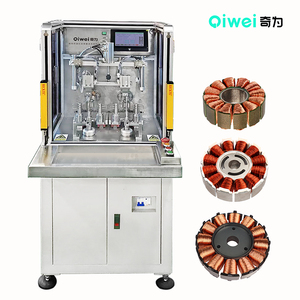
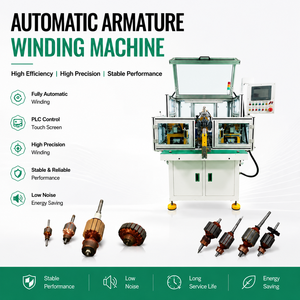
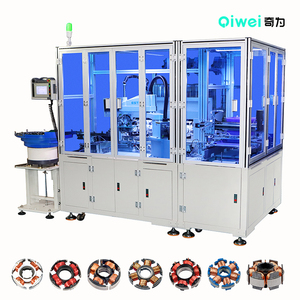
Featured Stator Winding & Automated Production Systems

Engineered for high-volume manufacturing, precision wire placement, and optimal slot copper fill ratio across industrial, automotive, and drone motor applications.

Verified Manufacturer Profile

Engineering Leadership & Manufacturing Capability

Ningbo Davri Automation Equipment Co., Ltd. (operating globally under the Cefnak brand) stands as a premier Chinese designer and exporter of advanced automated brushless DC (BLDC) stator manufacturing systems, needle winding machinery, and turnkey electric motor assembly solutions. Operating directly out of Ningbo, Zhejiang—the hub of China’s high-precision electromechanical manufacturing ecosystem—Cefnak bridges the gap between hardware engineering expertise and scalable OEM production line integration.

Unlike standard machinery trading firms, Cefnak maintains an end-to-end manufacturing campus equipped with high-speed gantry punching presses, CNC machining centers, automated stator lacquer-dipping units, and dynamic rotor balancing rigs. Every custom stator production line is verified against the buyer's physical stator core samples and magnet wire specifications prior to factory acceptance testing (FAT).

11+
Years Industry R&D
5+
Senior Servo Engineers
6
In-House QA Testers
>99.4%
First-Pass Yield Target

Intertek On-Site Verification: Cefnak has been independently audited and verified on-site by Intertek. Our production facility, engineering credentials, sample-based customization capability, and overseas technical support infrastructure adhere to rigorous international industrial standards.

Industrial Engineering Architecture

BLDC Stator Production Line Technology: Kinematics, Wire Tension & Fill-Factor Optimization

A comprehensive technical analysis of modern needle-winding automation, slot insulation techniques, dynamic copper wire tensioning, and quality validation routines for next-generation electric motors.

1. The Evolution of Brushless DC (BLDC) Stator Manufacturing

The rapid transition toward electrifying automotive systems, industrial robotics, HVAC thermal management, and unmanned aerial vehicles (UAVs) has placed unprecedented performance demands on permanent magnet brushless DC (BLDC) and Permanent Magnet Synchronous Motors (PMSM). At the heart of motor efficiency, thermal dissipation, and torque density lies the stator assembly.

Traditional flyer winding and manual coil insertion methods are no longer sufficient for contemporary high-density stator cores. Modern automated BLDC stator production lines rely on multi-axis CNC needle-winding kinematics, where precision servo nozzles traverse directly through the internal or external stator slots to lay magnet copper wire with minimal turn-to-turn overlap and maximum slot fill factors.

1.1 Kinematic Comparison: Internal vs. Outer Stator Winding Systems

Selecting the optimal winding kinematics depends fundamentally on the magnetic geometry of the motor architecture:

Winding Kinematics Target Motor Geometry Typical Wire Diameter Range Slot Fill Factor Capability Primary Application Sectors
Internal Needle Winding Inner-rotor BLDC / PMSM stators with internal slots 0.15 mm – 1.4 mm 42% – 58% Automotive pumps, power tools, EV thermal compressors, industrial servos
Outer Stator Winding External-rotor BLDC stators (teeth face outward) 0.12 mm – 1.2 mm 45% – 62% FPV drones, UAV propulsion, ceiling fans, treadmill traction motors
Segmented Tooth Winding Individual lamination teeth assembled post-winding 0.4 mm – 2.5 mm (Heavy Gauge) Up to 68% High-torque traction motors, industrial electric forklifts, heavy robotics
Flyer Winding / Armature Slotted armatures, 2-pole universal rotors 0.08 mm – 0.8 mm 35% – 48% Power tool armatures, automotive wiper motors, kitchen appliances

2. Anatomy of a Fully Automated Turnkey BLDC Stator Production Line

A modern automated stator manufacturing line integrates several interconnected station modules, engineered to convert raw lamination stacks and copper wire spools into fully tested, insulated, and terminated stator assemblies without manual handling contamination.

Module 01: Slot Insulation & Paper Insertion

High-speed servo mechanisms cold-form insulation paper (NMN, NOMEX, or PET) from continuous reels, feeding and cutting individual slot liners before inserting them into lamination slots with 100% optical presence verification.

Module 02: Multi-Axis CNC Needle Winding

Synchronized multi-station needle winders utilize 4-to-6 axis AC servo system architectures (Yaskawa/Delta) to achieve high-speed needle interpolation, precise layer winding, wire parking, and automatic lead wire trimming.

Module 03: Terminal Wire Stripping & Hot Staking

Automatic enamel wire stripping using high-frequency laser units or mechanical rotary blades, followed by precision CNC heat-staking / resistance welding of phase lead wires directly onto terminal pins or PCB busbars.

Module 04: End-Coil Forming & Lacing

Mechanical expanding dies press and compact coil overhang heights to exact physical tolerances, ensuring rotor clearance. Servo-driven lacing needles bind end-turn bundles with high-tensile cords to prevent vibration stress.

Module 05: Trickle Varnish / Epoxy Impregnation

Automated pre-heating, peristaltic trickle varnishing, or vacuum resin encapsulation seals inter-turn copper gaps, maximizing thermal dissipation conductivity and mechanical protection against harsh environmental contaminants.

Module 06: End-of-Line (EOL) Quality Suite

100% automated electrical testing inspecting DC resistance balance, AC/DC Hi-Pot insulation breakdown, surge impulse wave comparison (inter-turn insulation), and partial discharge (PD) micro-defect detection.

3. Closed-Loop Tension Control: Eliminating Enamel Degradation

Copper wire tension accuracy represents the single most critical variable determining stator winding yield. Uncontrolled spike forces cause microscopic cracking in the enamelled insulation layer (polyimide/polyesterimide), leading to latent phase-to-phase short circuits during operation under thermal stress.

Cefnak's advanced BLDC stator winders utilize dynamic magnetoelectric closed-loop tensioners. By combining real-time tension sensors with high-speed magnetic torque brakes, the system adjusts wire feed tension within ±1.0 gram resolution at acceleration speeds exceeding 3,000 RPM. This guarantees pristine enamel wire integrity while maintaining crisp, tight coil pack layers.
Strategic Procurement Roadmap

Future Trends in Global BLDC Stator Manufacturing Sourcing

How top-tier industrial buyers, automotive Tier-1 suppliers, and drone OEMs are shaping their motor manufacturing procurement strategies over the next decade.

1. Shift Toward Hairpin & Continuous Slot Fill

In automotive EV traction and high-power thermal management compressors, traditional round wire needle winding is increasingly giving way to rectangular wire (Hairpin / Pin-Winding) architectures. Hairpin manufacturing achieves slot fill ratios exceeding 70%, drastically reducing I²R copper resistance losses. Equipment suppliers offering scalable modular conversion between round-wire needle winding and continuous segmented slot technology hold a clear long-term competitive advantage.

2. Industry 4.0 MES Integration & Real-Time Traceability

Global OEMs demand complete component-level digital birth certificates. Contemporary BLDC stator production lines must integrate OPC-UA protocols, allowing real-time telemetry streaming into Enterprise Manufacturing Execution Systems (MES). Every stator produced is laser-etched with a 2D DataMatrix code detailing winding tension profiles, surge test voltage decay curves, operator ID, and varnish curing temperature profiles.

3. Energy Efficiency Regulations (IE4 & IE5 Super Premium)

International efficiency standards (IEC 60034-30-1) are mandating strict adherence to IE4 and IE5 efficiency classes across industrial pumps, fans, and HVAC systems. Reaching these targets requires stators with minimized iron core losses (utilizing ultra-thin 0.2mm to 0.35mm silicon steel laminations) and tightly controlled coil overhang geometries to minimize stray end-loss flux.

4. Sample-First Customized Engineering Workflow

Procurement teams are shifting away from rigid off-the-shelf catalog machinery. Sourcing directors favor equipment manufacturers capable of delivering sample-validated tooling—where tooling design, needle paths, and fixture tolerances are custom-machined directly against the client’s physical lamination stacks and tested via trial winding prior to final line delivery.

Precision Benchmark

Enterprise Quality Control System & Verification Matrix

To eliminate field failures in demanding operating environments (such as sub-zero EV thermal pumps, high-g drone maneuvers, and 24/7 continuous industrial conveyancing), Cefnak executes a rigorous 6-stage Quality Assurance framework across all manufactured machinery and custom stator components.

Quality Test / Inspection Parameter Testing Instrument / Methodology Acceptance Standard Threshold Engineering Significance
Wire Tension Accuracy Digital Handheld Tensor & Dynamic Torque Sensors Within ±1.0g of target setpoint Prevents wire stretching, copper necking, and enamel micro-fracturing.
Insulation Withstand Voltage (Hi-Pot) Automated High-Voltage Insulation Tester AC 1500V - 2500V, Leakage Current < 2mA for 60s Guarantees electrical isolation between phase coils and core laminations.
Inter-Turn Insulation Surge Voltage Impulse Surge Waveform Analyzer Waveform Area Difference (AER) < 1.5% Detects subtle turn-to-turn insulation degradation before failure.
DC Resistance Balance Precision Micro-Ohm Meter (4-Wire Kelvin Sensing) Phase-to-Phase Resistance Deviation < 0.8% Ensures balanced 3-phase electromagnetic torque and zero cogging ripple.
Rotational Dynamic Balancing Hard-Bearing Dual-Plane Balancing Machine Residual Unbalance < G2.5 (ISO 1940 standard) Eliminates high-speed vibration, bearing wear, and acoustic noise.
Microscopic Joint Inspection High-Magnification Industrial Optical Microscope Zero cold-solder joints, 100% pin encapsulation Validates structural reliability under thermal cycling and heavy vibration.
Technical Knowledge Base

Frequently Asked Questions for Sourcing Directors & Motor Engineers

Answers to essential technical and procurement inquiries regarding stator winding machine customization, line integration, lead times, and overseas engineering support.

Which specific motor stator types can your winding machines handle?

Our machine portfolio covers virtually all brushless DC (BLDC) and Permanent Magnet Synchronous Motor (PMSM) configurations. Needle-type internal stator winders accommodate inner-rotor motor stators (6 to 36 slots) used in power tools, automotive pumps, and EV compressors. Outer stator winders process external-rotor motors used in UAVs, FPV drones, ceiling fans, and treadmill drive systems. Additionally, we manufacture flyer-type armature winders for universal brushed motors and dedicated 3-phase induction motor slot inserters.

Do you provide fully integrated turnkey motor production lines or just standalone winders?

We supply both standalone modular machines and fully automated turnkey production lines. A complete turnkey line typically integrates slot paper inserting, needle winding, wire stripping, lead wire terminal hot-staking, end-coil lacing/forming, trickle varnish impregnation, and automated End-of-Line (EOL) electrical testing stations linked via pallet conveyors or robotic pick-and-place transfer arms.

How does the sample-based machine customization process work?

Our sample-based customization workflow is independently audited and verified by Intertek. Buyers send physical stator samples or CAD drawings (.STEP/.DWG) detailing slot geometry, stack height, wire gauge, turns per coil, and target units per hour (UPH). Our engineering team performs 3D SolidWorks tooling modeling, configures servo nozzle paths, and conducts physical trial winding in our application lab. We provide video acceptance trials and sample stator inspection reports to the client for sign-off prior to machine assembly.

What after-sales installation and commissioning support is provided for international buyers?

We provide comprehensive overseas engineering technical support. Our certified automation engineers travel directly to overseas manufacturing sites to manage physical installation, line integration, PLC/HMI programming adjustments, and operator training. Remote technical support is also available 24/7 via encrypted remote desktop assistance directly linked to the machine’s PLC network interface.

What are the key technical parameters required to receive an accurate engineering quote?

To provide an accurate technical proposal and quotation on the first revision, our engineers require four core inputs: (1) Stator Outer & Inner Diameter + Stack Height, (2) Slot Count & Slot Opening Dimension, (3) Magnet Wire Diameter & Winding Diagram (turns per tooth / phase connection), and (4) Desired Production Output / Takt Time (Units Per Hour).

What is the Minimum Order Quantity (MOQ) and lead time for machinery vs. components?

For custom stator winding machinery and automated production lines, the MOQ is 1 set, with typical factory delivery times between 30 to 60 calendar days depending on automation complexity. For custom OEM UAV/drone motor stators, the MOQ is 500 pieces. For finished BLDC or PMSM electric motors, the MOQ starts at 10 pieces.

Accelerate Your Motor Production Line Project

Whether you require a single high-precision needle winding station or a full turnkey BLDC stator assembly line, our engineering team is prepared to review your stator drawings and deliver a tailored technical proposal within 24 hours.