Featured Automated Motor Assembly Equipment
High-speed, precision-engineered turn-key solutions tailored for BLDC, sub-pumps, actuators, and industrial electric motor assembly lines.
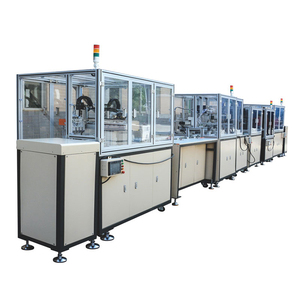
Huiyue Custom Fully Automatic Pump Motor Gear Machine
- High-precision gear press fitting
- Non-standard custom architecture
- Real-time torque monitoring
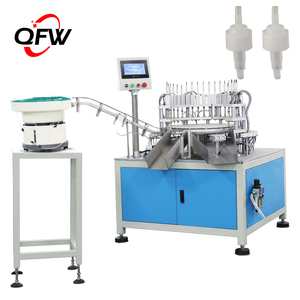
Automatic Nasal Sub-Pump Lid & Motor Bearing Assembly Line
- 220V multi-axis indexing platform
- Integrated bearing press system
- Automated core component insertion
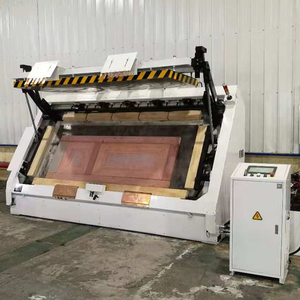
High Frequency 20KW Motor & Pump Frame Assembly Machine
- 20KW HF dielectric heating system
- Hydraulic frame alignment unit
- Rapid cycle bonding capability
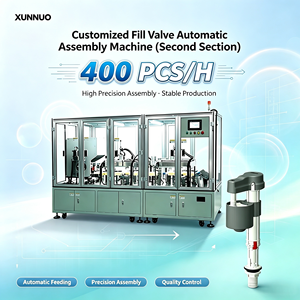
XUNNUO PLC Automatic Motor Engine Fill Valve Assembling Machine
- 15,000W high-torque drive
- Siemens PLC smart controller
- 100% automated optical inspection
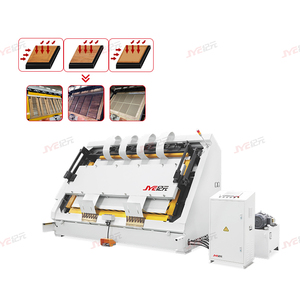
JYC High Frequency 20KW Motorized Frame Press Assembly System
- Multifunctional directional pressure
- Heavy-duty 20KW motor platform
- 1-Year global warranty coverage
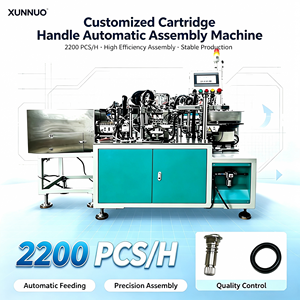
XUNNUO High-Speed 3000W Motor Cartridge Assembly System
- 2,200 PCS/H production capacity
- 3000W servo-driven indexing
- Fully automated fault diagnostics
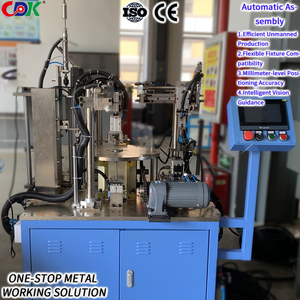
Automatic Plug Assembly Machine for Motor Pump & Gearbox
- Heavy-duty steel structural frame
- Gearbox & motor sub-part insertion
- Flexible multi-part feeding bowl
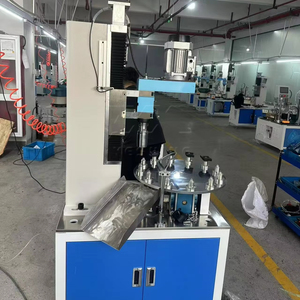
High-Speed Automatic Bearing & Small Motor Assembly Machine
- Automated bearing press & grease feed
- Sub-assembly micro-motor insertion
- High throughput efficiency booster
Engineering Excellence in Automated Electric Motor Assembly Machinery
An authoritative technical analysis on architectural design, process integration, quality verification, and global sourcing strategies for modern motor production lines.
1. Executive Overview: The Paradigm Shift in Electric Motor Manufacturing
The global transition toward electrification across automotive, industrial automation, consumer appliances, and aerospace sectors has fundamentally reshaped manufacturing dynamics. Original Equipment Manufacturers (OEMs) and Tier-1 suppliers face immense pressure to achieve higher torque density, superior energy efficiency (IE4/IE5 standards), and zero-defect quality while driving down overall unit manufacturing costs. At the core of this industrial revolution lies the automated motor assembly machine.
Historically, motor production relied heavily on semi-automated or manual labor-intensive processes—particularly during stator coil winding, slot insulation insertion, commutator hot staking, rotor magnet positioning, and final end-of-line (EOL) electrical testing. Modern production environments demand integrated, highly flexible, turn-key automated lines capable of sub-3-second takt times, complete process traceability, and instantaneous conversion between diverse stator/rotor geometries.
As a leading Chinese designer and custom manufacturer of non-standard motor assembly machinery, our engineering solutions bridge the gap between complex electromagnetic design specifications and mass-production realities. By combining high-precision CNC multi-axis motion controls, advanced closed-loop servo press mechanisms, machine-vision alignment, and real-time process monitoring, China's motor automation ecosystem delivers unparalleled ROI for global procurement executives.
2. Technical Architecture of Modern Automated Motor Assembly Systems
A state-of-the-art electric motor manufacturing line operates through a series of synchronized sub-assembly cells. Understanding the engineering design of each sub-module is essential for procurement teams evaluating supplier capabilities.
A. Stator Manufacturing Cell
The stator assembly cell handles lamination stack alignment, insulating paper insertion, end-board mounting, needle winding (or outer-stator winding), wire stripping, and terminal crimping or laser welding. Precision wire tensioners maintain uniform enamel wire integrity, preventing micro-scratches that cause dielectric breakdown.
B. Rotor Sub-Assembly & Balancing
For Brushless DC (BLDC) and Permanent Magnet Synchronous Motors (PMSM), rotor lines integrate automated permanent magnet insertion, glue dispensing, thermal curing, shaft press-fitting, and dynamic balancing correction cells to minimize operational vibration and acoustic noise.
C. Housing & Bearing Integration
Precision servo-electric press units insert bearings, seals, and sub-assemblies into motor housings with force-displacement monitoring. Closed-loop feedback guarantees exact press depth within ±0.01mm, eliminating axial play and premature bearing wear.
D. End-of-Line (EOL) Testing Matrix
Integrated EOL testing stations execute automated electrical safety and performance testing: Surge voltage test, Hi-Pot insulation resistance, phase resistance balance, back-EMF measurement, hall sensor alignment check, and FFT vibration/acoustic analysis.
3. Technical Comparison: Winding & Assembly Technologies
Selecting the appropriate machinery platform depends heavily on the motor topology, wire gauge, slot fill ratio requirement, and production scale. The matrix below outlines key engineering criteria:
| Machine / Technology Type | Applicable Motor Topology | Typical Slot Fill Factor | Takt Time Range | Key Engineering Advantages |
|---|---|---|---|---|
| Needle Type Internal Stator Winder | Inner-Rotor BLDC, Automotive Pumps, Power Tools | 45% – 68% | 12 – 45 sec/stator | Direct slot flyer insertion; precise layer control; eliminates wire damage. |
| Outer Stator Flyer Winding Machine | External-Rotor BLDC, Drone Outrunners, Ceiling Fans | 40% – 60% | 8 – 30 sec/stator | High-speed multi-station winding; minimal setup time between stack heights. |
| Armature Winding & Hot Staking Line | Brushed DC Motors, Universal Appliance Motors | 50% – 70% | 5 – 15 sec/rotor | Integrated commutator fusing; simultaneous double-flyer winding cycle. |
| Hairpin Stator Assembly Line | EV Traction Motors, High-Power Automotive Drives | 70% – 85%+ | 35 – 90 sec/stator | Maximum slot fill; superior thermal conductivity; laser wire stripping & 3D welding. |
| Turnkey Modular Assembly Line | Pump Motors, Actuators, HVAC Fan Motors | N/A (Full System) | 2.5 – 10 sec/unit | End-to-end automation; zero-operator assembly; integrated MES data logging. |
4. Key Sourcing Trends & Future Developments in Motor Assembly (2025–2030)
As global motor manufacturers optimize their supply chains, strategic equipment procurement has moved beyond evaluating initial sticker price. Forward-thinking procurement teams assess Total Cost of Ownership (TCO), machine flexibility, energy efficiency, and digital readiness.
A. Industry 4.0 Integration & Digital Twin Commissioning
Modern motor assembly equipment is no longer an isolated mechanical island. Today's leading Chinese manufacturers embed industrial IoT protocols (OPC UA, MQTT, EtherCAT) natively into PLC architectures (Siemens S7-1500, Beckhoff, Omron). This allows factory managers to track Overall Equipment Effectiveness (OEE), monitor real-time tool wear, predict maintenance windows, and log complete serial-number-level birth certificates for every motor produced. Furthermore, virtual commissioning via Digital Twin simulation reduces physical setup and factory acceptance testing (FAT) lead times by up to 40%.
B. Transition to High-Fill Hairpin & Flexible Winding Kinematics
Driven by electric vehicle traction applications and high-efficiency industrial pumps, the market demand for hairpin (flat wire) stator manufacturing line equipment is accelerating rapidly. Hairpin winders require extreme mechanical rigidity, 3D CNC wire bending accuracy, automated slot paper insertion, 3D vision guided twist alignment, and high-speed laser welding. Simultaneously, for round wire applications, multi-axis servo needle winders with dynamic electronic wire tension controls are replacing mechanical tensioners to support ultra-fine or dual-strand parallel winding without enamel friction degradation.
C. Micro-Assembly Automation for Micro-Motors and Actuators
Medical sub-pumps, smart home actuators, automotive HVAC dampers, and drone brushless motors require miniature high-precision assembly tooling. As demonstrated in our product showcase, automated lid-fitting, bearing pressing, sub-gear mesh inspection, and dispensing machines operate at sub-millimeter tolerances. The incorporation of high-resolution 2D/3D Vision Inspection Systems ensures that components with tiny dimensional variances are filtered out before reaching final assembly.
5. Step-by-Step Custom Machinery Procurement Framework
Procuring custom non-standard automation machinery from China requires a structured engineering validation process to ensure alignment with production volume targets, quality standards, and floor space constraints.
Phase 1: Technical Requirement Definition (RFQ)
The buyer provides physical motor samples, 3D CAD drawings (STEP/IGES), wire specs, stack dimensions, target UPH (Units Per Hour), and plant voltage standards (e.g., 220V/380V/480V 50/60Hz).
Phase 2: Engineering Proposal & 3D Layout Concept
Our mechanical and electrical engineering team develops a comprehensive technical proposal including cycle time analysis, station breakdown, 3D machine render, sensor/pneumatic bill of materials (BOM), and commercial terms.
Phase 3: Sample-Based Trial Winding & Prototyping
Before full-scale machine fabrication, physical stator or rotor samples are tested on pilot tooling to verify slot fill factor, winding trajectory, wire tension stability, and press forces.
Phase 4: Fabrication, Assembly & PLC Programming
Machining of structural frames, hardened steel fixtures (SKD11/DC53), servo indexing tables, and electrical panel wiring compliant with CE / UL safety standards.
Phase 5: Factory Acceptance Testing (FAT)
The customer audits the running machine at our facility (or via live multi-camera streaming), running 500–1000 continuous test cycles to calculate Cpk capability indices for critical parameters.
Phase 6: Overseas Delivery, SAT & On-Site Support
Export sea-worthy vacuum packing, international shipping, on-site commissioning by field engineers, operator training, and 24/7 remote diagnostic support.
6. Enterprise Competence & Manufacturing E-E-A-T Benchmark
As an independently verified manufacturer located in Ningbo, Zhejiang—one of China’s premium industrial manufacturing hubs—our facility represents the highest benchmark of Experience, Expertise, Authoritativeness, and Trustworthiness (E-E-A-T).
Verified Production Facilities: Our operations are on-site audited by Intertek, confirming physical manufacturing infrastructure, CNC machining capacity, quality testing laboratories, and legal compliance. We maintain in-house high-speed gantry punching presses, CNC precision wire-cut EDM, coordinate measuring machines (CMM), dynamic dynamic balancing benches, and multi-channel dielectric withstand voltage testers.
Engineering Depth & Staff Experience: Our core design team consists of senior mechanical and electrical automation engineers with over 11 years of dedicated experience in motor production technology. Every custom machine undergoes rigorous Cpk testing, thermal aging analysis, and safety audits before dispatch.
Turnkey Single-Source Supply Chain: Beyond building standalone winding machines and automated assembly lines, our dual capacity in producing motor components (such as precision UAV stators and permanent magnet BLDC motors) gives us unique domain insight into how machinery tolerances directly impact final motor performance. We design assembly lines from the perspective of a motor manufacturer.
Why Global OEMs Partner With Us:
- 100% Sample-Based Customization: Tooling engineered specifically around your physical motor parts for perfect mechanical fit.
- Proven Component Brands: Standardized integration of world-class automation parts (SMC/Festo pneumatics, Siemens/Omron PLC, THK linear guides, Schneider electricals).
- Rapid Lead Times: Standard standalone machines delivered in 25–35 days; complex custom turn-key lines in 60–90 days.
- Global After-Sales Service: Remote diagnostic modules built into machines plus expatriate engineering staff available for international installation and troubleshooting.
7. Frequently Asked Questions (FAQ) for OEM Procurement & Line Engineers
Our custom equipment covers virtually all major electric motor designs: Inner-rotor and outer-rotor BLDC motors, Permanent Magnet Synchronous Motors (PMSM), AC induction motors, brushed DC motors, universal appliance motors, shaded-pole pump motors, linear actuators, and specialized micro sub-pump assemblies.
We utilize closed-loop electric servo presses with integrated load cell and LVDT displacement sensors, high-resolution machine vision alignment cameras, dynamic electronic wire tension controls, and hardened precision CNC fixtures (machined to ±0.005mm accuracy).
Yes! We design quick-changeover modular tooling platforms. Tooling fixture swaps take less than 15 minutes, while stack height changes are frequently automated via recipe selection on the HMI touch panel driving multi-axis servo adjustments.
Following final 3D design approval and sample validation, standalone automated machines (such as pump motor gear press or lid assembly machines) typically ship within 30 to 45 days. Complete multi-station automated lines take between 60 to 90 days including FAT testing.
Every machine is equipped with secure VPN remote access modules allowing our software engineers to diagnose PLC/HMI issues online instantly. Additionally, we dispatch experienced field installation engineers overseas to assist with machine setup, factory acceptance testing, and operator training.
All machinery design and panel build processes comply strictly with CE directives (Low Voltage Directive and Machinery Directive) and ISO 9001 quality management systems. Electrical schematics adhere to NFPA 79 / IEC 60204-1 standards.
Request a Customized Technical Proposal & Machinery Quotation
Partner with China's leading motor assembly automation manufacturer. Send us your motor drawings, target UPH, or physical samples today for a comprehensive engineering evaluation.
Get Catalog