Featured Motor Winding Equipment & Automation Lines
Explore our flagship automated coil winders, segmented stator assembly rigs, motor test benches, and complete BLDC production systems configured to your exact technical specifications.
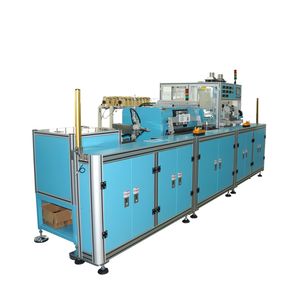
Fully Automatic Multi-Component Winding Line
High-speed production line for relays, contactors, solenoids, transformers, inductors, and specialized motor coils.
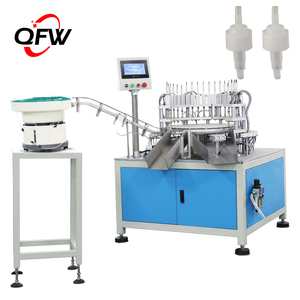
Automatic Assembly Equipment for Sub-Pump Lines
220V automated lid assembly machine with integrated bearing press-fitting and motor engine core component insertion.
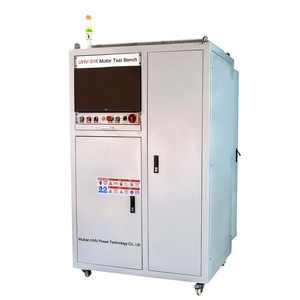
UHV-316 Customizable Motor Test Bench
Precision end-of-line (EOL) motor testing equipment for torque, back-EMF, temperature rise, and insulation diagnostics.
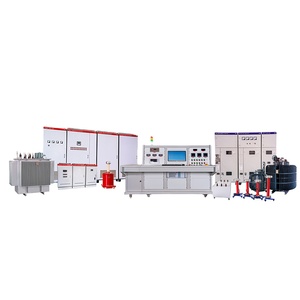
UHV-316 Industrial Electric Motor Test Bench
Heavy-duty motorized testing rig designed for continuous quality control of industrial BLDC, PMSM, and AC motors.
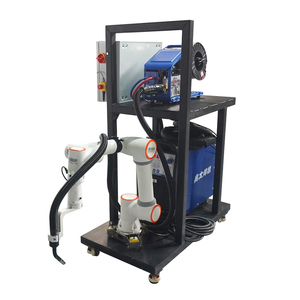
Automated Electric Motor Arm Production Line
High-speed automated assembly line suited for various electric vehicle motor arms, robotic actuators, and power tools.
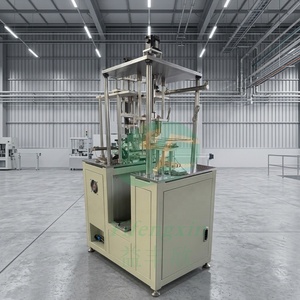
Fully Automatic ISO Motor Assembly Production Line
Customized ISO-certified turn-key motor manufacturing line with robotics integration, automated gluing, and testing.
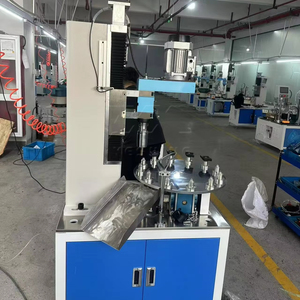
High-Speed Bearing & Motor Wheel Assembly Machine
Precision multi-station assembly equipment engineered to improve factory output and operational consistency.
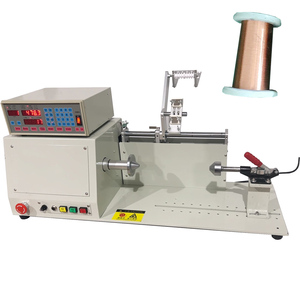
Enameled Wire Coil Winding Machine for Electric Motors
Heavy-duty CNC coil winding machinery engineered for uniform wire tension, high slot fill factor, and zero enamel damage.
Engineering Next-Generation Motors via Segmented Stator Winding Technology
In the rapidly advancing electrical machinery landscape—spanning Electric Vehicles (EV), unmanned aerial vehicles (UAV), industrial robotics, and high-efficiency HVAC compressor systems—the demand for higher torque density, enhanced thermal dissipation, and miniaturized motor envelopes has pushed traditional integral stator winding to its mechanical limits.
Segmented stator technology (also known as tooth-by-tooth or split-core stator design) breaks down the continuous circular stator lamination stack into individual pole teeth or linear segment chains. This architectural shift enables direct, unhindered needle winding around each tooth prior to final core interlocking, unlocking unprecedented copper slot fill factors exceeding 75% (compared to 45%–55% in standard internal needle-wound stators).
Technical Value Proposition: Segmented stator winding eliminates the needle passage restriction inherent to closed internal stators. Manufacturers can deploy thicker copper wire gauges, optimize turn packing geometric symmetry, and reduce end-winding overhang volume by up to 30%, resulting in lower copper losses (I²R) and vastly superior motor efficiency profiles.

Integral Stator vs. Segmented Stator Needle Winding
A comparative analysis of electromagnetic performance, manufacturing complexity, tooling wear, and structural tolerances across motor stator architectures.
| Performance / Engineering Parameter | Standard Integral Stator Winding | Segmented Stator Winding (Single Tooth) | Segmented Stator Winding (Chain/Flexible Joint) |
|---|---|---|---|
| Slot Copper Fill Factor (%) | 45% – 55% | 68% – 78% | 62% – 72% |
| Wire Tension Control Precision | Moderate (Subject to slot opening friction) | Ultra-High (Closed-loop Magnetic Tensioner) | High (Guided servo tensioning) |
| Coil Layering Uniformity | Orthocyclic attempt, prone to crossing | Precision Orthocyclic Layer-by-Layer | Precision Layer-by-Layer |
| End-Winding Overhang Length | Bulky, requires manual phase lacing | Ultra-Compact, minimal axial length | Compact, continuous wire transition |
| Tooling & Nozzle Wear Rate | High (Frequent deflection inside narrow slots) | Very Low (Open tooth access trajectory) | Low (Open slot access) |
| Core Assembly & Interlocking Method | None (Single stack lamination) | Dovetail press-fit, laser welding, or shrink ring | Hinge folding + single seam laser welding |
| Primary OEM Application Domain | Low-cost pumps, general appliance BLDC | EV Compressors, High-KV Drone, Traction Motors | Automotive EPS, Premium Power Tools |
Tooth-by-Tooth Needle Trajectory
Using 4-axis or 6-axis CNC servo linkage, the needle head guides high-grade enameled copper wire directly around an individual unmounted tooth. This unrestricted 360-degree approach guarantees zero scrapings on slot insulation paper and precise coil turn placement.
Active closed-loop Servo Tensioning
Fluctuations in wire tension during high-speed needle oscillation (up to 2,500 RPM) cause micro-fractures in insulation enamel. Cefnak segmented winders integrate active magnetic hysteresis tensioners with real-time feedback, maintaining tension constancy within ±1.5% tolerance.
Automated Segment Interlocking
Post-winding core consolidation utilizes high-precision CNC rotary fixtures. Wound pole segments are assembled into a rigid 360° ring via dovetail key joints, hydraulic press-fitting, or continuous fiber-laser seam welding, maintaining roundness within 0.03 mm TIR.
State-of-the-Art Factory Infrastructure & Rigorous Quality Assurance
Headquartered in Ningbo, China, Ningbo Davri Automation Equipment Co., Ltd. (Cefnak) operates a fully integrated motor automation engineering center, bridging equipment manufacturing with direct motor component manufacturing.

Vertically Integrated Manufacturing Capability
Unlike specialized equipment integrators who outsource core mechanical sub-assemblies, Cefnak maintains complete control over the motor machinery value chain: from high-precision lamination metal stamping and CNC machining to coil winding, vacuum varnish impregnation, and final end-of-line testing.
Intertek Verified
On-site audited supplier status covering facility scale, technical staff, and legal standing.
Sample-Based Engineering
Tooling and winding trajectory custom-designed from customer physical stators or CAD files.
In-House Quality Lab
Equipped with 6 specialized test instruments: Hi-pot, temperature rise, dynamic balance, tension meter.
Global Field Support
Senior engineers dispatched worldwide for installation, trial run tuning, and worker training.
Four-Step Quality Verification Standard for Winding Equipment

1. Wire Tension Measurement
Digital tension gauges verify constant force across acceleration and deceleration cycles.

2. Insulation Hi-Pot Testing
3000V AC dielectric strength check between phase coils and core laminations.

3. Multi-Channel Temp Rise
Thermal imaging logs temperature distribution under max rated current load.

4. 3D CAM Tooling Simulation
Virtual collision-free movement validation before CNC tool fabrication.
Future Sourcing & Procurement Trends in Stator Winding Machinery
As global electrification demands higher power density and zero-defect production, procurement managers must evaluate several critical technological evolutions when selecting Chinese winding machine vendors.
1. Hybrid Segmented & Hair-Pin Integration
While continuous rectangular wire (Hair-Pin) dominates large EV traction motors, segmented needle winding is rapidly capturing the medium-to-high voltage auxiliary motor segment (e.g., thermal management pumps, EV climate compressors, servo actuators). Procurement teams are favoring modular machine chassis that allow quick interchangeability between round wire needle nozzles and flat copper rectangular wire guides.
2. Smart IoT Diagnostics & Closed-Loop Quality Control
Industry 4.0 connectivity is no longer optional. Modern winding machinery specifications mandate real-time OPC-UA interface compatibility, automated barcode scanning for stator lamination traceability, and micro-second logging of tension force, wire speed, and spindle angular position. Equipment that auto-adjusts tensioner voltage upon sensing wire batch diameter deviations drastically reduces operator dependence.
3. High-KV UAV & Drone Motor Optimization
The exponential growth in commercial payload UAVs, agricultural spray drones, and FPV racing platforms requires ultra-lightweight brushless outrunner stators with exceptionally thin laminations (down to 0.15mm silicon steel). Sourcing trends demonstrate a heavy pivot toward dual-station and 4-station automatic outer-stator winders capable of winding multi-strand parallel copper wires without overlapping or tangling.
Procurement Executive Insight: When sourcing automated motor production lines from Chinese manufacturers, evaluate the supplier's capability to deliver turnkey end-of-line integration. A single-source vendor offering lamination stacking, insulation insertion, tooth winding, segment welding, and EOL electrical testing reduces system integration friction by up to 40% and clarifies warranty accountability.
Evolution of Motor Winding Automation Technology
Understanding the historical shift from manual flyers to ultra-high-speed multi-axis CNC needle winders provides critical context for strategic equipment capital expenditure (CapEx).
Manual / Semi-Auto Flyers
External flyer arm rotates around a stationary core. Limited slot access, high wire friction, slot fill factor restricted to <45%.
Internal Needle Winders
Vertical needle stroke inside completed stator ring. Higher precision, but stroke velocity limited by narrow slot openings.
Segmented Tooth CNC Winders
Direct tooth-by-tooth winding prior to core assembly. Unrestricted 360° access, slot fill factor up to 75%+, zero enamel damage.
Robotic Modular Lines
Fully automated workcells combining segment winding, laser joint welding, automated varnish dipping, and 100% vision inspection.
Frequently Asked Sourcing & Engineering Questions
Answers to technical, operational, and commercial questions commonly raised by global motor manufacturing engineers and procurement specialists.
What specific motor types benefit most from segmented stator winding machinery?
How does Cefnak guarantee coil wire insulation integrity during high-speed needle winding?
Can your automated winding machinery be customized based on our physical motor samples or CAD drawings?
What key parameters must buyers provide to receive an accurate technical proposal and quotation?
What post-sales engineering support and installation services are available for overseas factories?
What is the Minimum Order Quantity (MOQ) and lead time for machinery and motor components?
Ready to Optimize Your Motor Manufacturing Efficiency?
Whether you require a single high-speed needle winding machine, custom segmented stator components, or a fully automated turn-key motor assembly line, our application engineers are available to review your technical drawings and provide a competitive technical proposal.