Engineering Excellence in Inner Stator Needle Winding Machine Manufacturing
Optimizing Copper Slot Fill Factor, Tension Control, and Cycle Speed for Next-Generation Electric Motors
The global transition toward high-efficiency Brushless Direct Current (BLDC) motors, Permanent Magnet Synchronous Motors (PMSM), and Electric Vehicle (EV) traction actuators has revolutionized electromagnetic coil manufacturing. At the core of this engineering evolution is the inner stator winding machine (frequently referred to as an internal stator needle winding machine). Unlike traditional flyer winding techniques used for external armatures or open-slot stators, inner stator winding demands multi-axis CNC needle insertion directly into narrow internal slots. Sourcing equipment from certified, high-precision manufacturers directly dictates slot copper fill rates, insulation wire safety, cogging torque minimization, and total thermal efficiency of the motor assembly.
Technical Gain Insight: Modern needle winding equipment achieves copper space factors exceeding 45% to 58% in narrow internal slots through closed-loop servo tensioners and multi-axis CNC spatial path interpolation. Achieving this precision prevents wire overlap, reduces inter-turn short circuits, and ensures structural thermal equilibrium under heavy motor loading.
Featured Stator Winding Machines & Motor Assembly Equipment
Enterprise-Grade Automated Solutions Designed Around Custom Motor Samples and Exact Takt-Time Requirements
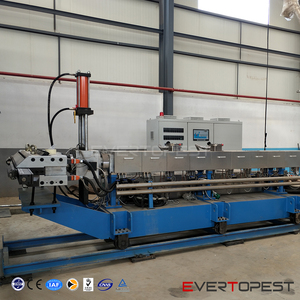
New Double Metal Composite Panel Product Line High Speed Electric Motor Assembly Line
Fully integrated automated assembly and composite panel manufacturing line designed for high-speed electric motor production and electronic component integration.
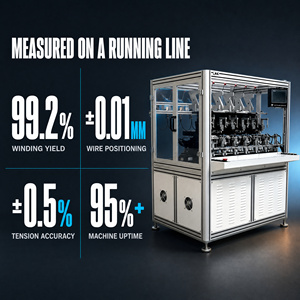
Custom Automated Brushless Motor Winding Machine OEM Production Equipment
Precision inner stator needle winding system with multi-axis CNC control, offering custom tooling configuration tailored to client-specific BLDC motor stators.
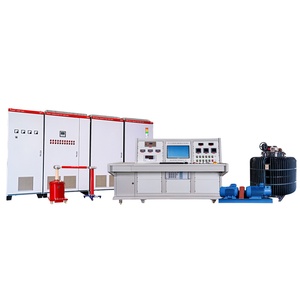
UHV-316 DC Motor Test Bench High-Precision Motor Testing Equipment
Comprehensive end-of-line diagnostic equipment testing electric parameters, temperature rise, torque characteristics, and insulation integrity for DC motors.
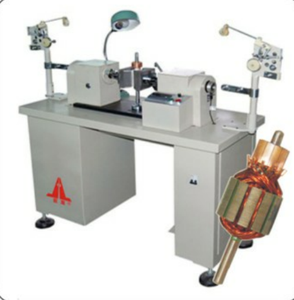
ZB-2GB Model Semi-automatic Rotor Wire Winding Machine Armature Equipment
Heavy-duty semi-automatic armature coil winding system engineered for fast setup, accurate turn counting, and minimal maintenance in universal motor production.
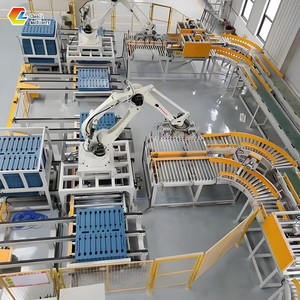
Environmental Protection Industrial Dry Mortar Automated Production Line
Eco-friendly automated raw material handling and precise dry mortar blending equipment built with dust collection and energy-saving processing modules.
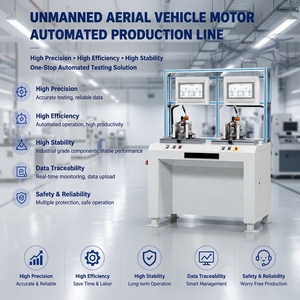
High Performance 380V Automatic Brushless DC Motor Drone Line
Specialized high-speed manufacturing assembly line configured for high-pole-count civilian FPV drone motors and lightweight UAV stator production.
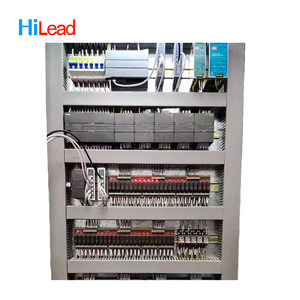
Production Line Intelligent Electronic Control System for Motor Lines
Centralized PLC & SCADA integration architecture delivering real-time yield monitoring, automated fault detection, and digital operational control.
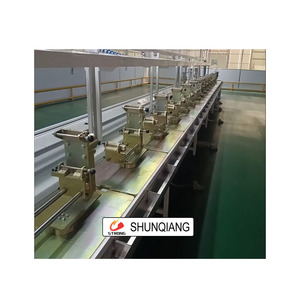
Automotive & Motorcycle Engine Assembly Production Machine Line
Industrial workstation matrix providing ergonomic assembly, multi-stage torque verification, and sub-assembly line automation for internal combustion and hybrid drive units.
Technological Innovations Driving Inner Stator Winding Advancement
Key Engineering Milestones Reshaping High-Speed Slot Filling and Wire Quality Protection
Closed-Loop Servo Tensioning
Conventional mechanical tensioners introduce wire stretch and enamel cracking during rapid directional shifts. Next-generation inner stator winders utilize active magnetic or electric closed-loop feedback tensioners that respond dynamically in milliseconds to needle stroke velocity.
Multi-Axis CNC Motion Interpolation
Synchronizing rotation, vertical stroke, and nozzle stroke via 4 to 6-axis CNC controllers ensures zero friction wire placement. This precise spatial trajectory allows tight layer-by-layer winding inside deep, high-aspect-ratio stator bores.
Modular Tooling & Quick Changeover
Modern contract manufacturers process multiple stator stack heights and wire diameters on a single line. Rapid plug-and-play tooling jigs reduce downtime during production batch swaps from hours to under 15 minutes.
Future Procurement Trends for Motor Manufacturing Lines
Strategic Factors Driving Capital Investment Decisions for Global OEM Purchasing Managers
As global supply chains place greater emphasis on operational efficiency and overall equipment effectiveness (OEE), corporate purchasing strategies for motor manufacturing lines have evolved from purchasing standalone machinery to procuring integrated turnkey production environments.
| Winding Technology | Optimal Stator Architecture | Copper Space Factor | Suitable Motor Applications |
|---|---|---|---|
| Internal Needle Winding | Inner slot BLDC / PMSM (Slotted Stator core) | 45% – 58% | EV Compressors, Drone Outrunners, Power Tools |
| Flyer Outer Winding | External Rotor / Slotted Armatures | 35% – 48% | Ceiling Fans, Treadmill Drive Units, Universal Armatures |
| In-Slot Paper Insertion & Coil Insertion | AC Induction Motors / Single-Phase Stators | 30% – 42% | HVAC Blowers, Submersible Pumps, Washing Machines |
| Hairpin Winding | Form-Wound Rectangular Wire EV Stators | 60% – 75% | EV Main Traction Motors, Heavy Duty e-Buses |
Strategic Sourcing Shift: Procurement teams are increasingly evaluating Sample-Based Customization Verification prior to contract signing. Top-tier suppliers must provide prototype sample winding trials, phase impedance testing, and micro-sectioning reports to validate copper fill factor without wire enamel degradation.
Frequently Asked Questions (FAQ) for Inner Stator Equipment Procurement
Technical Answers to Common Buying Queries Regarding Machine Specs, Customization, and International Support
What core technical parameters are required to size an inner stator winding machine?
How does needle winding differ from traditional flyer winding for internal stators?
Can a single inner stator winding machine handle multiple motor sizes?
What measures prevent copper wire enamel damage during high-speed needle winding?
What after-sales commissioning and technical support options are offered for overseas buyers?
What is the typical production lead time for a custom inner stator needle winding line?
Why Partner with Ningbo Davri Automation Equipment (Cefnak)
Verified Manufacturing Heritage, Rigorous In-House Quality Testing, and End-to-End Motor Engineering
Located in Ningbo, Zhejiang—a globally recognized industrial center for precision motor production—Ningbo Davri Automation Equipment Co., Ltd. (Cefnak) operates at the intersection of machine engineering and motor component manufacturing. Our integrated business model spans the complete equipment and component lifecycle, ensuring our machine designs are refined by real-world production experience.
Intertek On-Site Verified Supplier
Our production workshops, machining center capacity, legal business standing, and export history have undergone full third-party physical audit and certification by Intertek, ensuring total transaction safety for global procurement partners.
Sample-Based Tooling Customization
We eliminate buyer risk by engineering winding nozzles, holding fixtures, and CNC motion paths around your physical stator samples or CAD lamination files, validating performance through prototype trial runs prior to shipment.
6-Stage Internal QA Laboratory
Our quality control center utilizes digital tension meters, hi-pot insulation withstand testers, dynamic balancing machines, and multi-channel temperature rise test benches to guarantee every machine and motor meets international standards.
Request Your Custom Inner Stator Winding Proposal
Send your motor drawing, stator sample specifications, or target UPH goals to receive a comprehensive engineering concept, station layout, and factory-direct price quotation.