In the rapidly evolving landscape of global electric motor manufacturing, securing high-reliability, automated equipment is paramount for optimizing core electromagnetic efficiency, slot fill ratio, and thermal dissipation. As a premier industry benchmark, Ningbo Davri Automation Equipment Co., Ltd. (Cefnak) delivers state-of-the-art stator winding equipment, turnkey BLDC motor production lines, and customized component manufacturing engineered to rigorous global industrial standards.
Featured Motor Winding Equipment & Turnkey Assembly Solutions
Engineered with multi-axis CNC servo synchronization, real-time tension feedback control, and sample-verified tooling design.
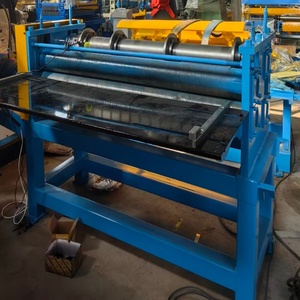
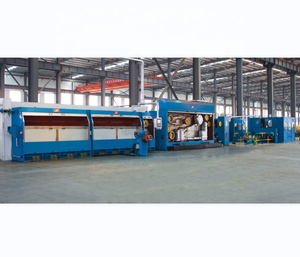
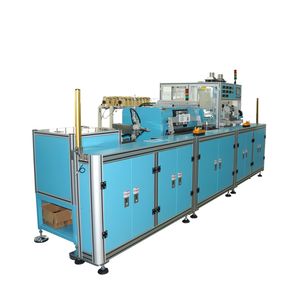
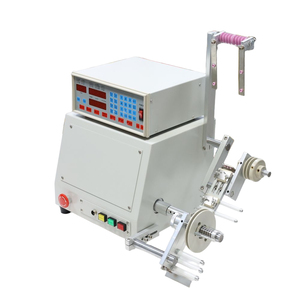
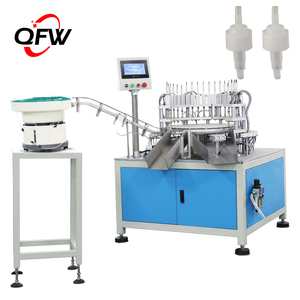
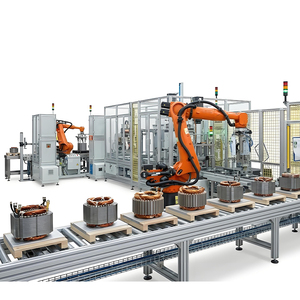
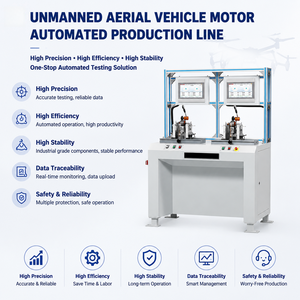
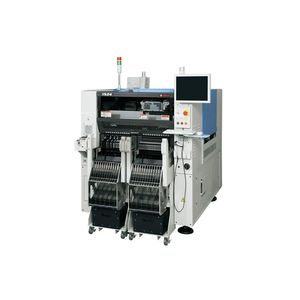
Manufacturer Excellence: Ningbo Davri Automation Equipment Co., Ltd.
Situated in the heart of China's advanced industrial hub—Ningbo, Zhejiang—Ningbo Davri Automation Equipment Co., Ltd. (Cefnak) operates as a globally audited, third-party verified (Intertek) machine manufacturer. Our expertise bridges the gap between hardware engineering, precision coil winding automation, and complete electric motor manufacturing ecosystems.
In-House Manufacturing Capabilities & Quality Control Protocols
Unlike pure machinery assembly operations, Cefnak maintains complete control over the key production processes. From raw metal lamination stamping, gantry high-speed punching, and precision stator stack assembly to automatic wire breakdown, needle winding, trickling gluing, and dynamic rotor balancing, our integrated workflow eliminates vendor dependency and guarantees absolute batch-to-batch consistency.
SolidWorks 3D CAD Modeling
Every winding nozzle, wire guide, and indexing fixture is optimized using finite element analysis (FEA) to minimize copper wire friction and prevent enamel micro-scratching.
Sample-Based Trial Winding
Before machine delivery, your actual stator laminations and copper wires undergo empirical trial runs in our QA lab to validate turn accuracy and thermal limits.
Multi-Stage Quality Inspection
Utilizing 6 in-house specialized testing instruments—including withstand voltage testers, multi-channel temperature rise recorders, and video microscopes.
2025–2030 Strategic Procurement Trends in Stator Winding Machinery
The global transition toward high-efficiency electric power (IE4/IE5 standards), ultra-lightweight UAV propulsion, and high-voltage New Energy Vehicles (NEV) is dramatically reshaping stator winding equipment procurement specifications. Procurement managers and manufacturing directors must align hardware investments with four pivotal technological shifts:
| Technology Vector | Legacy Manufacturing | Next-Gen Winding Trend (2025+) | Impact on Procurement Strategy |
|---|---|---|---|
| Stator Winding Architecture | Traditional Flyer Winding & Manual Insertion | Multi-Axis CNC Needle Winding & Hairpin Stators | Increases slot fill ratio from 45% to >70%, reducing copper mass and thermal resistance. |
| Quality Control & Vision | Post-assembly sampling & manual inspection | In-Line 2D/3D Machine Vision & AI Defect Detection | Eliminates insulation strip errors, improper coil twist, and soldering bridge defects in real time. |
| Production Line Integration | Standalone machines with manual transfer | Turnkey Automated Flexible Lines (Winding to EOL Test) | Drastically lowers labor dependency, achieves <15s cycle times (takt time), and guarantees full traceability. |
| Wire Tension Control | Mechanical friction tensioners | Closed-Loop Servo Active Tension Control | Maintains consistent tension within ±1g, preventing wire stretching and insulation micro-flaws. |
Key Procurement Drivers for Global Buyers
- Rapid Tooling Changeover (Modular Flexibility): Industrial buyers are prioritizing winding platforms equipped with quick-change tooling modules, enabling single-line assembly transition across multiple motor frame sizes (e.g., 22xx to 85xx series outrunners or 48V to 800V stators) within 30 minutes.
- High Slot-Fill Capacity for EV & UAV Applications: Maximizing magnetic torque density requires precise internal needle winding capable of layering thick copper wire tightly within narrow stator slot openings without damaging neighboring insulation paper.
- Turnkey System Traceability (Industry 4.0 Compatibility): Equipment suppliers must deliver PLC and MES integration capabilities, permitting remote data logging of turns, winding speed, wire tension, and hi-pot dielectric strength per individual serial-numbered stator.
Technological Evolution & Breakthroughs in Motor Coil Manufacturing
To maintain competitive dominance in electric motor production, leading manufacturers are shifting from simple automation to highly sophisticated electromagnetic engineering integration. Understanding these technological trends ensures long-term asset protection and maximum ROI on capital expenditure.
1. Hairpin Stator Automation (NEV & Traction Motors)
Hairpin technology utilizes solid rectangular copper wires rather than round stranded wires. Modern production lines incorporate 3D CNC wire bending, high-speed slot insertion, twist crown shaping, laser stripping, and 3D vision-guided laser welding stations to yield unparalleled power density.
2. Multi-Station Needle Internal Winding (BLDC / Drone / Tool Motors)
Internal needle winding machines feature synchronized multi-spindle motion that allows simultaneous winding across 2, 4, or 6 stations. Needle guide tubes traverse deep within small-bore stators, laying enameled copper wire directly around internal teeth with absolute layer control.
3. Integrated SMT & Component Sub-Assembly Automation
Modern motor manufacturing extends beyond pure coil winding. Leading assembly lines integrate high-speed SMT pick-and-place systems (such as Yamaha YS24) directly with motor control PCB placement, terminal hot staking, and automated pump or housing lid assembly machines.
Frequently Asked Technical & Procurement Questions (FAQ)
Expert insights addressing common engineering, custom manufacturing, and after-sales commissioning queries.
- Stator/Rotor Geometry: 2D/3D technical drawings highlighting outer diameter, inner diameter, stack height, and slot count.
- Wire Parameters: Enameled copper wire diameter range and insulation grade.
- Winding Specification: Number of turns per coil, winding schematic (star/delta connection), and target slot fill ratio.
- Target Output (UPH): Required Units Per Hour or cycle time target (takt time) to optimize spindle count and automation level.
Accelerate Your Motor Production & Elevate Winding Precision
Partner with an Intertek-verified leader in stator winding machinery and automated assembly lines. Submit your stator drawings or sample requirements today to receive a comprehensive engineering analysis and direct factory quotation within 24 hours.
Get a Quote