High-Precision Production Line Solutions & Machinery
Explore our core automated assembly equipment, tailored for Munich's automotive Tier-1 suppliers, electric vehicle powertrain facilities, and high-spec motor manufacturing ecosystems.
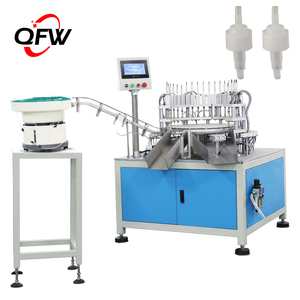
Automatic Assembly Equipment for Nasal Sub-Pump Production Line 220V Lid Assembly Machine Bearing Motor Engine Core Components
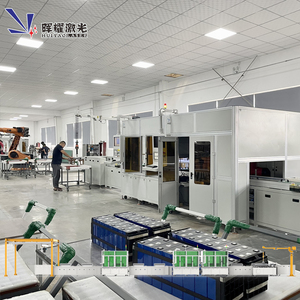
Automatic Prismatic-shaped Electric Vehicle Battery Group Assembly Line Lithium Square Cell Pack Manufacturing Production Line
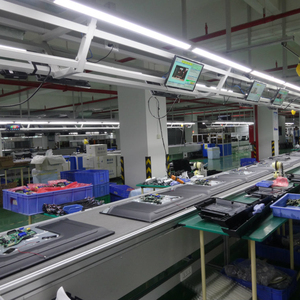
Customized Automatic TV and Mobile Phone Production Assembly Line with Electric Motor 380V 400kg
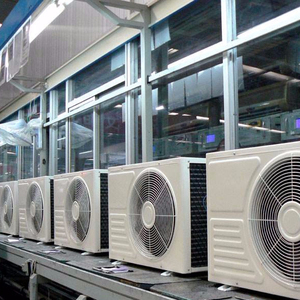
Automatic Electric Motor Assembly Line Air-conditioner Production Line
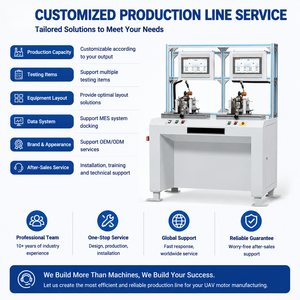
Automatic Brushless DC Motor Production Line for Civilian UAV and FPV Drone Motor Manufacturing
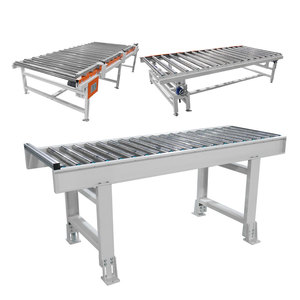
Automatic Electric Motor Chain Conveyor Assembly Production Line with Work Table Stainless Steel Provided Roller Heat Resistant
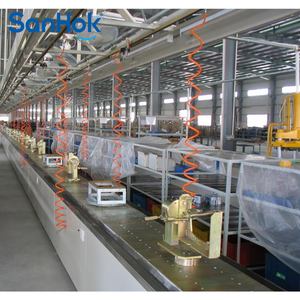
Car Motor Automatic Conveyor Electromobile Production Line Engine Assembly Line
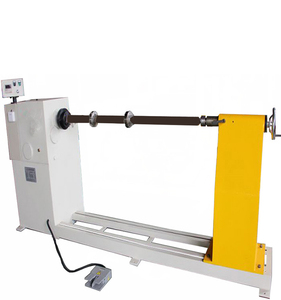
Electric Copper Wire Winder Machine Semi Automatic Horizontal Coil Winding Machine for Transformer
State of Automated Rotor Assembly in Munich’s E-Mobility Ecosystem
As Bavaria’s economic center and a prime European hub for automotive innovation, the Munich market demands unmatched rigor in industrial automation. Driven by high-performance electric vehicle (EV) powertrain requirements, heavy-duty industrial robotics, and energy-efficient HVAC technology, Munich OEMs and Tier-1 automotive manufacturers are rapidly transitioning from legacy manual or semi-automated work cells to fully automatic rotor assembly lines.
Modern Permanent Magnet Synchronous Motors (PMSM) and Brushless DC (BLDC) motors deployed across modern electric vehicles require extreme rotor structural integrity, sub-micron concentricity, and thermal stability. Our custom automated rotor production equipment bridges the gap between high-volume manufacturing throughput and micro-precision engineering. By eliminating human error during rotor sheet lamination stacking, shaft press-fitting, magnet insertion, resin encapsulation, and dynamic balancing, our systems ensure full compliance with strict European automotive quality frameworks, including ISO/TS 16949, VDA 6.3, and CE Directive specifications.
Information Gain Key Takeaway: For Munich-based system integrators and motor factories, upgrading to an automated rotor assembly line reduces unit cycle times (takt times) below 15 seconds while guaranteeing a shaft alignment accuracy within ±0.002 mm and dynamic balance levels meeting ISO 1940 Grade G1.0 specifications.


End-to-End Automatic Rotor Assembly Line Process Breakdown
A comprehensive overview of our modular automated rotor line design, engineered specifically for high-reliability applications in Munich's industrial automation belt.
1. Lamination Stacking & Core Pressing
Silicon steel rotor laminations are auto-fed, counted, and skew-stacked under precise servo-hydraulic control. Core height measurement and weighing sensors ensure uniform magnetic permeability prior to shaft installation.
2. Servo Shaft Press-Fitting
Utilizes multi-axis CNC displacement-force monitoring servo presses. Real-time curve fitting detects micro-burrs or pressure anomalies, guaranteeing zero shaft distortion during insertion into the rotor stack.
3. Permanent Magnet Insertion & Dispensing
Automated NdFeB / Ferrite magnet loading station equipped with high-accuracy glue dispensing (epoxy/resin trickling). Visual sensors verify pole orientation and slot seating depth before thermal curing.
4. Sleeve Retaining & Induction Curing
For high-RPM EV rotors, stainless steel or carbon fiber sleeve fitting is performed using induction heating or cryogenic press processes, creating exceptional centrifugal containment at speeds up to 24,000 RPM.
5. Automatic Dynamic Balancing
Dual-plane automatic dynamic balancing machine calculates precise imbalance mass and vector angles. Automated polar drilling or milling removes excess mass to meet ISO 1940 Grade G1.0 requirements.
6. End-of-Line (EOL) Testing & Traceability
100% inspection module checking total runout (TIR), flux density, back-EMF, surface defect detection via Machine Vision (AOI), and laser engraving of QR codes linked to Siemens TIA / MES databases.
Automatic Rotor Assembly Line Technical Specifications
Compare baseline technical configurations across our rotor manufacturing line series to match your specific production requirements in Munich and broader Germany.
| Technical Parameter | EV Powertrain Rotor Line | Industrial Servo / Robotics Line | Auxiliary & Pump Motor Line |
|---|---|---|---|
| Applicable Rotor Outer Diameter | Ø 80 mm – Ø 260 mm | Ø 40 mm – Ø 150 mm | Ø 15 mm – Ø 75 mm |
| Line Takt Time (Sec/Unit) | 12 s – 25 s (depending on sleeve process) | 8 s – 15 s | 5 s – 10 s |
| Shaft Press Force Accuracy | ± 0.5% (Servo closed-loop force/displacement) | ± 0.5% | ± 1.0% |
| Dynamic Balancing Grade | ISO 1940 G1.0 (Dual Plane) | ISO 1940 G1.0 / G2.5 | ISO 1940 G2.5 |
| Magnet Insertion Precision | ±0.01 mm position accuracy | ±0.015 mm position accuracy | ±0.02 mm position accuracy |
| PLC & Automation Standard | Siemens S7-1500 / Profinet / OPC UA | Siemens S7-1500 / Beckhoff EtherCAT | Siemens S7-1200 / Omron PLC |
| Operating Voltage / Power | 380V/400V 3P 50Hz/60Hz (CE Standard) | 380V/400V 3P 50Hz/60Hz | 220V/380V 3P 50Hz/60Hz |
Why Munich Buyers Trust Cefnak (Ningbo Davri) Equipment
Combining over 11 years of specialized motor manufacturing machinery expertise with third-party verified production quality standards.
Intertek Verified Supplier
Our production facilities, technical credentials, and engineering team are independently audited and verified on-site by Intertek. German clients receive full transparency on company standing and manufacturing capacity.
Sample-Based Customization
We do not sell rigid off-the-shelf catalog machines without validation. Send your physical rotor stack, shaft sample, or 3D STEP drawings, and our 5+ certified mechanical and electrical engineers will tailor custom fixtures and tooling.
On-Site European Technical Support
Our experienced expatriate commissioning engineers provide full on-site installation, line integration, PLC programming adjustment, and operator training directly at your plant in the Munich metropolitan region or surrounding Bavaria.


Rotor Assembly Integration Across Key Munich Industries
Tailored automation platforms designed to solve specific localized engineering challenges facing manufacturers in Munich and southern Germany.
Electric Vehicle Drive Rotors (Munich OEM & Tier-1 Ecosystem)
With major automotive manufacturers driving the shift to high-voltage EV platforms (400V / 800V architectures), rotors require high magnet containment strength and low cogging torque. Our automated lines incorporate precise epoxy dispensing, thermal sleeve shrinking, and high-speed dynamic balancing to handle rotor RPMs upwards of 20,000 RPM while maintaining continuous operational stability.
Robotics & Precision Industrial Servos
The industrial automation ecosystem around Munich places high demand on low-inertia, fast-response servo motor rotors. Our equipment supports ultra-fine lamination skewing and high-accuracy shaft press-fitting to eliminate torque ripple, making them ideal for articulated robotic arms, CNC spindle drives, and automated guided vehicles (AGVs).
High-Efficiency Commercial HVAC & Pumps
Driven by strict European energy efficiency directives (such as IE4 and IE5 efficiency classes), HVAC and pump manufacturers require automated rotor lines capable of assembling high-efficiency permanent magnet rotors. Our integrated line ensures fast batch changeovers and 100% automated magnetic pole testing.
Drone & Aerospace Micro BLDC Outrunners
For specialized aerospace and civilian drone applications, rotor weight saving and dynamic balance are critical. Our compact automated rotor lines press micro-bearings, insert high-grade magnets, and balance miniature external rotors with micro-gram resolution.
Munich Procurement & Engineering FAQ
Common technical questions answered for plant engineers, procurement managers, and technical buyers looking for rotor line machinery in Germany.
Do your automatic rotor assembly lines comply with EU and CE standards for German deployment?
Yes. All rotor assembly machines and turnkey automated production lines delivered to Munich and the broader European Union are built strictly according to CE Directive standards. This includes full compliance with Machine Safety Directive 2006/42/EC, Low Voltage Directive 2014/35/EU, and Electromagnetic Compatibility (EMC) Directive 2014/30/EU, featuring integrated safety light curtains, interlocked enclosures, and emergency stop loops.
Can the PLC hardware and software interface be integrated with Siemens TIA Portal?
Absolutely. Recognizing that Siemens S7-1500 PLC and TIA Portal software form the standard automation architecture in Munich and German manufacturing facilities, we offer native Siemens control hardware integration, including Profinet communication protocols and OPC UA data server capabilities for direct MES / Industry 4.0 connectivity.
What is the typical procedure for sample validation prior to equipment shipment?
We enforce a strict FAT (Factory Acceptance Test) protocol. Clients provide physical samples of rotor laminations, shafts, and magnets. Our engineering team builds customized tooling and conducts full trial runs in our assembly lab. We record video documentation, perform 100% dimensional and dynamic balance testing, and share detailed measurement reports before dispatching the machinery to your Munich factory.
How do you handle after-sales installation, engineer commissioning, and spare parts in Germany?
We provide remote video commissioning support as well as dispatching certified technical service engineers directly to your site in Munich or Bavaria. Replacement wear parts (such as dispensing nozzles, press tips, and pneumatic actuators) use standardized global brands (SMC, Festo, Schneider) ensuring rapid local availability across Germany.
What is the minimum order quantity (MOQ) and lead time for a custom rotor assembly line?
The MOQ for custom automated rotor assembly machinery or standalone winding/balancing units is 1 set. Typical manufacturing lead time ranges from 45 to 75 days depending on tooling complexity, automated station count, and custom testing integrations.
Transform Your Rotor Manufacturing in Munich
Request a comprehensive technical proposal, custom line 3D design, or schedule a sample-based trial run with our senior engineering team today.