High-Precision Motor Manufacturing Machinery
Explore our specialized portfolio of CNC flyer winding machines, automated stator lines, and component assembly platforms configured for North American industrial standards.
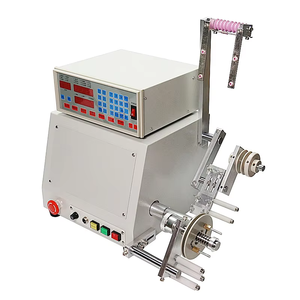
LY 810 CNC Copper Wire Coil Winding Machine
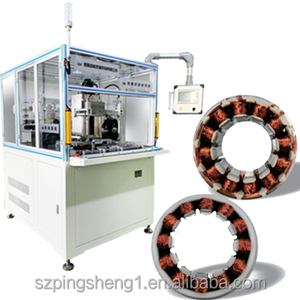
Large Motor Stator Coil Winding Production Line
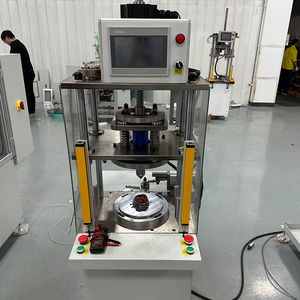
Kiron Stator Coil Winding & Shaping Equipment
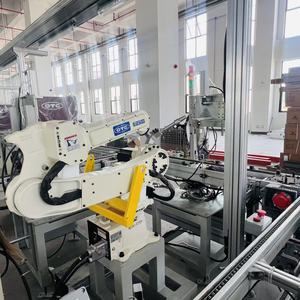
Turnkey Modular Compressor Motor Assembly Line
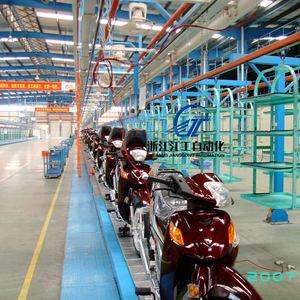
Automotive & Motor Bike Assembly Line Conveyor
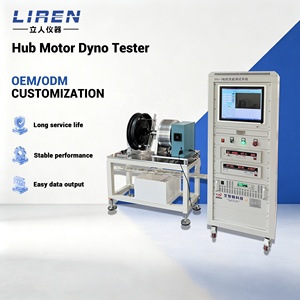
Custom OEM Hub Motor Dynamometer Test Bench
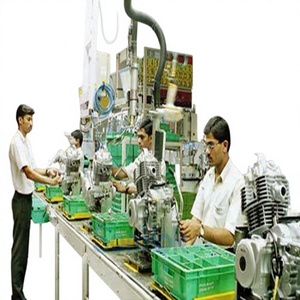
ROHS Certified Automatic Engine Assembly Line
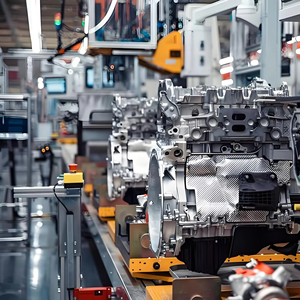
Custom New Energy Vehicle Engine Assembly Line
High-Density Stator Winding Engineering for the Detroit Automotive Ecosystem
The global transition toward electrified mobility has placed unprecedented demands on the North American automotive manufacturing hub. Within the Detroit metropolitan area—stretching from historic OEM assembly centers in Dearborn, Warren, and Detroit to advanced Tier-1 engineering corridors in Auburn Hills, Troy, and Sterling Heights—the requirement for next-generation electric motor manufacturing equipment has reached a critical inflection point. As automotive OEMs scale production of battery electric vehicles (BEVs), hybrid powertrains, and high-voltage auxiliary systems, stator coil winding precision directly dictates motor efficiency, power density, and thermal dissipation performance.
Ningbo Davri Automation Equipment Co., Ltd. (Cefnak) serves as a premier OEM stator flyer winding machine manufacturer and exporter, delivering custom-engineered automation platforms specifically calibrated to meet the rigorous quality standards of the Detroit automotive supply chain. While hairpin winding dominates main traction motors in large-scale EV platforms, high-speed stator flyer winding technology remains the undisputed industry standard for auxiliary EV motors, automotive thermal management pumps, electric power steering (EPS) actuators, brake system pumps, electronic throttle bodies, and high-performance brushless DC (BLDC) stators.
Flyer winding operates on the principle of wrapping magnet wire around a stationary stator core via a dynamically balanced rotating arm (the flyer). By eliminating the need to physically rotate heavy or intricate stator stack laminations, flyer winders achieve rotational speeds up to 3,000 RPM while maintaining sub-millimeter wire placement accuracy. For Detroit manufacturing engineers tasked with achieving high slot fill ratios (exceeding 68%) without compromising enamel insulation integrity, Cefnak’s specialized CNC flyer winding systems provide the ideal synthesis of high throughput, micro-tension control, and rapid tooling changeover.
Physics of High-Speed Flyer Winding vs. Needle Winding
Understanding the mechanical trade-offs between winding methodologies is essential for Tier-1 tool design, process validation, and line qualification under APQP / PPAP frameworks.
Dynamic Flyer Head Balancing
Dual-counterweight rotating flyer arms eliminate high-frequency harmonic vibration at speeds up to 3,000 RPM. This preserves spindle bearing longevity and prevents micro-chatter marks on magnet wire enamel during high-speed coil insertion.
Closed-Loop Servo Tensioning
Real-time active tension feedback tensioners adjust braking torque within ±1.5% of setpoint. This prevents wire stretching, necking, and dielectric strength degradation across wire diameters ranging from 0.15mm to 1.8mm heavy enamel copper.
Zero-Scratch Polished Tooling
Wire guide nozzles equipped with single-crystal ruby tips, polished ceramic radius bends, and tungsten carbide wire catchers ensure micro-fissure-free copper placement even under maximum packing density profiles.
Technical Comparison: Winding Methodologies for Automotive Stators
Selecting the optimal stator coil winding methodology requires balancing slot opening geometry, wire gauge flexibility, capital expenditure, and takt time targets. The matrix below outlines how flyer winding compares to internal needle winding and hairpin technology across typical automotive applications.
| Parameters / Metrics | Cefnak CNC Stator Flyer Winder | Internal Needle Winding Machine | Automotive Hairpin Winding System |
|---|---|---|---|
| Primary Application | External Rotors, Auxiliary Motors, EPS, HVAC | Internal Slot BLDC, Power Tools, Pump Motors | High-Voltage Main EV Traction Powertrains |
| Slot Fill Ratio Capability | 62% – 72% High Fill Density | 48% – 58% Standard Slot Fill | 73% – 82% Ultra-High Fill (Square Wire) |
| Winding Speed (Max) | 2,500 – 3,200 RPM (Flyer Arm) | 800 – 1,400 Strokes/Min (Needle) | N/A (Formed Pin Insertion Process) |
| Wire Gauge Compatibility | 0.12 mm – 2.0 mm Round Magnet Wire | 0.20 mm – 1.4 mm Round Magnet Wire | Rectangular / Flat Enamelled Wire Only |
| Tooling Changeover Time | < 15 Minutes (Quick-Lock Modular) | 30 – 45 Minutes (Multi-needle align) | 4 Hours – 1 Day (Complex Die Sets) |
| CAPEX / Equipment Investment | Moderate / Rapid ROI (< 12 Months) | Moderate / Standard ROI | Very High ($1.5M - $5M+ per cell) |
Localized Scenarios Across Detroit's Automotive & Industrial Hub
From Tier-1 component manufacturing plants in Oakland and Macomb Counties to cross-border integration plants in Windsor, Ontario, Cefnak equipment is tailored to regional operational workflows.
1. Electric Vehicle Thermal Management & HVAC Compressors
Next-generation 800V EV architectures require auxiliary scroll compressors and high-efficiency coolant pumps to maintain battery thermal equilibrium. Cefnak custom flyer winding machines process continuous multi-strand parallel copper wires directly into stator slots without insulation tearing, supporting high-voltage dielectric breakdown requirements (> 2.5 kV hi-pot isolation tests).
- Integrated automatic lead wire stripping and terminal staking.
- Compact footprint matching Detroit Tier-1 cellular manufacturing lines.
- EtherCAT bus control compatible with Allen-Bradley & Siemens PLC networks.
2. Electric Power Steering (EPS) & Brake-by-Wire Actuators
Safety-critical steer-by-wire and electromechanical brake actuators demand absolute zero-defect coil winding. Our flyer winders feature real-time turn counting via dual optical encoders and continuous wire tension logging. Every individual stator serial number can be paired with its exact tension graph for full ISO/IATF 16949 quality traceability.
- Automated paper insulation insertion & end-turn shaping integration.
- Sub-millimeter slot positioning for ultra-low cogging torque requirements.
- PPAP Level 3 documentation package support for North American deployments.
North American Industrial & Automotive Trends Impacting Detroit Procurement
As Detroit OEMs shift toward modular vehicle platforms and localized US-MCA supply chains, machinery procurement teams prioritize three macro trends:
- Flexible Multi-Model Production Lines: Modern stator winding cells must handle multiple lamination stack heights and stator outer diameters (OD 40mm to OD 250mm) with minimal re-tooling down time. Cefnak's recipe-driven CNC software allows operators to switch production programs in under 60 seconds.
- Energy Efficiency & Carbon Reduction (Scope 1 & 2 Standards): Featuring high-efficiency regenerative servo drives, our flyer winders recover braking energy back into the internal DC bus, reducing total power consumption by up to 22% compared to traditional clutch-brake winding machines.
- NFPA 79 & UL Electrical Safety Compliance: Machinery exported to Michigan, Ohio, and Indiana manufacturing plants is built with UL-listed electrical panels, Category 4 safety light curtains, dual-channel E-stop relays, and standard English-language HMI interfaces for immediate compliance with OSHA workplace safety standards.
Why Global OEMs Partner with Ningbo Davri Automation (Cefnak)
A proven track record spanning over a decade of motor manufacturing machinery design, verified on-site by third-party inspection agencies.
Intertek On-Site Verified Manufacturing Capability
Ningbo Davri Automation Equipment Co., Ltd. is independently audited and verified on-site by Intertek. Our facility spans comprehensive vertical manufacturing stages—including precision metal lamination stamping, stator core assembly, automatic coil winding, resin impregnation, precision dynamic balancing, function testing, and export seaworthy packaging. With over 11 years of dedicated motor automation expertise and a team of certified senior mechanical & software engineers (each with 5+ years of specialized field experience), we guarantee machinery built to rigorous global standards.
Sample-Based Tooling Customization
Send your physical stator stack laminations or 3D CAD files to our engineering lab. We perform winding simulation, tool path optimization, and trial coil winding before final machine assembly, providing full video proof and sample return for your inspection.
6-Point In-House Quality Assurance Lab
Every winder undergoes strict internal testing using digital wire tension meters, hi-pot insulation resistance testers, multi-channel temperature rise loggers, dynamic rotor/stator balance test benches, and high-magnification video microscopes for solder joint inspection.
Global Technical Support & Overseas SLA
We provide comprehensive remote commissioning support via secure VPN gateway connections, step-by-step video guidance, and rapid dispatch of certified field application engineers for on-site installation, operator training, and line integration across North America.
Frequently Asked Questions for Detroit Engineering Procurement
Direct answers to common technical, logistics, and quality assurance inquiries from North American automotive motor manufacturers.