Featured Electric Motor Winding Equipment & Production Lines
Explore our flagship CNC armature winders, needle-type stator winders, motor test benches, and automated manufacturing lines customized for Indonesian industrial requirements.
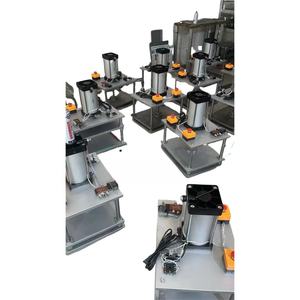
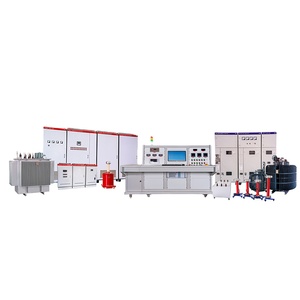
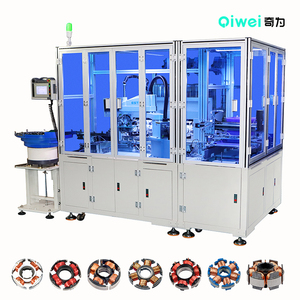
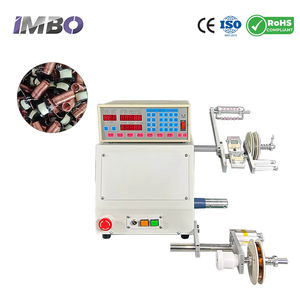
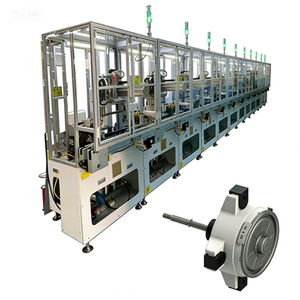
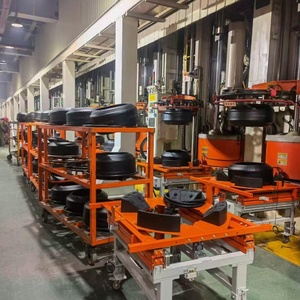
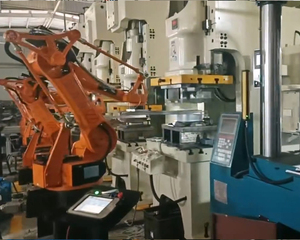
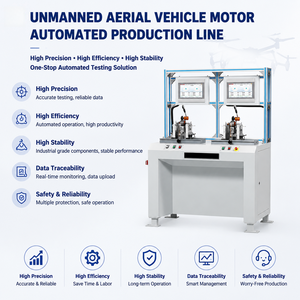
Engineering Excellence in Electric Armature Winding Machinery for Indonesia
The rapidly accelerating industrial landscape in Indonesia—anchored by the government’s Making Indonesia 4.0 roadmap and national electrification mandates under Presidential Regulation (Perpres) No. 55/2019—has created unprecedented demand for advanced electric motor manufacturing equipment. At the center of this transformation lies the electric armature winding machine: a vital piece of industrial automation designed to precisely index, wrap, and terminate magnet wire into slotted rotors and stators for universal motors, brushed DC motors, automotive starter motors, and next-generation BLDC/PMSM traction drives.
As electric motor manufacturing migrates toward higher power densities and stringent IE3 / IE4 Premium Efficiency standards, traditional manual or semi-automatic flyer winding methods fail to meet required slot-fill factors, tension consistency, and thermal management metrics. Industrial plants across Indonesia's primary manufacturing hubs—such as West Java (Cikarang, Karawang, Bekasi), Greater Jakarta (Jabodetabek), and East Java (Surabaya, Rungkut)—require industrial-grade multi-axis CNC armature winding machines capable of maintaining exact coil geometry, minimal electrical resistance variance, and high-speed cycle times.
Key Technical Takeaway for OEM Procurement Managers in Indonesia: Modern CNC flyer armature winding machines utilize closed-loop servo tensioning systems combined with programmable dynamic balancing indexing. This ensures wire tension tolerances within ±0.5 Gram-force (gF), eliminating insulation scratching, micro-short circuits, and rotor imbalance during high-RPM operations (up to 25,000 RPM in power tools and EV auxiliary components).
Kinematic Fundamentals: How High-Precision Armature Winding Works
An electric armature winder operates by taking continuous enamelled copper magnet wire (typically ranging from Ø0.05 mm ultra-fine gauge up to heavy-duty Ø1.6 mm magnet wire) and delivering it through dual flyer arms rotating at speeds between 2,500 RPM and 6,000 RPM. The armature core (constructed from silicon steel lamination stacks) is held securely in an indexing collet controlled by a high-resolution AC servo motor.
During operation, the mechanical kinematics follow a highly synchronized 4-step sequence:
- Servo Indexing & Alignment: The armature shaft is positioned with arc-second angular accuracy to align designated rotor slots directly in line with the flyer wire guides.
- Dual Flyer High-Speed Winding: Opposing flyer arms spin simultaneously around the armature body, laying turns cleanly into opposing slot pairs while a dynamic wire guide template prevents wire jumping or overlapping.
- Commutator Hook Indexing & Wrapping: Without cutting the wire, the machine automatically lowers the wire lead into the commutator riser slot or around the commutator hook, forming a mechanical contact prior to hot staking.
- Automatic Trimming & Clamping: Integrated pneumatic shears cleanly cut the wire while pneumatic clamps capture the wire end for seamless transition to the next armature cycle.
By replacing manual labor with CNC multi-axis synchronization, Indonesian OEMs achieve throughput boosts ranging from 300% to 600%, while reducing copper scrap rates to under 0.2% per production batch.
Armature Winding vs. Stator Winding: Technical Distinction for Procurement
For factory engineers evaluating equipment investments, distinguishing between Armature Winding (Rotational Element) and Internal/Outer Stator Winding (Stationary Element) is essential to proper line planning:
- Armature Winding Machines (Flyer Winding / Rotor Winder): Engineered for universal motors (electric power tools, blender motors, vacuum cleaners) and brushed DC systems. The wire is wrapped around the outer diameter slots of an rotating shaft, requiring direct mechanical interface with a commutator.
- Needle-Type Internal Stator Winding Machines: Designed for inner-rotor Brushless DC (BLDC) motors and Permanent Magnet Synchronous Motors (PMSM). A reciprocating needle moves vertically and rotates inside the stator bore, depositing copper wire directly into internal slots.
- Outer Stator Winding Machines: Optimized for external-rotor BLDC outrunner motors, widely utilized in civilian FPV drones, ceiling fans, and electric motorcycle hub drives.
Armature Winding & Motor Production Equipment Specifications
Compare parameters across our industrial armature winding systems, commutator hot staking units, and automated motor assembly platforms.
| Equipment Model / Type | Wire Diameter Range | Armature / Stator OD | Max Winding Speed | Tension Control Method | Target Indonesian Applications |
|---|---|---|---|---|---|
| CNC Double-Flyer Armature Winder | Ø 0.16 mm – 1.20 mm | Ø 20 mm – 60 mm | 0 – 5,000 RPM (Adjustable) | Closed-Loop Magnetic / Servo Tensioner | Power Tools, Automotive Starters, Home Appliances |
| CNC Commutator Hot Staking Machine | Commutator OD Ø 8–40 mm | Shaft Length: Max 250 mm | Cycle: 1.5 - 2.5 sec/hook | Constant Current Inverter Welder | Universal Motor Rotors, Wiper Motors |
| Needle Internal Stator Winder (4-Station) | Ø 0.15 mm – 1.00 mm | Stator OD: Ø 30–120 mm | Max 1,200 Strokes/min | Multi-Channel Electronic Tensioner | Water Pumps, AC Motors, Appliance BLDC |
| Outer Stator Winder (Drone / Ceiling Fan) | Ø 0.10 mm – 0.85 mm | Stator OD: Ø 18–180 mm | 0 – 2,500 RPM | Precision Hysteresis Brake Tensioner | Agricultural Drones, FPV Motors, Industrial Fans |
| Turnkey EV Traction Assembly Line | Automated Coil Insertion | Motor Frame 80 – 250 mm | Takt Time: 45 – 90 sec/unit | Full PLC Servo Feedback Loop | Electric 2-Wheeler Motors, EV Compressors |
Localized Application Scenarios Across Indonesian Industrial Hubs
How our machinery drives operational efficiency across Indonesia’s premier manufacturing ecosystems, from Cikarang to Surabaya.
Electric Vehicle (EV 2W/4W) & E-Mobility
Deployed in West Java’s automotive corridor (KIIC Karawang & MM2100 Cikarang), powering high-torque BLDC hub motors and electric motorcycle traction armatures compliant with domestic TKDN requirements.
Cikarang & Karawang EV BeltIndustrial & Submersible Water Pumps
Supporting East Java’s pump manufacturing cluster (Surabaya SIER & Rungkut Industrial Estate). Winding heavy-duty insulated wire for deep-well agricultural water pumps designed for continuous tropical duty.
Surabaya & East Java HubHome Appliances & HVAC Manufacturing
Optimized for Tangerang, Bekasi, and Semarang appliance factories. Producing ultra-quiet IDU BLDC fan motors, washing machine agitator armatures, and refrigerator compressor motors.
Tangerang & Bekasi Appliance BeltHigh-Speed Industrial Power Tools
Full-cycle armature winding and hot staking for angle grinders, rotary drills, and marble cutters. Engineering rigid slot insulation to withstand vibration in heavy civil construction.
National OEM Construction ToolsAgricultural & Industrial UAV Drones
Specialized high-slot outer stator winding machines for agricultural crop-spraying drones utilized in Sumatra and Kalimantan palm oil plantations, ensuring lightweight and high thermal dissipation.
Sumatra & Kalimantan Drone TechAutomotive Auxiliary & Starter Motors
Automation for automotive OEM supply chains producing heavy-duty starter armatures, radiator fan motors, window lifters, and electronic power steering (EPS) motors.
Tier-1 Automotive SuppliersStrategic Motor Manufacturing Trends Shaping Indonesia
Key regulatory and economic drivers accelerating industrial automation in the Indonesian archipelago.
TKDN Compliance & Domestic Value Addition
Indonesia’s Ministry of Industry enforces strict Tingkat Komponen Dalam Negeri (TKDN) thresholds, requiring electric vehicle and motor manufacturers to achieve up to 40%–60% localized manufacturing. In-house armature winding allows factories to pass government audits seamlessly.
Making Indonesia 4.0 & Smart Factory Automation
The national transition toward Industry 4.0 mandates real-time data connectivity. Our CNC armature winding machines feature integrated Modbus/EtherCAT PLC interfaces, enabling remote OEE tracking, cycle monitoring, and predictive maintenance integration.
Tropicalization & High-Humidity Insulation Standards
Indonesia's tropical climate presents high relative humidity (often exceeding 85% RH) and elevated ambient temperatures. Machines must support Class H (±180°C) and Class F insulation processing, precise trickle varnishing, and dielectric flashover testing.
Why Indonesian OEM Engine Manufacturers Partner with Cefnak
Ningbo Davri Automation Equipment Co., Ltd. (Cefnak) is an Intertek-verified, specialized manufacturer of motor winding machinery, automated assembly lines, and precision motor stators with over 11 years of global export experience.
-
✓Sample-Based Technical Customization: Send your armature rotor or stator sample to our Ningbo R&D lab. We perform dynamic trial winding and deliver a custom tooling proposal before contract execution.
-
✓16 In-House Process Steps: From raw silicon steel lamination stamping and precision CNC shaft machining to armature balance testing and trickling, all critical production stays under our direct control.
-
✓On-Site Overseas Engineer Support: We deploy experienced field engineers directly to industrial estates across Jakarta, Surabaya, Cikarang, and Karawang for machine setup, tooling calibration, and operator training.
-
✓Form E / ASEAN-China Free Trade Advantage: All exported machinery is certified under Form E documentation, allowing Indonesian importers to enjoy zero or significantly reduced tariff duties under ACFTA regulations.
Frequently Asked Questions by Indonesian Buyers
Addressing essential technical, logistics, and operational inquiries for Indonesian factory operations.
All our industrial armature winding machines, CNC hot staking units, and automated production lines are natively built to support Indonesia’s standard industrial power grid specification: 380V Three-Phase ±10%, 50Hz frequency, as supplied by Perusahaan Listrik Negara (PLN). Control transformer circuits operate on standard 24V DC for enhanced operator safety.
By supplying automated armature winders, slot insulation inserters, and commutator spot welding equipment to your plant in Indonesia, your company transitions from importing complete motor assemblies to domestic coil winding and assembly. This directly increases your domestic transformation value, allowing your finished motors or vehicles to meet government TKDN thresholds.
Yes! Sample-based technical validation is an independently verified capability of Cefnak. You can courier your un-wound armature rotors or stators to our engineering center in Ningbo, China. Our engineers will perform trial winding on our CNC test rigs, record HD video of the process, measure electrical resistance and slot fill, and return the finished samples for your quality audit.
We provide comprehensive remote commissioning guidance and can dispatch bilingual field engineers directly to your plant in Cikarang, Karawang, Tangerang, Surabaya, or other Indonesian industrial zones. Our engineers handle mechanical leveling, electrical integration, PLC parameter tuning, and conduct intensive training for local technicians.
We issue official Form E (Certificate of Origin under the Framework Agreement on Comprehensive Economic Co-operation Between ASEAN and China). When clearing customs at Tanjung Priok (Jakarta) or Tanjung Perak (Surabaya), Form E enables Indonesian importers to benefit from preferential zero or near-zero import tariffs on qualifying motor manufacturing machinery.
For standalone CNC armature winding machines, commutator hot stakers, or test benches, the MOQ is 1 set with a typical manufacturing lead time of 25 to 40 business days depending on custom tooling complexity. For OEM drone stators or BLDC components, MOQs start from 500 units.
Accelerate Your Motor Production Line in Indonesia Today
Send your armature drawings, wire specifications, or production targets to our engineering team. Receive a comprehensive technical proposal and customized quote within 24 hours.
Get a Quote