Featured Industrial Assembly Systems & Equipment
Explore our precision-engineered motor assembly machinery optimized for high-efficiency manufacturing, robust thermal handling, and seamless integration into Brazilian industrial workflows.
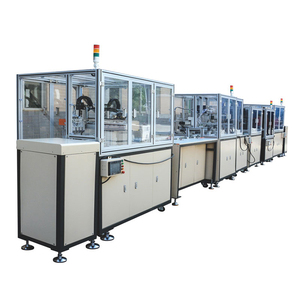
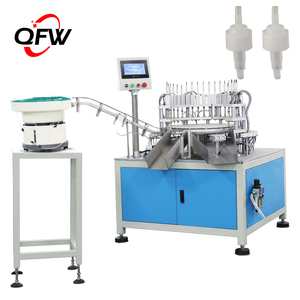
Navigating the Brazilian Electric Motor & Assembly Manufacturing Sector
Brazil stands as the industrial powerhouse of South America, representing a dynamic ecosystem where automotive manufacturing, agricultural pump production, home appliance production in the Manaus Free Trade Zone (PIM), and commercial HVAC manufacturing converge. As global OEMs accelerate localized production to mitigate supply chain disruptions and lower tariff burdens under the Brazilian *Tarifa Ex-Tarifário* framework, selecting a qualified motor assembly machine supplier serving the Brazil market is no longer merely a purchasing decision—it is a core strategic initiative.
Modern electric motor assembly requires meticulous precision. From handling micro-tolerances in needle-type internal stator winding to deploying automated hot staking for armatures and high-frequency joining presses for heavy-duty pump enclosures, assembly machinery must withstand intensive operation while conforming to local Brazilian grid characteristics and rigorous labor safety regulations.
Engineering Compliance: NR-12 Safety Standards & INMETRO Directives
Procurement engineers and plant managers across key Brazilian industrial clusters—such as the ABC Paulista automotive belt, Joinville’s metal-mechanic hub, and the Manaus Industrial Pole—face heavy regulatory scrutiny under *Norma Regulamentadora 12* (NR-12). Importing non-compliant automation lines risks immediate factory shut-downs by Brazil’s Ministry of Labor (MTE).
Our specialized motor assembly machinery is architected from the ground up to satisfy these mandatory specifications:
NR-12 Safety Interlocking
Dual-channel emergency safety relays, physical perimeter guarding, optical light curtains, and zero-energy state safety lockout (LOTO) valves built into every automated cell.
Dual Frequency & Grid Handling
Robust transformer configurations built for Brazil’s mixed electrical distribution: 60Hz frequency standard, 220V/380V delta-wye configurations, and transient surge filters.
INMETRO Efficiency Alignment
High-precision wire tension control and slot-fill optimization designed to manufacture motors that effortlessly achieve IE3 (Premium) and IE4 (Super Premium) energy ratings.
Localized Application Scenarios Across Brazilian Industrial Sectors
The versatile nature of our motor assembly equipment enables customized deployment across Brazil’s most demanding manufacturing verticals:
1. Automotive Powertrains & E-Mobility Transition (São Paulo & Minas Gerais Corridors)
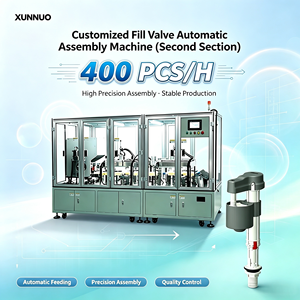
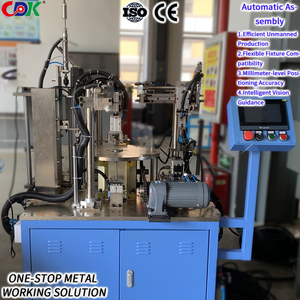
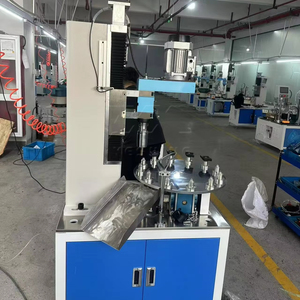
Brazil's automotive manufacturing hubs—spanning Greater ABC, Resende, and Betim—are undergoing a massive transformation toward hybrid vehicles (Flex-Fuel + Electric) and auxiliary electric motors. Our automated needle-type internal stator winding machines and fill-valve assembly cells enable high-speed production of starter-generator motors, electric power steering (EPS) motors, and auxiliary radiator fan motors. With integrated online vision check systems and torque validation, automotive suppliers guarantee zero-defect parts for Tier-1 supply chains.
2. Home Appliances & White Goods (Polo Industrial de Manaus - PIM)
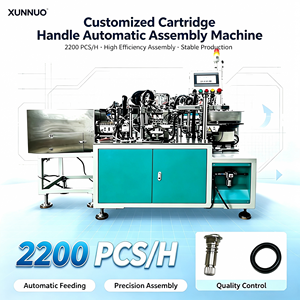
In Northern Brazil, the Manaus Free Trade Zone houses leading global home appliance brands manufacturing compressors, washing machine actuators, and air conditioner fan motors. High throughput is essential. Our 4-station internal stator winding systems and automatic cartridge handle assembly equipment operate at up to 2,200 PCS/H, delivering maximum output per square meter of air-conditioned factory space.
3. Agribusiness & Submersible Irrigation Pump Motors (Cerrado Region & South)
Brazil’s agricultural sector relies heavily on high-capacity irrigation pumps, deep-well submersibles, and fluid handling systems. Pump motors require heavy-duty enamel wire handling, high structural rigidity, and sealed bearing press-fitting. Equipment like our non-standard customized pump motor gear assembly lines and high-frequency press units ensure hermetic sealing, zero dielectric breakdown, and long operational life under harsh field conditions in Mato Grosso and Rio Grande do Sul.
4. Commercial Furniture & Woodworking Actuator Assemblies
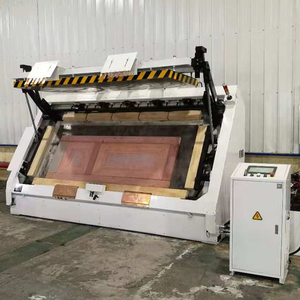
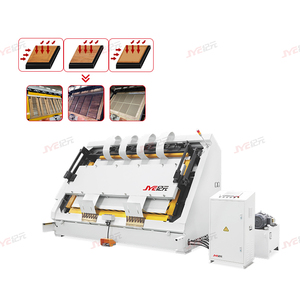
In the furniture clusters of Bento Gonçalves (RS) and Ubá (MG), automated woodworking machinery incorporates specialized high-frequency 20KW motor and pump joining presses. These systems streamline wood panel joining, door frame assembly, and heavy motor-driven mechanical joints with touch-screen PLC automation and minimal labor requirements.
Technical Matrix: Assembly Automation vs. Motor Specification
Select the optimal machine architecture based on motor topology, output capacity, and control parameters required by Brazilian plant engineers:
| Equipment Category | Target Motor Topology | Primary Industrial Application | Key Automation Specs | Compliance Standards |
|---|---|---|---|---|
| Internal Stator Winder | Inner-Rotor BLDC / PMSM | Automotive EPS, EV Compressors, Power Tools | 4-Station Needle Winding, Servo CNC Control | NR-10, NR-12, CE, ISO9001 |
| Outer Stator Winder | External-Rotor BLDC / Outrunners | Drone Motors, Commercial Ceiling Fans, Treadmills | Dual-Station High Tension Precision Wire Layering | NR-12, INMETRO IE3/IE4 Ready |
| Pump Motor Gear Assembly | AC / DC Gear & Pump Motors | Agribusiness Irrigation, Automotive Fuel Pumps | PLC-Integrated Mechanical Press, Gear Mesh Testing | NR-12 Lockout Safety Ready |
| Armature Hot Staking | Brushed Universal / Commutator Rotors | Household Vacuum Cleaners, Mixers, Angle Grinders | High-Frequency Inverter Spot Welding, Micro-Check | NR-10 Electrical Insulation Passed |
| High-Frequency Press Line | 20KW Pump & Motor Furniture Frames | Heavy Wood Door Joinery, Structural Frames | 20KW High-Frequency Generator, Hydraulic Clamp | MTE Work Safety Compliant |
Industry 4.0 & Automation Trends in Brazil’s Motor Sector
As Brazilian manufacturers adapt to global decarbonization mandates and rising electricity tariffs, four dominant technical trends are shaping purchasing decisions across the country:
1. Shift from Induction to BLDC/PMSM
Rising industrial power costs are driving OEMs away from traditional single-phase AC induction motors toward Brushless DC and Permanent Magnet Synchronous Motors. This requires upgrading assembly lines with specialized needle winding and magnetic rotor insertion equipment.
2. Remote Diagnostics & Telemetry
To eliminate technical response latency across overseas factory deployments, Brazilian buyers prioritize equipment outfitted with secure VPN routers (e.g., HMS Ewon or Siemens Scalance) allowing Chinese engineering teams to diagnose PLC program bugs in real time.
3. Modular & Rapid Tooling Changeover
With high product variation in domestic markets, plant managers demand quick-change pallet fixtures, adjustable slot indexers, and recipe-based PLC storage that cuts tooling changeover time from hours to under 15 minutes.
Why Global & Brazilian OEMs Partner with Us
As an Intertek On-Site Verified Supplier operating out of Ningbo, Zhejiang—one of China’s premier automation and motor engineering hubs—Ningbo Davri Automation Equipment Co., Ltd. (Cefnak) bridges high-tier manufacturing technology with accessible international service.
Rigorous 8-Step Quality Control Lifecycle
Every automated line or standalone winding assembly machine undergoes stringent verification:
- 1. Precision Lamination Stamping & Core Inspection: Verifying slot dimensions and stack height uniformity.
- 2. High-Accuracy Servo Winding: Digital handheld tension meter checks prevent enamel degradation.
- 3. Automated Wire Taping & Insulation: Eliminating phase-to-phase shorting risks.
- 4. Hot Staking & Microscopic Solder Inspection: Video microscopes inspect wire terminations under magnification.
- 5. Dynamic Balancing & Concentricity Verification: Ensuring whisper-quiet high-RPM performance.
- 6. Withstand Voltage (Hi-Pot) & Surge Testing: Validating dielectric breakdown immunity.
- 7. Multi-Channel Temperature Rise Testing: Real-time thermal profiling under continuous duty cycles.
- 8. Full Aging & Export Vacuum Packing: Seaworthy moisture-proof packaging for transatlantic transit to Santos, Paranaguá, or Manaus ports.
Frequently Asked Questions (FAQ) for Brazilian Procurement Officers
Find clear technical and commercial answers regarding international shipping, NR-12 compliance, voltage adaptation, and after-sales field support for Brazil.
Our machines destined for Brazil can be customized to full NR-10 and NR-12 compliance. This includes installing dual-channel safety relays (e.g., Sick or Allen-Bradley), physical safety enclosures with locked door switches, two-hand start controls, emergency stop buttons situated at operator stations, and Portuguese-language safety signage and electrical schematics.
Brazil operates on a diverse electrical grid (220V, 380V, or 440V at 60Hz depending on the state and industrial zone). We engineer our machine power control panels with step-down/step-up transformers and 60Hz-rated VFDs (Variable Frequency Drives) and PLC power supplies, ensuring seamless plug-and-play installation without overheating standard 50Hz components.
You provide your motor drawing or send physical samples (stators, armatures, gears) to our Ningbo headquarter. Our engineering team conducts SolidWorks 3D modeling, calculates optimal needle trajectories or press forces, manufactures custom tooling, and executes a trial production run. We provide comprehensive FAT (Factory Acceptance Test) HD videos and inspection reports before dispatch.
Yes. Many of our automated assembly machines qualify for Brazil’s *Ex-Tarifário* regime (temporary import tariff reduction for capital goods without direct national equivalent). We provide detailed technical dossiers, functional descriptions, catalog specs, and HS Code classifications to assist your Brazilian customs broker with the Ministry of Development, Industry and Commerce (MDIC) application.
We provide two tiers of support: 1) 24/7 remote technical assistance via encrypted VPN connection directly to the machine’s PLC/HMI for immediate troubleshooting and firmware updates; 2) Field engineer dispatch to your facility in Brazil for physical installation, mechanical setup, line integration, and operator training.
Standard standalone winding or assembly equipment typically requires 30 to 45 days for manufacturing and FAT testing. Fully automated, multi-station turnkey production lines take between 60 to 90 days. Ocean freight transit from Ningbo Port to Santos or Manaus takes approximately 35 to 45 days.
Ready to Upgrade Your Motor Production Line in Brazil?
Contact our engineering experts today to discuss your stator dimensions, cycle time targets, NR-12 requirements, or to request a customized technical quotation.