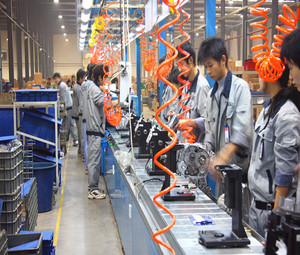
Motorcycle Engine Assembly Production Line Equipment
- Heavy-duty automated conveyor
- PLC controlled station indexing
- Customized for ICE & EV drivetrains
Explore our industrial-grade stator paper inserting equipment, coil winders, and automated assembly solutions customized for Baltimore motor OEM/ODM factories.
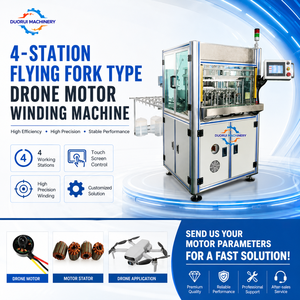
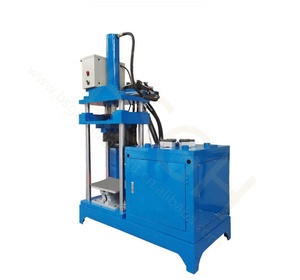
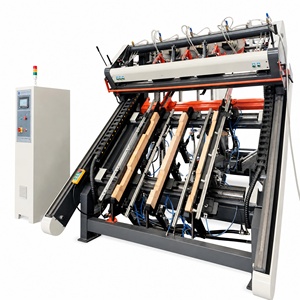
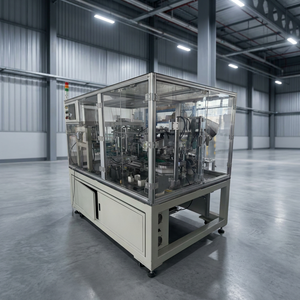
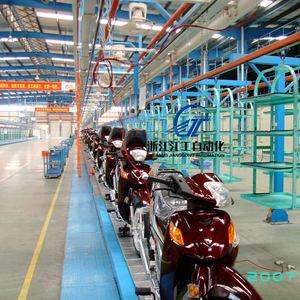
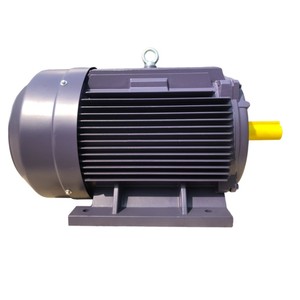
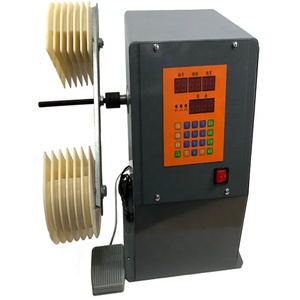
In modern electric motor manufacturing—ranging from compact BLDC drone actuators to heavy-duty industrial induction motors—the stator slot insulation process represents a critical quality checkpoint. The automated stator paper inserting machine executes the fundamental task of feeding, edge-folding (cuffing), cutting, shaping, and driving dielectric insulation paper into internal or external stator slots. In high-efficiency motor designs, precise slot liner placement is essential to prevent coil-to-core ground faults, dielectric breakdown, and mechanical damage to magnet wire during subsequent high-speed coil winding and lacing cycles.
Core Technical Insight: The interaction between insulation paper elasticity, edge-cuff height, and mechanical slot insertion force directly dictates the slot fill factor achievable in OEM motor fabrication. Premium paper inserters operate with micro-step servo indexing to ensure zero paper tears and less than 0.05mm margin drift.
Automated stator paper inserting machinery must handle diverse electrical insulation media, including Nomex®, DMD (Dacron-Mylar-Dacron laminate), NMN (Nomex-Mylar-Nomex), and PET film, across Class B, Class F, and Class H thermal ratings. The mechanical feeder mechanism draws insulation material from a tension-controlled roll, feeding it into a pre-cuffing die. Edge cuffing—creating folded flanges at both axial ends of the paper liner—prevents the slot paper from migrating axially under wire insertion force and shields magnet wire from sharp lamination stack edges.
Our OEM/ODM stator paper inserting equipment incorporates dual servo-driven cuffing blades capable of adjusting fold widths from 2.5mm to 6.5mm dynamically. By maintaining absolute control over material tension and fold geometry, the machine eliminates micro-fractures in the PET/Nomex layer, preserving dielectric breakdown strength exceeding 5 kV to 10 kV according to IEEE 95 standards.
Legacy slot paper inserters relied heavily on mechanical cams and ratchet mechanisms, which suffered from mechanical wear, high setup times during stator stack changeover, and fixed slot pitch constraints. Contemporary OEM/ODM machinery produced for automated motor plants utilizes multi-axis CNC servo synchronization:
Direct-drive rotary servo tables achieve slot-to-slot angular position accuracy within ±0.02 degrees, matching uneven slot spacing and skewed stator designs effortlessly.
Programmable paper length feeding allows operators to store over 100 stator part recipes on the touchscreen HMI, reducing changeover times from 2 hours down to under 10 minutes.
Integrated photo-electric and fiber-optic sensors audit paper presence, cuff completeness, and slot alignment prior to driving the insertion ram, eliminating uninsulated slot errors.
In high-efficiency PMSM and BLDC stators, maximizing copper slot fill factor (often target >45% to 60%) requires the slot insulation paper to hug the internal contours of the lamination tooth profile tightly. Excess bulk or loose paper geometry restricts the open slot window, leading to scraped enamel or jammed wire during needle winding or coil insertion. OEM paper inserting machines utilize custom-machined shaping mandrels designed via SolidWorks 3D simulation to match exact stator laminations, maximizing usable copper area while guaranteeing zero turn-to-ground contact.
Baltimore, Maryland, serves as a vital logistics, maritime, defense engineering, and advanced manufacturing hub. Our stator paper inserting machines and automated production lines are purpose-built to meet regional operational demands.
The Port of Baltimore is one of the busiest maritime shipping gateways on the U.S. East Coast, driving immense demand for automated guided vehicles (AGVs), electric forklifts, and heavy harbor cranes. Local motor re-manufacturers and OEMs leverage our heavy-duty induction stator paper inserters and traction motor assembly lines to build high-torque, explosion-proof electric drives for warehouse logistics and container port automation.
With strict environmental sustainability targets across Maryland waterways, commercial boatbuilders and naval engineering firms around Chesapeake Bay are transitioning to electric and hybrid marine propulsion. Our custom outer-stator insulation and winding machines accommodate high-pole count PMSM marine motors, guaranteeing IP65/IP67 thermal and dielectric resilience against saltwater moisture environments.
Situated near Aberdeen Proving Ground (APG) and regional defense tech corridors, Maryland aerospace suppliers require ultra-precise UAV motor production lines. Our specialized micro-stator paper inserters handle small slot openings down to 1.2mm for custom BLDC outrunner and inrunner drone motors, ensuring lightweight, high-temperature Nomex slot insulation for autonomous defense systems.
Baltimore’s commercial building modernizations demand energy-efficient HVAC fan blowers, hermetic EV compressors, and water pump motors. Our universal paper inserting equipment accommodates multi-stack frame sizes (NEMA 48 to 256T), permitting local repair and OEM plants to re-insulate stators quickly with minimal tooling adjustment.
The manufacturing landscape in Maryland and the broader Mid-Atlantic region is undergoing rapid structural evolution. Driven by state-level green energy mandates, federal infrastructure investments (such as the CHIPS and Science Act and Inflation Reduction Act), and supply chain reshoring initiative, motor manufacturers in Baltimore face three pressing trends:
Industrial electricity tariffs and U.S. Department of Energy (DOE) regulations mandate strict efficiency thresholds. Utilizing automated stator paper inserting machines allows manufacturers to achieve tight slot dimensions, leaving maximum space for high-density copper winding required for Premium (IE3) and Super-Premium (IE4) efficiency standards.
To mitigate global maritime supply chain disruptions, Maryland OEM plants are replacing manual slot insulation and hand-lacing with integrated automated production lines. Replacing manual paper tucking reduces labor requirements by up to 85% while boosting daily unit throughput.
Industrial motor buyers in North America require UL 508A cabinet panel compliance, NFPA 79 electrical safety standards, and 480V 60Hz 3-phase power compatibility. Our export machinery is engineered specifically to meet North American grid specs and safety codes upon delivery.
Select the ideal slot insulation configuration based on your stator core dimensions, slot count, and target output metrics.
| Machine Model | Stator O.D. Range | Stack Height | Insertion Speed | Compatible Insulation | Control System |
|---|---|---|---|---|---|
| SPI-80B Internal Winder | Ø 15mm - Ø 80mm | 10mm - 80mm | 0.35s - 0.5s / slot | DMD, NMN, PET (0.12-0.25mm) | Delta / Mitsubishi PLC + Servo |
| SPI-160 Industrial Stator | Ø 40mm - Ø 160mm | 20mm - 160mm | 0.4s - 0.6s / slot | Nomex, DMD, NMN (0.15-0.35mm) | Siemens S7-1200 + Weinview HMI |
| SPI-300 Heavy NEMA Frame | Ø 100mm - Ø 300mm | 40mm - 280mm | 0.5s - 0.8s / slot | Nomex, Heavy DMD (0.20-0.50mm) | Multi-Axis CNC Servo Control |
| Micro-UAV Custom Inserter | Ø 8mm - Ø 45mm | 3mm - 40mm | 0.25s - 0.4s / slot | Polyimide, Thin PET (0.08-0.15mm) | High-Speed Micro Stepper / Servo |
With over 11 years of specialized motor equipment manufacturing experience, Ningbo Davri (Cefnak) delivers end-to-end reliability, custom engineering, and verified quality control.
Our manufacturing plant, production capacity, design software infrastructure, and legal status have been independently audited on-site by Intertek experts, assuring authentic factory-direct pricing and capabilities.
Send physical stator stack samples or CAD drawings from Baltimore. Our engineering team designs custom tooling dies, paper forming mandrels, and HMI software tailored specifically to your motor stack parameters.
Every paper inserter and assembly station undergoes rigorous trial runs in our testing lab, including digital wire tension checks, hi-pot electrical insulation withstand tests, and continuous 72-hour burn-in aging.
Get immediate answers regarding electrical compliance, shipping logistics to Port of Baltimore, customization, and aftermarket technical support.
Yes. All machines built for shipment to Baltimore, Maryland, and North American clients are custom wired for 480V/208V/240V 3-phase 60Hz power supplies. Control cabinets utilize UL-listed breakers, Schneider/Siemens contactors, and proper color-coded industrial wiring matching NFPA 79 guidelines.
Ocean freight from Ningbo Port directly to the Port of Baltimore typically takes 30 to 35 transit days. Manufacturing and factory trial testing take approximately 25 to 40 days depending on custom tooling complexity. We provide full DDP (Delivered Duty Paid) or CIF Baltimore port logistics management.
Absolutely. Our machines feature adjustable stack height guides and programmable servo indexing. Changing stack height takes less than 5 minutes by adjusting mechanical clamps. Changing slot count or stator outer diameter requires swapping out the modular shaping mandrel and selecting the corresponding recipe on the HMI screen.
Yes. Sample validation is standard procedure. Clients ship physical un-insulated stator cores to our Ningbo laboratory. We perform trial paper insertion, record high-definition video of the cycle, measure edge-cuff dimensions, and return completed samples to Baltimore for your engineering approval prior to final shipment.
We provide comprehensive remote video commissioning, step-by-step English documentation, and PLC diagnostic support. For turnkey production lines, our certified field service technicians can be dispatched on-site to your Baltimore facility for installation, operator training, and process calibration. We also ship wearing parts (blades, forming dies) via DHL/FedEx within 48 hours.
Our feed mechanisms handle all standard industrial slot insulation media, including Nomex®, DMD (Dacron-Mylar-Dacron), NMN, NHN, PET films, and vulcanized fiber, ranging in thickness from 0.10mm up to 0.50mm.
Contact our engineering specialists today to request a tailored technical proposal, 3D station layout, or custom machine quotation engineered specifically for your stator production targets.