Featured Stator Production Lines & Motor Systems
Engineered for high slot-fill capability, strict INMETRO energy compliance, and continuous 24/7 industrial duty across Greater São Paulo.
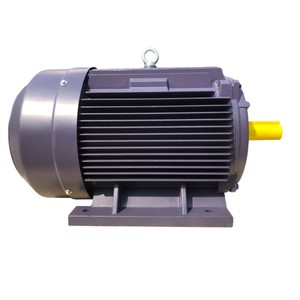
Three Phase Induction Stator Production Line 5.5kW - 30kW
- Power Rating: 5.5kW to 30kW (134Nm)
- Encoder & VFD Synchronization
- Voltage: 380V/220V 60Hz Compatible
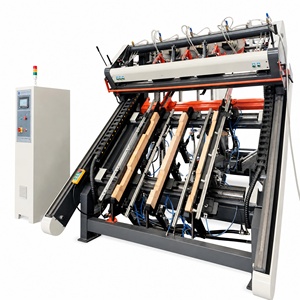
High Capacity Automatic Motor Gear Assembly Line PLC Control
- Siemens / Mitsubishi PLC Automation
- Low Maintenance & High Takt Time
- Integrated Quality Check Stations
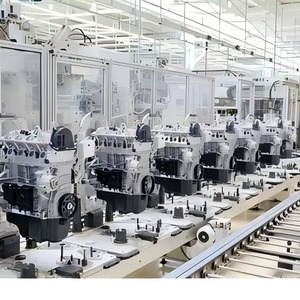
Efficient Semi-Automatic Motor Assembly Line Solution
- Multi-Voltage & Dual-Frequency Compatible
- 300kg Payload Modular Conveyor
- Flexible Tooling for Quick Changeover
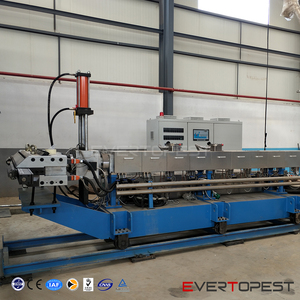
High-Speed Electric Motor & Core Composite Stator Line
- Double Panel High-Speed Assembly
- Electronic Manufacturing System
- Precision Servo Tensioning
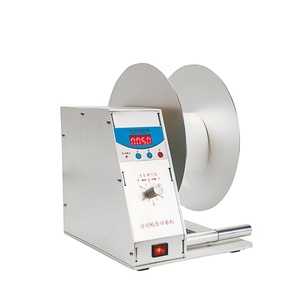
Automatic Electrical Motor Rewinding & Unwinding System
- CNC Programmable Coil Winding
- Heavy-Duty Wire Spool Unwinder
- Automatic Wire Tension Compensation
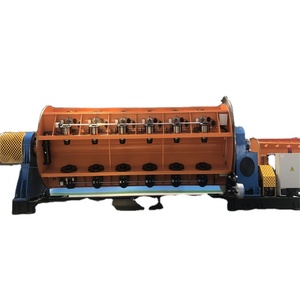
630 Rigid Stranding & Wire Taping Equipment 50m/min
- 1+6+12 Cage Motor Configuration
- Speed: Up to 50 meters/minute
- High-Tensile Stator Lead Processing
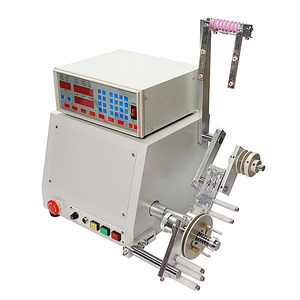
Electric Automatic Coil Winding Machine with Brushless DC Motor
- 400W Brushless DC Drive
- Dual Voltage 220V/110V Operation
- High Precision Micro-Coil Winding
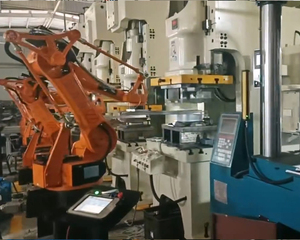
Industrial Automation PLC Motor Production Line for Appliances
- Robotic Integration & PLC Control
- Customized Hourly Capacity
- Nonstick Cookware & Appliance Stators
Stator Manufacturing Ecosystem in Greater São Paulo: An Engineering Analysis
State of São Paulo stands as the undisputed industrial powerhouse of South America, generating over 30% of Brazil’s total manufacturing GDP. Key industrial corridors—including the historic Região do ABC (Santo André, São Bernardo do Campo, São Caetano do Sul), the high-tech hub of Campinas, the automotive belt of Sorocaba, and the heavy manufacturing centers in Guarulhos and Jundiaí—demand world-class electrical motor manufacturing solutions. As Brazilian manufacturers face rising electricity tariffs and stringent efficiency regulations enforced by INMETRO (Ordinance No. 233/2018) and the PROCEL Anti-Waste Program, upgrading motor stator production lines to premium efficiency levels (IE3, Premium Efficiency, and IE4, Super Premium Efficiency) has transformed from a strategic choice into a regulatory imperative.
Designing automated stator production lines for deployment in São Paulo requires meticulous engineering adaptation to local industrial infrastructure. Operating parameters must seamlessly accommodate Brazil’s dual 3-phase industrial power grid standard: 380V/220V at 60Hz, alongside industrial line voltage fluctuations common in high-density industrial parks. Furthermore, production equipment exported to Brazil must strictly comply with national machinery safety standards under NR-12 (Norma Regulamentadora 12) and electrical safety mandates under NR-10. As an experienced exporter and dedicated manufacturer, Ningbo Davri Automation Equipment Co., Ltd. (Cefnak) delivers fully compliant, high-output stator manufacturing systems tailored specifically to the operational realities of São Paulo manufacturers.
Technical Information Gain: Copper Slot Fill Optimization for IE3/IE4 Efficiency
Achieving IE3 and IE4 efficiency standards under INMETRO testing protocols requires increasing stator copper mass while maintaining rigid slot insulation integrity. Cefnak's advanced needle type internal stator winding lines utilize high-torque closed-loop servo control that maximizes wire packing density up to a 78% slot fill factor—without damaging wire enamel at high winding velocities.
Grid & Voltage Adaptability
Configured specifically for 380V/220V 60Hz supply lines across SP industrial zones, featuring internal isolation transformers and surge suppression circuits.
NR-12 Safety Compliance
Equipped with dual-channel safety relays, physical perimeter guarding, light curtains, and zero-energy lockouts engineered to clear ABNT/NR-12 audits.
High Takt-Time Efficiency
Integrated multi-station index tables minimize downtime, delivering cycle times under 18 seconds per stator for high-volume appliance and BLDC lines.
Engineering Architecture of Turnkey Stator Production Lines
A modern automated stator production line is an interconnected ecosystem of high-precision sub-assemblies. From raw silicon steel lamination packs to fully impregnated, tested, and sealed stators, each phase of processing must maintain absolute concentricity and electrical isolation. Below is the multi-stage manufacturing breakdown engineered into Cefnak turnkey lines shipped to São Paulo:
| Production Phase | Core Equipment / Module | Technical Operational Specifications | Quality & Inspection Target |
|---|---|---|---|
| 1. Stator Core Stamping & Indexing | Gantry High-Speed Press & Interlocking Riveting | Progressive die stamping of 0.35mm–0.5mm low-loss silicon steel laminations with skew angle control. | Stack height tolerance < ±0.05mm; Zero burr buildup (< 0.02mm). |
| 2. Slot Insulation Insertion | CNC Paper Forming & Insertion Machine | Automated feeding, cuffing, edge-folding, and insertion of Nomex or DMD Class H/F insulation paper. | 100% visual and mechanical slot paper presence & edge clearance check. |
| 3. Precision Coil Winding | Multi-Axis Needle Type / Flyer Winding Engine | Closed-loop servo tensioners; multi-strand parallel winding; programmable slot-by-slot wire placement. | Zero wire enamel stripping; turns counter accuracy ±0 turns. |
| 4. Lead Termination & Staking | CNC Commutator Hot Staking / TIG Welding | Automated wire lead routing, stripping, terminal crimping, and high-temperature fusion welding. | Micro-ohm contact resistance; 100% tensile pull-test verification. |
| 5. Lacing & End-Turn Forming | Dual-Head Automatic Stator Lacing Machine | Mechanical expansion jaws shape coil end-turns while servo needles lace polyester cord around slots. | Bore clearance compliance; compact coil heads for housing assembly. |
| 6. Varnish Impregnation & Curing | Continuous Trickle Varnish & Induction Oven | Precision resin trickle application targeted directly at slot passages, followed by thermal curing. | Zero varnish contamination on stator OD/ID; Class H thermal bond. |
| 7. End-of-Line (EOL) Testing | Automated Multi-Function Stator Test Bench | Integrated Hi-Pot (Dielectric), Surge/Impulse, DC Winding Resistance, and Phase Rotation testing. | Automatic pass/fail grading with barcode data logging for full traceability. |
In-House Manufacturing & Quality Control Infrastructure


Localized Application Scenarios across São Paulo's Key Industrial Sectors
Manufacturing requirements vary significantly across São Paulo's diverse industrial belt. Cefnak engineers custom-configure stator winding kinematics, fixture dimensions, and automation levels depending on the specific end-use application:
Automotive OEMs in Sorocaba & ABC
Dedicated assembly lines for EV compressor stators, Electric Power Steering (EPS) motors, and auxiliary 12V/48V BLDC cooling pumps requiring zero-defect automotive traceability.
HVAC & Commercial Refrigeration in Campinas
High-volume outer stator winding lines designed for BLDC condenser fans and hermetic compressor motors, engineered for continuous operation in tropical ambient temperatures.
Home Appliances & White Goods in Greater SP
High-speed 4-station internal stator winders producing direct-drive washing machine motors, universal blender armatures, and kitchen appliance stators with rapid tooling changeover.
Macro Trends & Procurement Logistics: Navigating Santos Port & Ex-Tarifário
Investing in capital equipment in Brazil demands strategic planning around import tariffs, tax regimes, and ocean freight logistics. Brazilian buyers importing stator production lines can achieve substantial cost advantages by leveraging local regulatory mechanisms:
1. Capitalizing on the "Ex-Tarifário" Duty Exemption Regime
Under the Brazilian Ministry of Economy's Ex-Tarifário regime, import duties (Imposto de Importação - II) on capital goods (Bens de Capital - BK) can be temporarily reduced from standard rates (often 14%–18%) down to 0% if no equivalent machine is produced domestically in Brazil. Because Cefnak manufactures advanced multi-axis CNC needle stator winders and automated BLDC lines with specialized technical specifications not produced in South America, our engineering team assists São Paulo clients by providing detailed technical documentation, CAD schematics, and functional descriptions formatted specifically for NCM code applications (such as NCM 8479.89.99).
2. Seamless Logistics via Porto de Santos
Ocean freight shipments destined for São Paulo factories are routed through Porto de Santos, the largest container port in Latin America. Standard maritime transit times from the Port of Ningbo-Zhoushan to Santos average 30 to 35 days. Cefnak equipment is packed in heavy-duty, seaworthy vacuum-sealed foil barriers enclosed within reinforced ISPM-15 compliant fumigated wooden crates. This anti-corrosion barrier protects sensitive CNC servo drives, linear encoders, and polished winding needles from humid oceanic environments during transit.
Verification & Expatriate Engineer On-Site Support
Cefnak is an Intertek On-Site Verified Supplier. For every production line installed in São Paulo, we dispatch experienced technical service engineers directly to your facility for installation, NR-12 integration tuning, operator training, and pilot batch validation.
São Paulo Industrial Buyer FAQ: Stator Production Lines
How do Cefnak stator production lines handle Brazilian grid voltage variations (380V/220V 60Hz)?
Our electrical cabinets are specifically engineered for South American industrial power grids. We integrate custom-wound isolation transformers and heavy-duty line filters that accept 380V or 220V 3-phase input at 60Hz. Main PLC systems, servo drives, and sensor buses run on stabilized 24V DC power units protected against ±12% voltage fluctuations commonly encountered in high-density industrial corridors across São Paulo State.
Can Cefnak provide technical documentation to support Ex-Tarifário tax relief applications in Brazil?
Yes. We regularly assist Brazilian motor manufacturers in obtaining 0% import tariff approval under the Ex-Tarifário regime. Our engineering department supplies complete technical dossiers, including functional block diagrams, unique operational feature specifications, layout drawings, and NCM tariff classification justification letters required by Brazil's Secretariat of Development, Industry and Commerce (SDIC).
What is the typical lead time from design freeze to delivery at Porto de Santos?
For standard standalone needle winding or paper insertion machines, manufacturing takes approximately 35 to 45 days. For complex, turnkey automated stator production lines, fabrication, assembly, and trial winding validation require 60 to 75 days. Ocean shipping from Ningbo to Porto de Santos typically takes 30 to 35 days, resulting in a total project delivery window of approximately 95 to 110 days from initial deposit.
How is local technical commissioning and after-sales support managed in São Paulo?
We provide a two-tier support structure. First, our automated lines are equipped with secure remote IoT diagnostic modules, allowing our software engineers in Ningbo to perform real-time PLC troubleshooting and program updates over encrypted connections. Second, upon machine arrival in São Paulo, we dispatch bilingual field service engineers on-site to handle physical positioning, wiring verification, tool calibration, and staff training.
What maximum slot fill factor can be achieved on your needle winding machines?
For inner-rotor BLDC stators and high-efficiency induction motor stators, our CNC needle winding machines consistently achieve copper slot fill ratios between 70% and 78%. By utilizing precision electronic tension controllers and custom-ground tungsten carbide winding nozzles designed in SolidWorks, wire layering is kept tight and parallel without stripping the copper wire insulation layer.
Do your production lines comply with NR-12 safety standards required by Brazilian auditors?
Yes. Machines destined for Brazil can be configured to comply fully with NR-12 (Safety in Machinery and Work Equipment) and NR-10 (Electrical Installations Safety). This includes installing dual-channel safety circuit controllers, yellow physical safety enclosures with interlocking safety switches, emergency stop pushbuttons located at every operator station, and safety light curtains around loading zones.