Featured Motor Winding & Automated Assembly Solutions
Engineered to strict OEM Monozukuri standards for Tier-1 suppliers, automotive manufacturing, and high-tech industrial plants in Nagoya.
Technical Whitepaper: Precision Rotor Winding Engineering for Greater Nagoya’s Advanced Manufacturing Hub
The Greater Nagoya area—encompassing Aichi, Gifu, and Mie prefectures—represents the beating heart of Japanese industrial output (Chubu region). Accounting for over 40% of Japan’s total automotive production equipment and machine tool supply, Nagoya’s manufacturing paradigm demands uncompromised Monozukuri precision, exceptional equipment longevity, and flawless integration into high-takt automated assembly ecosystems.
As electric drive units (e-Axles), automotive HVAC compressors, brushless DC (BLDC) actuators, and high-precision servo motors transition toward higher power densities and smaller physical footprints, the performance of the electromechanical core hinges on one critical step: automatic coil and rotor winding accuracy.
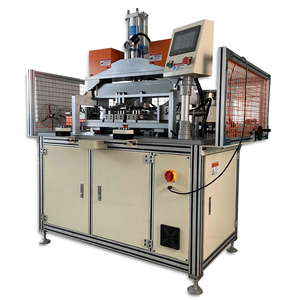
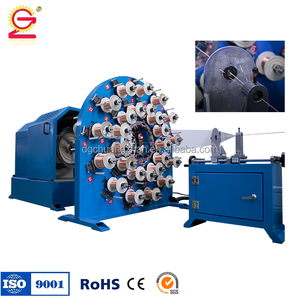
Ningbo Davri Automation Equipment Co., Ltd. (Cefnak) delivers state-of-the-art automatic rotor winding machines, armature winders, needle-type internal stator winders, and complete turnkey motor assembly solutions engineered specifically to address the stringent requirements of Nagoya-based OEMs and Tier-1 automotive component makers. By replacing traditional manual or semi-automated processes with servo-driven tension management and closed-loop CNC control, our equipment guarantees maximum magnetic flux density, minimized heat dissipation, and zero wire insulation degradation.
Rotor & Stator Winding Architecture Matrix
Selecting the optimal coil winding architecture depends strictly on the core geometry, wire gauge, slot opening dimensions, and targeted operational speed (RPM). Below is a direct engineering comparison of the primary winding methodologies deployed across Nagoya's industrial clusters:
| Winding Methodology | Target Motor Geometry | Copper Fill Factor Efficiency | Tension Control Mechanism | Primary Nagoya Sector Application |
|---|---|---|---|---|
| Needle-Type Internal Winding | Inner-rotor BLDC stators, deep-slot automotive pumps | Up to 82% - 88% | Closed-Loop Servo Tensioner (±0.5% tolerance) | Automotive EV Coolant Pumps, EPS Actuators |
| Flyer / Armature Winding | Slotted rotors with commutators (Brushed DC / Universal) | 70% - 78% | Magnetic / Hysteresis Friction Braking | Power Tools, Automotive Seat Motors, Wipers |
| Outer Stator Winding | External-rotor motors (Outrunners, drone stators, fans) | 75% - 85% | Closed-Loop Electronic Tension Control | Drone Motors, Treadmills, HVAC Blower Motors |
| High-Speed Multi-Station CNC | Mass-production universal & industrial pump stators | 80% - 86% | Programmable Servo tensioners with real-time feedback | Industrial Machinery Motors, Factory Automation |
Our engineering team provides sample-based custom prototyping. Before machine sign-off, customer-supplied rotor cores or stator laminations undergo exhaustive trial winding in our laboratory, validating wire layering efficiency, slot space factor, and electrical insulation resistance under full operating tension.
Localized Application Scenarios in Nagoya & Aichi Industrial Sectors
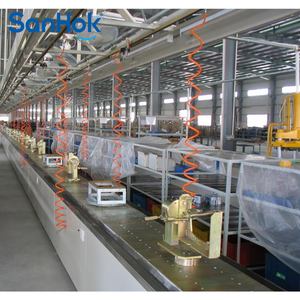
The manufacturing dynamics of Aichi Prefecture require specialized machinery designed for distinct high-growth verticals. Below are the key localized industrial scenarios where our automatic rotor winding machines and complete assembly lines provide immediate competitive advantages:
Automotive Next-Gen xEV Components
High-precision winding for electric vehicle thermal management pumps, EV compressor rotors, electric power steering (EPS) motors, and brake system actuators compliant with strict Automotive Tier-1 quality norms.
Industrial Robotics & Servo Actuators
Nagoya leads global industrial robotics production. Our multi-axis CNC rotor winders deliver tight turn-to-turn precision required for high-torque, low-cogging AC servo motors and articulated robot joint drive motors.
UAV & Commercial Drone Motors
With Chubu emerging as a aerospace testing ground, our outer stator winding systems and outrunner BLDC assembly lines satisfy demand for ultra-lightweight, high-efficiency drone propulsion systems.
Material Handling & E-Forklifts
Custom winding and assembly solutions for heavy-duty 5000W 6000RPM permanent magnet brushless DC traction motors powering seated electric forklifts used throughout Nagoya Port logistics networks.
Precision Micro-Mechanisms & Horology
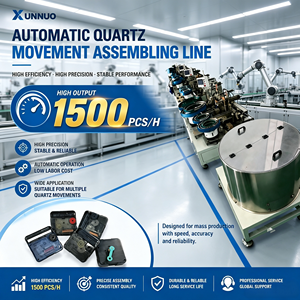
Ultra-fine wire handling systems engineered for micromotors, watch movements, and high-frequency solenoid coils where tension accuracy down to fractional grams is essential.
Precision Metal Coil Slitting & Stamping
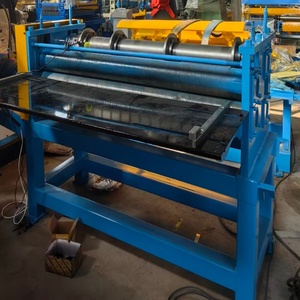
Integrating fully automatic PLC-controlled motor-driven slitting lines for silicon steel coils, producing precise lamination stacks with minimal burr heights for ultra-low core loss performance.
Information Gain: Critical Factors in Achieving Maximum Rotor Winding Efficiency
Standard catalog machines often fail to meet the harsh duty cycles of Japanese production facilities because they ignore the complex physical interaction between copper wire stretch, dynamic tension, and thermal expansion during fast acceleration phases. Below are four key engineering parameters Davri (Cefnak) addresses to guarantee zero-defect yield:
1. Closed-Loop Servo Tension Management vs. Friction Braking
Conventional mechanical friction tensioners induce tension spikes during start-stop motion, causing subtle elongation in magnet wire (copper stretching). This alters wire resistance and weakens insulation enamel, leading to inter-turn short circuits down the line. Our automatic rotor winders utilize dynamic closed-loop servo tensioning, constantly measuring real-time wire feed speed and automatically adjusting torque output to maintain steady tension within ±0.5%.
2. Copper Slot Fill Factor Optimization
Increasing the slot fill factor from 65% to 85% directly increases electromagnetic output while reducing motor physical mass. Achieving this requires precise needle trajectory programming, preventing wire overlapping and wire crossing. Our software automatically calculates optimum layer-by-layer offsets based on wire diameter tolerances, ensuring neat, parallel coil layering even in complex multi-slot rotors.
3. Integrated CNC Commutator Hot Staking & Spot Welding
For brushed rotor armatures, connection reliability between coil lead wires and commutator segments is vital. Our integrated CNC hot staking stations combine thermocompression fusing with real-time electrical resistance monitoring. By eliminating manual soldering or untamed resistance welding, we ensure constant micro-ohm junction resistance across all armature segments.
4. Dynamic Balancing & End-of-Line (EOL) Dynamometer Testing
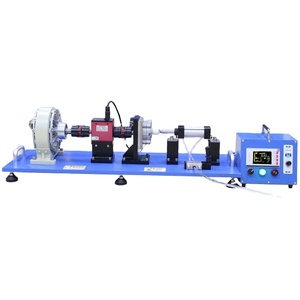
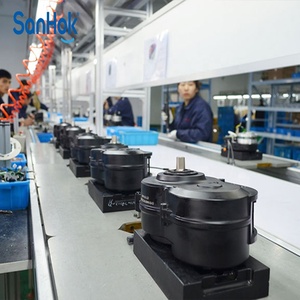
A perfectly wound rotor will still fail prematurely if rotational imbalance remains uncorrected. Our production lines integrate high-speed dynamic balancing stations paired with motor dynamometer testing machines. Every completed core is subjected to back-EMF analysis, vibration FFT spectrum analysis, hi-pot insulation testing, and temperature rise logs under simulated load.
Intertek-Verified Manufacturing Credibility & Quality Protocol
Ningbo Davri Automation Equipment Co., Ltd. (Cefnak) operates out of Ningbo, Zhejiang—directly connected to Nagoya Port via major sea shipping channels (3-5 day transit time). As an Intertek On-Site Verified Manufacturer, our legal standing, production facilities, R&D engineering headcount, and quality control infrastructure have undergone rigorous third-party auditing.
Our in-house quality lab utilizes six dedicated testing instruments operated by certified engineers with over five years of specialized motor manufacturing experience. Our 8-stage QA control process guarantees complete component traceability from incoming raw steel coils to final export packaging:
Frequently Asked Questions by Nagoya Procurement Teams
Clear answers to common questions regarding machine customization, PLC compatibility, Japanese safety compliance, and overseas field engineering support.
Transform Your Motor Manufacturing Line Today
Partner with an Intertek-verified leader in rotor winding machines and automated motor assembly. Request a customized technical proposal and full product catalog tailored to your exact motor specifications.