Featured CE Certified Motor Testing Equipment
Explore our precision-engineered motor testing benches, dynamometers, and universal testing units validated to European Safety Standards and ISO 17025 calibration guidelines.
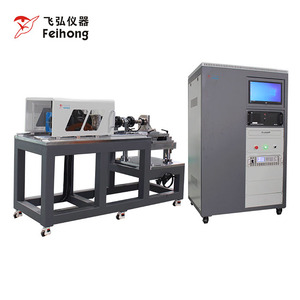
Robot Joint Module Motor & Deceleration Load Life Tester
- High-Dynamic Back-EMF Analysis
- Precision Harmonic Decelerator Load
- Multi-axis Endurance Simulation
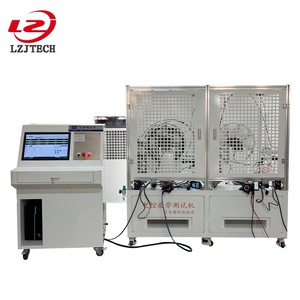
Two-Station Motor and Controller Durability Tester
- Torque, Speed & Power Diagnostics
- Simultaneous Controller Aging
- Automated Duty Cycle Profiles
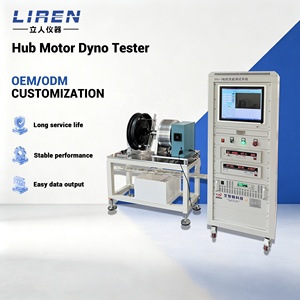
Customized Hub Motor Dynamometer Test Bench
- Mid-Drive & In-Wheel Hub Testing
- Efficiency Mapping (IEC 60034-2-1)
- Regenerative Braking Load Simulation
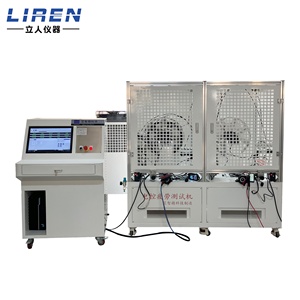
Heavy-Duty Two-Station Motor & Controller Performance Tester
- Real-time Speed-Torque Curves
- High Temperature Thermal Monitor
- CE LVD & EMC Fully Compliant
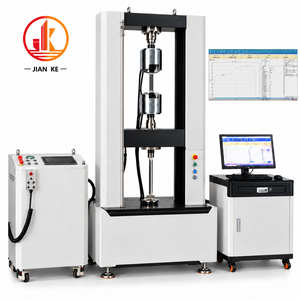
Double Column Panasonic Servo Universal Testing Machine
- Tensile & Compression Stress Tests
- Closed-Loop Servo Closed Control
- Metal, Rubber & Component Strain
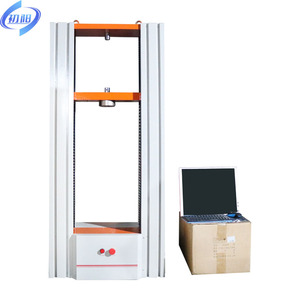
Heavy-Load Servo Motor Universal Material Testing Machine
- 5kN / 10kN / 50kN Capacity Range
- High-Precision Load Cell (0.5 Class)
- Motor Housing Mechanical Integrity
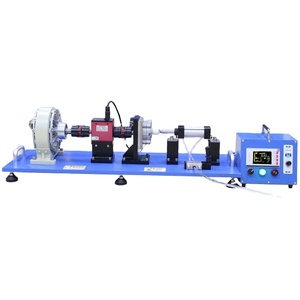
High-Precision Motor Dynamometer Performance Test System
- Hysteresis / Eddy Current Brake Option
- Transient Load Response Capture
- LabVIEW-Based Control System
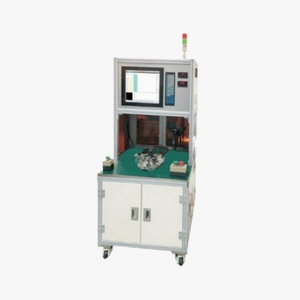
LS-ITM Integrated BLDC Motor & Vacuum Performance Tester
- High-Speed BLDC Airflow & Suction
- Electrical Insulation & Hi-Pot Built-in
- 100% End-of-Line Production Pass/Fail
Engineering Architecture of CE Certified Motor Testing Systems
A comprehensive technical evaluation on safety compliance standards, dynamic load absorption technologies, and sensor metrology for industrial, robotic, and automotive electric motors.
1. European Regulatory Directives: Mandatory Requirements for Motor Test Benches
Procuring a CE certified motor testing machine requires strict adherence to three key European Union Directives: the Low Voltage Directive (LVD 2014/35/EU), the Electromagnetic Compatibility Directive (EMC 2014/30/EU), and the Machinery Directive (2006/42/EC). Unlike basic laboratory test instruments, high-power motor test benches generate intense electromagnetic interference (EMI) due to high-frequency Pulse-Width Modulation (PWM) inverter drives and regenerative energy feedback.
Compliance guarantees that high-voltage insulation barriers (Hi-Pot testing up to 5kV AC/DC), emergency stop safety relays (SIL 3 / Performance Level e), and radiated emission suppression filters are natively integrated into the cabinet chassis. This mitigates operational risks, prevents line noise corruption in facility power grids, and protects human operators against high-speed mechanical failures or arc flashes during stall-torque testing.
2. Dynamometer Load Absorption Technologies: Hysteresis vs. Eddy Current vs. Servo Drives
Selecting the optimal load absorption mechanism is critical for accurate torque-speed characterization ($P = \frac{T \cdot n}{9550}$). Enterprise motor testing manufacturers implement three primary dynamic load types based on the target application:
A. Hysteresis Dynamometers: Ideal for low-to-medium torque applications (e.g., drone BLDC motors, vacuum cleaner motors, robot joint actuators). Hysteresis brakes provide friction-free torque independent of shaft speed, allowing precise measurement from zero speed (stall torque) up to 30,000 RPM without mechanical wear.
B. Eddy Current Dynamometers: Optimized for high-speed, high-power industrial motors and starter motors. They deliver robust power dissipation capacity, though torque absorption diminishes at near-zero speeds.
C. AC Servo Regenerative Test Benches: Essential for electric vehicle (EV) traction motors and forklift drives. Active AC servo absorbers simulate real-world road loads, vehicle inertia, and transient load cycles while feeding braking energy back into the facility power grid with over 92% electrical efficiency.
3. Precision Sensor Metrology & Data Acquisition Integrity
High-tier test benches rely on non-contact rotary strain-gauge torque transducers paired with high-resolution optical encoders (up to 10,000 P/R). Sensor signals are routed through isolated signal conditioners to prevent common-mode voltage spikes generated by Silicon Carbide (SiC) and Gallium Nitride (GaN) motor drives.
Modern automated software platforms capture electrical power factor, Total Harmonic Distortion (THD), phase-to-phase back-EMF waveforms, cogging torque profiles, and temperature rise via multi-channel PT100/K-type thermocouples simultaneously. Compliance with IEC 60034-2-1 standard mandates continuous loss-segregation calculation to determine true motor efficiency ratings across varied speed-torque operational maps.
Future Procurement Trends in Electric Motor Testing
Navigating technological transitions over the next 5 to 10 years: Industry 4.0 integration, high-voltage platforms, and AI-driven quality assurance.
800V/1200V High-Voltage EV Platform Integration
As the automotive industry transitions from 400V to 800V and 1200V SiC powertrain architectures, procurement teams are shifting toward high-voltage isolated test benches capable of evaluating partial discharge, insulation resistance under high $dV/dt$ voltage gradients, and thermal runaway behavior at extreme current density levels.
Hardware-in-the-Loop (HIL) & Digital Twin Simulation
Future-ready motor test systems feature real-time HIL digital twin capabilities. Instead of static load testing, equipment can emulate real-world road terrain, mechanical backlash, wind resistance, and payload mass dynamically via software models synchronized with the physical load bench.
AI-Powered End-of-Line (EOL) NVH Diagnostics
Automated pass/fail criteria are expanding beyond electrical limits. Machine learning algorithms integrated with vibration accelerometers and acoustic microphones now analyze Noise, Vibration, and Harshness (NVH) spectra in real time to catch bearing defects, rotor unbalance, or stator eccentricity within 3 seconds of EOL testing.
Specification Matrix: Motor Testing Equipment Comparison
Comprehensive selection parameters for engineering and procurement managers.
| Testing Machine Category | Target Motor Types | Torque & Speed Range | Measurement Accuracy | Key Compliance Directives |
|---|---|---|---|---|
| Robot Joint & Decelerator Tester | Harmonic Drive Motors, Frameless BLDC, Servo Joint Actuators | 0.1 Nm – 500 Nm 0 – 6,000 RPM |
Torque: ±0.1% F.S. Angle: ±0.01° |
CE EMC (2014/30/EU) Machinery Directive |
| Hub & Mid-Drive Dynamometer | E-Bike Hub Motors, AGV Traction Wheels, Drone Outrunners | 1 Nm – 1,500 Nm 0 – 12,000 RPM |
Torque: ±0.05% F.S. Speed: ±1 RPM |
IEC 60034-2-1 CE LVD (2014/35/EU) |
| Two-Station Durability Bench | Industrial BLDC, Automotive Pump Motors, Controllers | 5 Nm – 800 Nm 0 – 15,000 RPM |
Power: Class 0.2 Temp: ±0.5°C |
ISO 16750 CE Certified Safety Relays |
| Universal Tensile & Servo Tester | Motor Housings, Stator Lamination Stacks, Rubber Mounts | Force: 5kN – 50kN Speed: 0.001–500 mm/min |
Load: Class 0.5 Displacement: 0.5 µm |
ISO 7500-1 ASTM E4, CE Certified |
| Integrated EOL Performance Tester | Vacuum Cleaner Motors, High-Speed Power Tools | Airflow: 0–5 m³/min Speed: up to 100,000 RPM |
Electrical: ±0.2% Hi-Pot: up to 5kV |
EN 60335-1 CE EMC & LVD Directives |
Enterprise Capabilities & Global Engineering Leadership
Why leading international OEMs, Tier-1 automotive suppliers, and motor manufacturers partner with Ningbo Davri Automation Equipment Co., Ltd. (Cefnak).
Sample-Based Customization & Turnkey Engineering Rigor
At Ningbo Davri Automation Equipment Co., Ltd. (Cefnak), machine design is engineered around the physical geometry and electromagnetic characteristics of your motor samples or CAD models. Operating from Ningbo, Zhejiang—one of the world's dense motor industrial hubs—our team combines over 11 years of specialized automated equipment manufacturing experience.
Our facility houses 6 advanced testing instruments operated by certified senior engineers, each carrying over 5 years of domain expertise. Every test bench undergoes 16 internal quality verification steps—ranging from precision CNC bed milling, alignment balancing, wiring harness noise shielding, to continuous 72-hour full-load aging tests before export dispatch.
As an independently Intertek On-Site Verified Supplier, our company transparency, manufacturing capacity, and legal standards are third-party authenticated. We provide complete technical documentation, CE certificates of conformity, software source code access for LabVIEW architectures, and expatriate engineer deployment for on-site commissioning, operator training, and annual calibration services worldwide.
Frequently Asked Questions for Motor Test Equipment Sourcing
Technical, operational, and procurement clarity for international buying authorities.
QWhat specific CE standards do your motor testing machines comply with?
Our motor testing machines strictly adhere to the EU Machinery Directive (2006/42/EC), Low Voltage Directive (LVD 2014/35/EU), and Electromagnetic Compatibility Directive (EMC 2014/30/EU). Electrical cabinets feature dual-channel safety relays, lockable main isolators, shielded sensor conduits, and filter modules engineered to suppress high-frequency noise from inverter power supplies.
QCan test benches be customized for proprietary motor communication protocols?
Yes. Our software systems natively support standard industrial protocols including CANopen, CAN-FD, Modbus RTU/TCP, EtherCAT, and LIN bus interfaces. We customize automated software routines to read internal motor controller registers (such as inverter temperature, rotor angle estimates, and fault flags) simultaneously with external physical sensors.
QHow is sensor calibration handled for international compliance (ISO 17025)?
All torque sensors, power analyzers, and load cells installed in our test systems are supplied with factory calibration certificates traceable to national metrology institutes (NIST / CNAS). The software platform includes built-in multi-point calibration routines allowing your quality team to re-verify torque and speed accuracy on-site using standard lever-arm mass weights.
QWhat data output formats are supported for MES and Industry 4.0 integration?
Test data can be logged to local Microsoft Access / SQL databases or automatically exported in CSV, Excel, and JSON formats. We offer direct API and OPC-UA server modules for seamless synchronization with enterprise Manufacturing Execution Systems (MES) and quality control cloud databases.
QWhat is the standard lead time for a customized motor dynamometer bench?
Standard CE-certified testing units are produced within 30 to 45 business days. Highly complex, customized multi-station lines or high-power regenerative dynamometer systems typically take 60 to 75 days, including sample-based fixture tooling engineering, trial testing, and FAT (Factory Acceptance Test) sign-off.
QWhat after-sales and commissioning support is offered for overseas buyers?
We provide full remote support via video commissioning, augmented reality (AR) wiring guidance, and online software desktop assistance. Additionally, our certified field service engineers are available for dispatch to your facility for physical installation, alignment verification, safety checks, and staff training.
Request a Tailored Technical Proposal & Quote
Share your motor specifications, voltage levels, speed-torque targets, or sample drawings. Our application engineering team will provide a comprehensive engineering layout and competitive quotation within 24 hours.