Featured Four-Station & Automated Winding Machines
Select high-performance stator winders, integrated armature assembly lines, and testing systems directly sourced from audited Chinese automation plants.
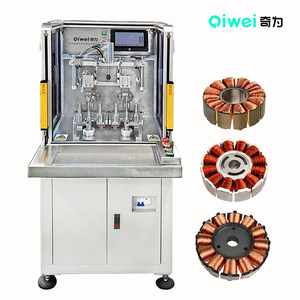
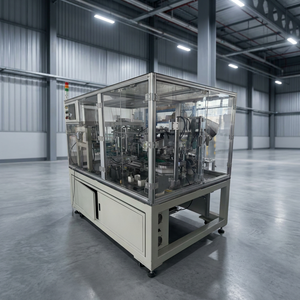
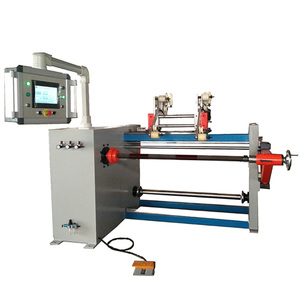
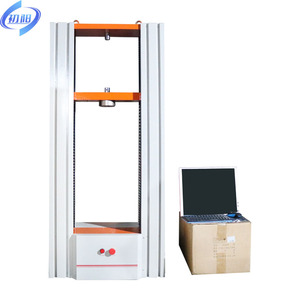
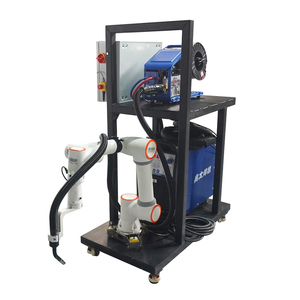
Understanding the 4-Station Winding Architecture in Modern Motor Manufacturing
In the rapidly evolving landscape of electromagnetic motion control, China four station winding machine manufacturers have established a critical technological bridge between high-speed mass production and micro-precision wire handling. The shift from traditional single-or-dual station fly-winding machinery to synchronized multi-axis four-station internal needle winders represents a major inflection point for global OEM motor producers.
Modern electrical machines—ranging from high-power-density Brushless Direct Current (BLDC) motors, Permanent Magnet Synchronous Motors (PMSM) for industrial traction, down to micro-diameter FPV and UAV drone outrunners—require exceptionally high copper volumetric slot fill factors (>85%) while maintaining strict insulation barrier integrity. Achieving these parameters at scale demands a kinematic system that minimizes wire stress, suppresses tension fluctuations, and optimizes index cycling times.
Four-station winding machines solve the persistent bottleneck of index dead-time. By enabling simultaneous processing—where two or four stators undergo active needle winding while auxiliary axes execute automated lead wire stripping, terminal wrapping, and slot insertion—overall equipment effectiveness (OEE) increases dramatically compared to legacy dual-head configurations.
Future Trends in Stator & Rotor Winding Machinery
As electric mobility, aerospace UAVs, and energy-efficient HVAC equipment redefine motor specifications, winding machine architecture is undergoing five core technical transformations.
1. Closed-Loop Servo Tension Tuning
Mechanical magnetic tensioners are rapidly being replaced by multi-axis closed-loop electronic tension control modules. Integrating real-time load cell feedback allows dynamic tension scaling during acceleration phases, preventing wire stretch and micro-fractures in ultra-fine enameled copper wire.
2. 3D Kinematic Needle Trajectory Planning
Modern internal needle winders utilize 4-axis to 6-axis CNC interpolation. Rather than linear slot movements, algorithms compute custom parabolic needle arcs, avoiding mechanical collision with narrow tooth slot openings down to 1.2mm, ideal for high-slot-count drone and automotive pump stators.
3. Hairpin & Continuous Wave Integration
While needle winding dominates BLDC applications, four-station equipment platforms are hybridizing with hairpin (flat wire) insertion and continuous wave winding heads to support 800V EV traction motors requiring maximum thermal conductivity.
Technology Comparison Matrix: Winding Methods & Performance Metrics
| Parameter / Feature | 4-Station Needle Winder | Traditional Fly Winder | Toroidal Core Winder |
|---|---|---|---|
| Target Stator Geometry | Inner Slot BLDC / PMSM | Outer Armature / Universal | Ring / Closed Magnetic Cores |
| Slot Fill Factor Capability | High (up to 88%) | Medium (65% - 75%) | Very High (up to 92%) |
| Tension Variance Control | ± 1.5% (Electronic Servo) | ± 5.0% (Friction/Magnetic) | ± 3.0% (Mechanical Shackle) |
| Cycle Time / Output Index | Ultra-Fast (Simultaneous 4-Head) | Medium (Sequential Dual-Head) | Low - Medium |
| Primary Application Fields | Drone Motors, EV Pumps, Tools | Appliance Rotors, Automotive | Transformers, Common Mode Chokes |
Global Procurement Trends: Sourcing Four-Station Winders from China
Shift to Turnkey Stator Assembly Lines
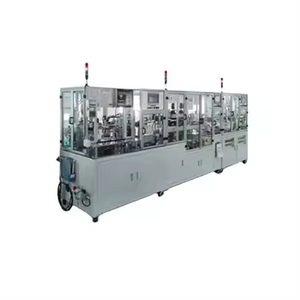
International buyers no longer procure standalone winding units. Sourcing managers seek modular turnkey production lines that bundle paper insertion, needle winding, terminal fusing, lacing, and end-of-line electrical testing (Hi-pot, resistance, inductance) into a single PLC-controlled system.
Sample-Driven Tooling Validation
Leading OEMs demand rigorous pre-shipment trial runs. Manufacturers must validate tooling with actual customer stator laminations and wire spools, delivering Cpk reports (>1.33) for winding diameter consistency before final factory acceptance testing (FAT).
Remote Engineering & IoT Support
With global manufacturing sites spread across Europe, Southeast Asia, and the Americas, tier-1 suppliers mandate integrated VPN edge gateways on winding PLCs for remote diagnostic tuning, software updates, and predictive maintenance alerts.
Enterprise Manufacturing Strength & Engineering Authority
Ningbo Davri Automation Equipment Co., Ltd. (Cefnak) delivers world-class industrial stator and rotor manufacturing equipment backed by verified quality systems and decades of domain expertise.
Audited Manufacturing Ecosystem & Quality Control Protocol
Located in the heart of Ningbo’s industrial hardware cluster, our manufacturing facility integrates complete in-house metal stamping, precision tooling machining, stator core assembly, automated winding, balancing, and end-of-line testing under a unified ISO-compliant quality system.
Frequently Asked Questions by Industrial Sourcing Managers
1. Which motor types can four-station internal needle winding machines process?
Four-station needle winding machines are optimized for internal-slot brushless DC (BLDC) stators, permanent magnet synchronous motors (PMSM), electric power tool stators, automotive fuel/water pump motors, and drone outrunner stators. For external-rotor motors or traditional brushed armatures, specialized outer stator winders or CNC hot staking lines are recommended.
2. What specific data is needed to receive an accurate technical proposal and quote?
To configure tooling, needle displacement stroke, and station layout, engineers require four primary parameters: (1) Stator outer/inner diameter and stack height drawing, (2) Slot opening width and slot count, (3) Wire gauge (mm or AWG) and turns per coil, and (4) Target hourly production output (Units Per Hour / UPH).
3. How do you handle custom tooling validation for non-standard motor samples?
Sample-driven customization is independently verified. Customers send physical raw stators and wire spools to our Ningbo application lab. Our engineering team designs custom needle nozzles, wire guide fixtures, and expansion mandrels in SolidWorks, executing trial runs with full video logs and electrical testing before equipment approval.
4. What post-sales support and installation services are available for overseas factories?
We provide comprehensive global technical assistance: (1) Pre-shipment video inspection and factory acceptance testing (FAT), (2) Complete English PLC user interfaces and wiring diagrams, (3) Remote VPN engineering diagnostics, and (4) On-site engineer deployment for installation, operator training, and line integration.
5. What is the standard Minimum Order Quantity (MOQ) and lead time?
For standalone four-station winding machines or custom automated lines, the MOQ is 1 set. Standard machinery build time is 30 to 45 calendar days, depending on tooling complexity and automated station customization.
Accelerate Your Motor Assembly Automation
Consult directly with our motor automation engineers to review your stator drawings, compute cycle times, and request a detailed commercial quote.