Architectural Overview: Next-Generation BLDC Manufacturing for Sapporo’s Industrial Sector
As Northern Japan accelerates its Green Transformation (GX) initiative and expands its footprint in advanced robotics, cold-climate automotive power electronics, and precision machinery, the demand for ultra-efficient Brushless Direct Current (BLDC) and Permanent Magnet Synchronous Motors (PMSM) has reached an unprecedented high. Operating within the industrial centers of Sapporo, Ishikari, and Tomakomai, Japanese OEMs require motor manufacturing equipment that achieves sub-micron mechanical tolerances, exceptional slot-fill coefficients, and uncompromising electrical insulation integrity under severe sub-zero thermal cycling.
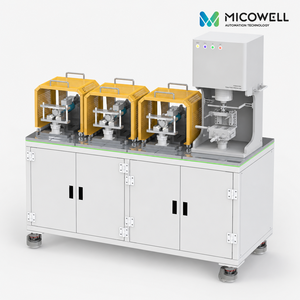
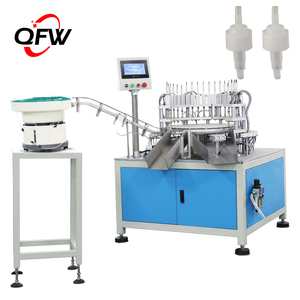
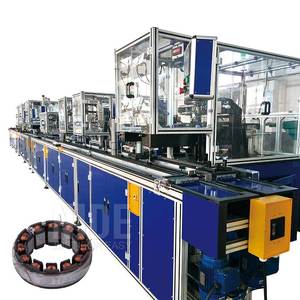
As a leading CE-certified automated motor assembly line exporter and global wholesaler (Ningbo Davri Automation Equipment Co., Ltd. / Cefnak), we engineer turnkey production solutions engineered specifically to bridge high-speed mass production with strict Japanese Quality Control protocols. Our automated assembly systems integrate four-station needle-type stator winding, servo-controlled armature insertion, CNC commutator hot staking, laser terminal welding, and multi-channel end-of-line (EOL) electrical safety testing into a single, cohesive industrial framework.
Engineering Information Gain: Eliminating Interfacing Risk in Motor Assembly
Traditional motor manufacturing procurement often forces factory managers in Sapporo to source winding machines, magnet inserters, trickling varnish systems, and EOL testers from disparate vendors. This fragmented approach introduces severe communication protocol friction, mismatched PLC cycles, and unclear warranty boundaries. Our unified turnkey BLDC lines eliminate vendor friction by standardizing on open industrial Ethernet protocols (EtherCAT / PROFINET), centralized Siemens S7-1500 PLC control, and sample-verified tooling engineered directly from customer-provided stator and rotor laminations.
Turnkey BLDC Assembly Line Engineering Architecture
A modern high-efficiency BLDC motor assembly line is divided into three critical functional zones: Stator Core Processing & Winding, Rotor & Shaft Assembly, and Automated Testing & Final Enclosure Integration. Below is the technical breakdown of the engineering modules incorporated into our CE-compliant lines shipped to Hokkaido.
1. Stator Winding & Insulation
Utilizes multi-axis CNC needle winding and outer-stator winding heads with closed-loop tensioners maintaining ±0.5g tension stability. Supports slot insulation paper insertion, end-phase insulating board placement, and automated wire stripping/terminal crimping.
2. Rotor & Magnet Insertion
High-speed servo-driven magnet pick-and-place with automated structural adhesive dispensing. Features thermal curing tunnels, high-precision dynamic balancing (ISO 1940 Grade G1.0 compliance), and anti-demagnetization testing before housing insertion.
3. End-of-Line (EOL) QC
Fully automated inline inspection unit performing DC Resistance, AC Withstand Voltage (Hi-Pot up to 5kV), Surge Comparison, Insulation Resistance (IR > 500MΩ), and Torque-Speed / Back-EMF performance curve mapping in under 8 seconds per unit.
Technical Comparison: Assembly Line Capabilities for Sapporo Wholesalers
When selecting motor production machinery, technical directors must evaluate operational parameters against projected takt times and floor space constraints. The table below outlines our standardized CE-certified automated line configurations available for export to Japan:
| System Parameter |
BLDC Stator Line (Series-S) |
EV Traction Motor Line (Series-EV) |
Sub-Pump & Micro-Motor Line |
| Target Output Rate |
800 – 1,200 Pcs/Hour |
500 – 800 Pcs/Hour |
1,200 – 2,200 Pcs/Hour |
| Winding Technology |
4-Station CNC Needle Winder |
Segmented Tooth / Flying Armature |
High-Speed Multi-Head Winder |
| Wire Diameter Range |
Φ 0.15mm – Φ 1.2mm |
Φ 0.8mm – Φ 2.5mm (Hairpin/Round) |
Φ 0.05mm – Φ 0.4mm |
| Insulation Grade |
Class B / Class F (155°C) |
Class H / Class C (180°C+) |
Class E / Class B |
| Control Architecture |
Siemens PLC + 15" Touch HMI |
Beckhoff EtherCAT / Omron PLC |
Delta / Mitsubishi Industrial Controller |
| Operating Voltage (Japan) |
200V / 220V 3-Phase 50/60Hz |
200V / 380V 3-Phase 50/60Hz |
200V 3-Phase 50Hz (Sapporo Standard) |
| Safety & Compliance |
CE Directive 2006/42/EC, ISO 9001 |
CE, JIS B 8433, Intertek Verified |
CE, UL Component Compliance |
Localized Application Scenarios in Sapporo & Northern Japan
The geographic and climatic conditions of Hokkaido present specialized engineering challenges that standard off-the-shelf electric motors cannot withstand. Industrial enterprises in Sapporo require BLDC assembly equipment that yields finished motors capable of handling severe freeze-thaw cycles, high humidity, and continuous duty cycles. Below are four key localized deployment scenarios where our exported assembly lines excel:
Sub-Zero Mobility
Cold-Climate Heavy Duty Snow-Removal & Utility Robotics
Robotic snowplows and autonomous clearing machinery deployed in Sapporo demand BLDC drive motors with extreme low-temperature grease retention and moisture-sealed stator encapsulations. Our lines incorporate precise resin potting and vacuum impregnating stations to guarantee IP67 waterproofing.
HVAC & Green Buildings
Zero-Energy Building (ZEB) High-Efficiency Heat Pump Blowers
Hokkaido’s stringent building efficiency mandates require permanent magnet motors reaching IE4 and IE5 ultra-premium efficiency tiers. Our 4-station needle winding technology maximizes stator slot fill factors up to 78%, drastically reducing harmonic losses in commercial HVAC compressors.
Agri-Tech & Sorting
Automated Food Processing & Agricultural Sorting Servos
Sapporo's massive agricultural packaging sector relies on high-speed pick-and-place sorters. Assembly lines equipped with dynamic rotor balance correction ensure micro-vibration-free motor operation, extending bearing lifespans during continuous 24/7 harvest cycles.
Precision Bio-Tech
Sapporo Techno Park Medical & Laboratory Actuators
Biomedical research facilities in Hokkaido utilize miniature BLDC actuators requiring whisper-quiet operation and ultra-low cogging torque. Our automated winding machines feature micro-tension control to eliminate wire crossing and magnetic field asymmetry.
Localized Industrial Trends Shaping Hokkaido’s Motor Sector
Manufacturing in Sapporo is experiencing a structural pivot toward high-value, low-carbon industrial output. Aligning with Japan’s 2050 Carbon Neutrality Goal, local factories are replacing aging brushed DC and AC induction motor manufacturing infrastructure with flexible, automated BLDC production lines. Key market dynamics include:
1. Shift Toward Modular & Multi-Model Flexible Lines
Rather than dedicated single-product lines, Sapporo manufacturers increasingly demand quick-changeover assembly systems. Our tooling designs utilize magnetic quick-release fixtures and software-driven recipe selection, enabling toolless changeovers between different stator stack heights and slot numbers in under 15 minutes.
2. Stringent Traceability & IoT Industrial Integration
Quality assurance standards in Japan demand complete component-level traceability. Our automated assembly lines capture over 30 operational data parameters—including winding tension curves, hot staking peak temperature, dynamic balance residual mass, and EOL surge waveforms—uploading data in real time via OPC-UA to plant MES platforms.
3. On-Site Engineer Dispatch & Technical Support to Sapporo
To ensure flawless factory integration, we offer dedicated bilingual engineering support. Our senior technical teams provide sample trial validation prior to export, Factory Acceptance Testing (FAT) via high-definition video link, Site Acceptance Testing (SAT), and on-site operator training directly inside facilities across Hokkaido.
Enterprise Trust & Manufacturing Capabilities (Ningbo Davri / Cefnak)
Choosing an overseas automation equipment partner requires rigorous verification of manufacturing capacity, technical expertise, and financial stability. As an Intertek On-Site Verified Supplier located in Ningbo, Zhejiang—one of the world's dense motor production hubs—we deliver comprehensive production infrastructure backed by 11 years of dedicated R&D.
In-House 16-Step Production
From high-speed gantry lamination punching and CNC precision machining of winding nozzles to coil varnish curing and final export crating, all operations are kept strictly in-house for complete quality control.
Sample-Based Tooling Customization
Send us your physical stator/rotor samples or CAD drawings (.STEP/.IGES). Our engineering group executes 3D SolidWorks FEA simulations, builds specialized winding tooling, and returns trial-wound samples before line fabrication starts.
Verified QC Laboratory
Equipped with 6 state-of-the-art testing instruments—including video microscope solder inspectors, multi-channel temperature rise testers, and digital tension meters—operated by certified senior automation engineers.
Frequently Asked Questions by Sapporo Motor Machinery Buyers
We regularly consult with factory managers, procurement executives, and chief engineers across Hokkaido. Below are authoritative technical answers to common questions regarding line customization, regional electrical compatibility, and export logistics.
Q1: Can your motor assembly line electrical panels be configured for Japan’s specific grid voltages?
Yes. While standard global lines operate on 380V/415V 3-phase power, all equipment built for export to Sapporo and Japan is engineered with industrial transformers and electrical cabinets built for 200V / 220V 3-Phase 50Hz (Eastern Japan frequency) or 60Hz. We utilize CE-certified and PSE/JIS-compliant circuit breakers, noise filters, and safety relays (Omron / Schneider / Fuji Electric).
Q2: How do you handle custom stator slot dimensions and non-standard coil geometries?
Sample-based custom engineering is our core specialty. Customers in Hokkaido simply send us their raw lamination stack samples or 3D drawings. Our engineering department designs specialized needle nozzles, wire guides, and slot-indexing fixtures, followed by trial winding in our testing laboratory to verify slot fill factor, phase resistance balance, and zero enamel damage before final line assembly.
Q3: What safety standards and certifications accompany the assembly lines exported to Japan?
All our automatic assembly lines strictly comply with the European CE Machinery Directive 2006/42/EC, Low Voltage Directive 2014/35/EU, and EMC Directive 2014/30/EU. Furthermore, mechanical safety guards, light curtains, emergency stop circuits, and zero-energy state lockout systems are built to align with JIS B 8433 (ISO 10218) industrial safety requirements.
Q4: What is the typical lead time for a turnkey BLDC assembly line shipped to the Port of Tomakomai or Sapporo?
Standard stand-alone winding or testing machines require 25–35 days. Complete turnkey multi-station BLDC production lines generally take 60–75 days from 3D design approval to Factory Acceptance Testing (FAT). Sea freight from Ningbo Port to Tomakomai/Sapporo Port typically takes 5–8 days, ensuring rapid delivery to Hokkaido industrial sites.
Q5: Do you provide on-site installation and engineer commissioning in Sapporo?
Yes. We dispatch qualified field service engineers to customer facilities in Sapporo and throughout Japan for physical installation, line integration, Site Acceptance Testing (SAT), and hands-on maintenance training. Remote technical assistance via direct PLC remote access modules is also available 24/7.
Q6: How does the equipment ensure wire enamel protection during high-speed needle winding?
Our needle winding heads feature polished tungsten-carbide nozzles and ceramic wire guides. Combined with dynamic servo magnetic hysteresis tensioners, the wire tension is kept continuously stable within ±0.5g, preventing micro-stretching or enamel abrasion even at linear speeds exceeding 2,500 rpm.
Q7: Can your EOL testing stations integrate directly into our existing MES factory network?
Absolutely. Our End-of-Line testers come pre-configured with OPC-UA, Modbus TCP, and Ethernet/IP protocols. Inspection data, barcoded serial numbers, pass/fail results, and detailed electrical wave data can be automatically logged and pushed to your local plant server or cloud-based MES.
Q8: What is the Minimum Order Quantity (MOQ) for custom components vs. machinery?
Winding machinery and complete production lines start from 1 set. For custom UAV and BLDC motor stators or rotors, MOQ starts at 500 pieces. For standard or custom PMSM motors, MOQ starts from 10 pieces.